Geosteering vs Well Placement: Understanding the Key Differences
April 25, 2023 ·1 minute reading
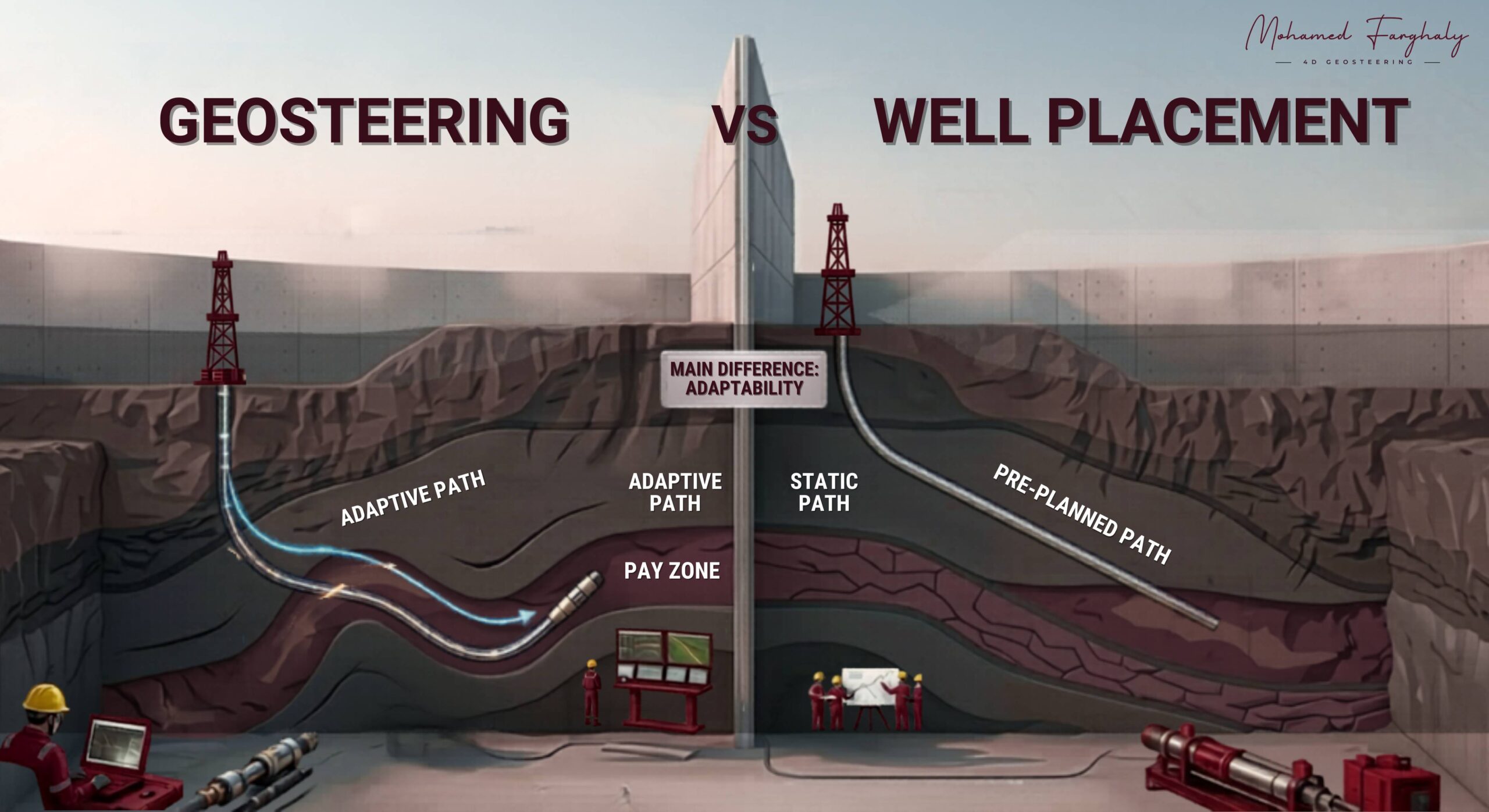
In well placement fundamentals, geologists and engineers distinguish between geosteering and well placement. These two connected stages define the drilling workflow. Primarily, well placement focuses on planning before drilling starts, while geosteering involves real-time adjustments during the drilling process.
Well Placement Strategy
Well placement defines the initial strategy for the well trajectory. It utilizes geological models, seismic interpretation, and reservoir understanding. Engineers design the planned trajectory to hit the most productive zones while avoiding risks like faults or water contacts.
Geosteering Execution
Conversely, geosteering represents the execution phase where teams actively refine the plan while drilling. Furthermore, specialists use real-time data from LWD and MWD tools to adjust the well path continuously. This ensures the well stays within the best part of the reservoir, especially in complex or thin formations.
| Aspect | Well Placement | Geosteering |
|---|---|---|
| Definition | Pre-drill planning of the well trajectory | Real-time adjustment of the well path while drilling |
| Timing | Before drilling begins | During drilling operations |
| Main Purpose | Design an optimal path to target the reservoir | Keep the well in the most productive zone |
| Data Used | Seismic data, static geological models, offset wells | LWD, MWD, real-time formation measurements |
| Flexibility | Limited changes after planning | Highly flexible and continuously updated |
| Decision Type | Predictive and strategic | Reactive and real-time |
| Main Value | Reduces drilling uncertainty and risk | Maximizes reservoir contact and production efficiency |