
Geosteering Master Protocol – 4DGeosteering
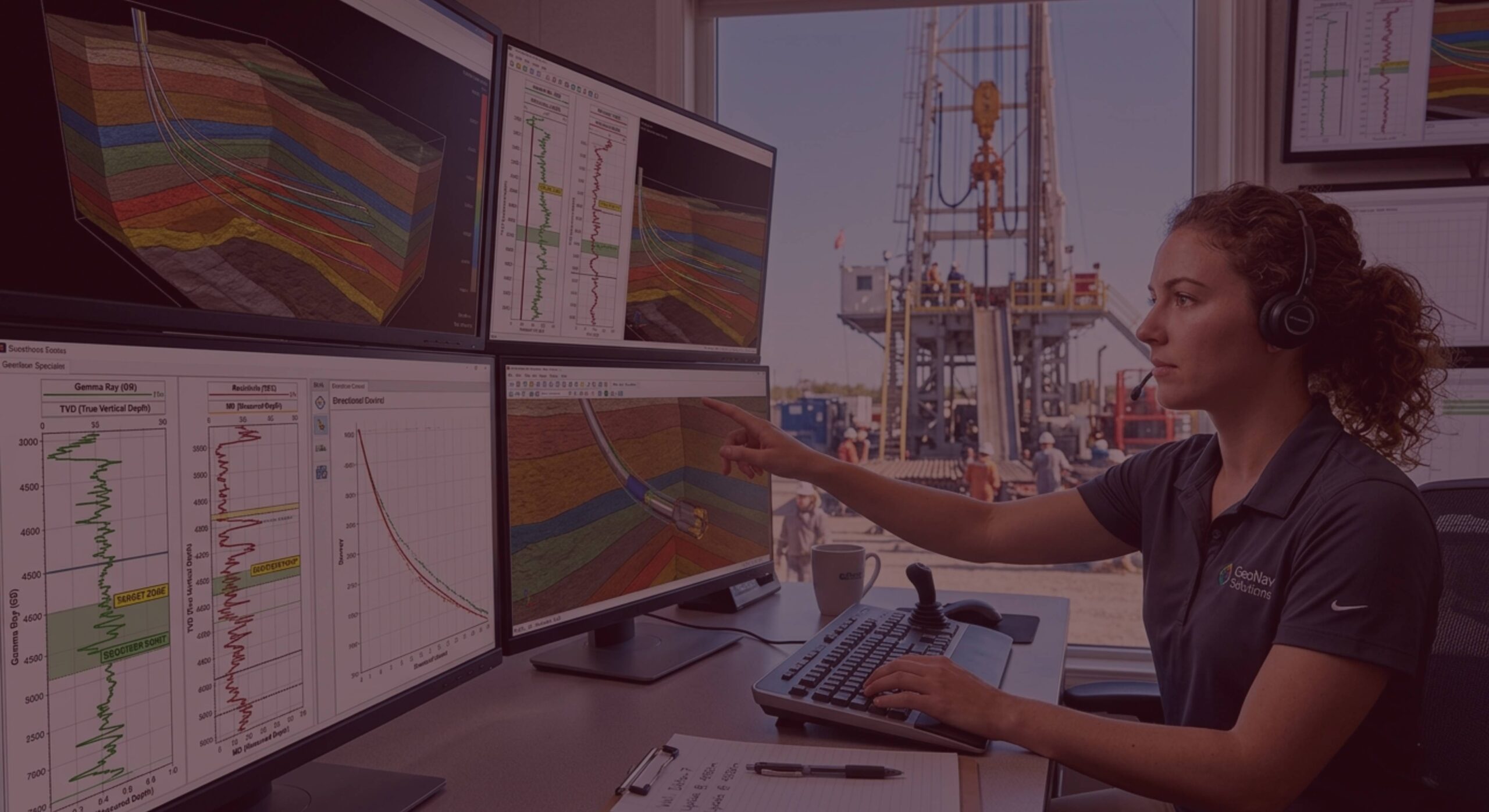
Welcome to the definitive operational roadmap for reservoir navigation. This framework bridges the gap between subsurface geology and active asset optimization, from foundational well placement to advanced real-time engineering.
📌 Explore the 9 operational phases below to access live technical deep-dives and track our curriculum development:
Operational Safety and Data Analysis Standards
1. Geosteering & Well Placement
⤷ Well Planning Workflow
⤷ Unexpected Reservoir Behavior
⤷ Data Gaps in Real-Time Operations
2. Drilling Techniques & Tools
⤷ Directional Drilling Fundamentals
⤷ Kickoff Point (KOP) Selection
⤷ Rotary Steerable Systems (RSS)
⤷Mud Motors and Deflection Tools
⤷ Top Drive System
⤷ Drill Bits
⤷ Bit Selection Optimization
⤷ Mud Circulation Systems
⤷ Drilling Hydraulics
⤷ Drilling Failures
3. Completion Systems
⤷ Well Architecture Components
⤷Production Systems
⤷ Cementing Tools
⤷ Cementing Operations
⤷ Advanced Completion Technologies
⤷ Smart Wells
⤷ Well Integrity and Longevity
4. Well Control and Safety
⤷ Gas Influx and Kick Management
⤷ Wellbore Pressure Management
⤷ Lost Circulation Management
⤷ Stuck Pipe Prevention
⤷ Directional Drilling Safety Risks
⤷ Formation Integrity Testing
⤷Operational Safety Practices (HSE)
5. Data, Imaging, and Analysis
⤷ Petrophysical Properties Analysis
⤷ Real-Time Data Systems
⤷ Wellbore Positioning & Surveying
⤷ Advanced Formation Imaging
⤷ Reservoir Mapping & Modeling
⤷ Advanced Seismic Applications
6. Fluids and Circulation Systems
⤷ Next-Generation Drilling Fluids
⤷ Hydraulic Fracturing Systems
⤷ Acidizing Operations
⤷ Well Stimulation Techniques
⤷ Thermal and Cooling Systems
⤷ Well Intervention Fluids
Advanced Management and Strategic Integration
7. Quality & Collaboration
⤷ Real-Time Decision Making in Operations
⤷ Quality Control and Assurance in Drilling
⤷ Data Security and Integrity in Oil & Gas Operations
⤷ Data Integration and Uncertainty Management
⤷ Effective Communication in Drilling Teams
⤷ Team Collaboration in Oil & Gas Operations
⤷ Operational Efficiency and Downtime Reduction
⤷ Human Performance in Rig Operations
8. Advanced Technologies
⤷ Digital Twins in Upstream Operations
⤷ Automation in Drilling Operations
⤷ Remote Operations Centers (ROC)
⤷ Advanced Rotary Steerable Systems (RSS)
⤷ Coring and Formation Sampling Technologies
⤷ Well Intervention and Logging Technologies
⤷ Formation Integrity and Testing Technologies
⤷ Mechanical Setting and Completion Tools
9. Case Studies in Geosteering
⤷ Surface Logging Tech in Geosteering
⤷ Machine Learning for Real-Time Lithology Prediction
⤷ Proactive Geosteering
⤷ Practice and Understanding of Sidetracking Horizontal Drilling in Old Wells (Part 1)
⤷ Study of Real-Time LWD Data Visual Interpretation and Geosteering Technology
⤷ Optimal Wells Placement to Maximize the Field Coverage Using Derivative-Free Optimization
⤷ Pilot Test of Horizontal Drilling and Completion Techniques
⤷ Key Surface Logging Technologies in Horizontal Well Geosteering
⤷ A New Method for Predicting Formation Lithology While Drilling at Horizontal Well Bit
⤷ Identification and Ranging of Reservoir Boundary in Horizontal Wells Geosteering
⤷ Artificial Intelligence in Oil and Gas Upstream
⤷ Geosteering – The Basics for Geophysicists
⤷ Real-Time AI Geosteering for Horizontal Well Trajectory Optimization
⤷ Ensemble-Based Well Log Interpretation
⤷ Geosteering Workflow
⤷ Reservoir Properties of Nahr Umr Formation
- Ultimately, this protocol serves as a comprehensive framework.
- Furthermore, applying these phases allows teams to bridge the gap between geology and engineering.
- Consequently, this integrated approach reduces technical uncertainty.
- Moreover, adhering to these standards ensures long-term operational success.