Measurement positioning
May 2, 2023· 2 minutes reading
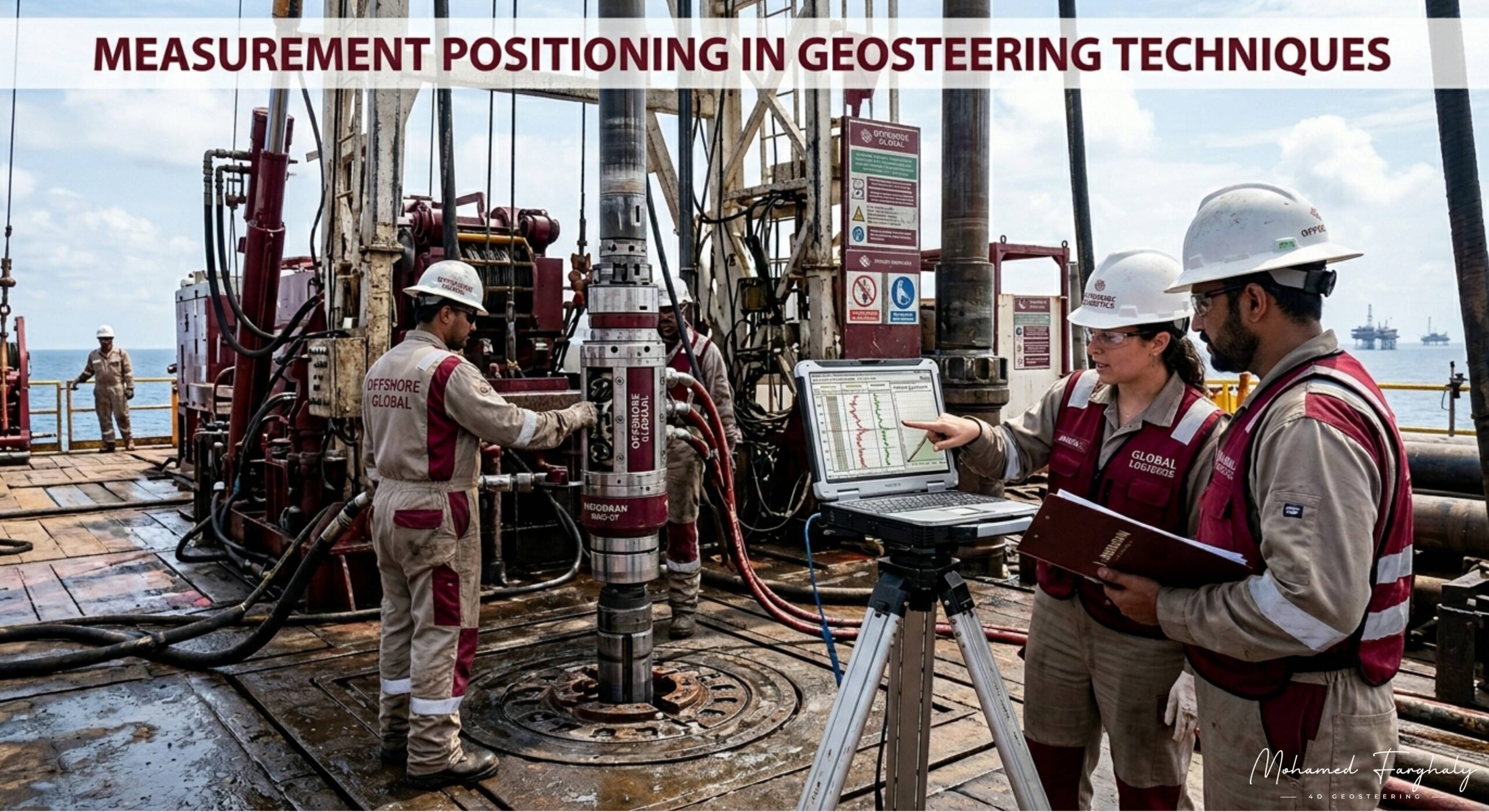
In geosteering, every decision depends on real-time data. But one important detail is often missed by beginners: the data does not always come from the drill bit position.
This is why measurement positioning in geosteering is so important.
During drilling, sensors inside the Bottom Hole Assembly, or BHA, usually sit behind the bit. This distance between the sensor and the bit is called sensor offset. If the geosteering team does not understand this offset, they may react too late to geological changes.
What Is Measurement Positioning?
Measurement positioning means knowing where each measurement was recorded inside the wellbore.
The drill bit cuts the formation first. Then the sensors record data after the bit has already moved ahead. This means the log response on the screen may represent a point behind the current bit position.
For accurate geosteering, the team must understand two positions:
- The current bit depth
- The sensor depth where the data was recorded
This helps geosteerers place the well more accurately inside the target reservoir.
Sensor Offset in LWD Tools
Different Logging While Drilling, or LWD, tools have different sensor locations. Gamma ray, resistivity, density, neutron, and other measurements may not come from the same point in the BHA.
For example, a gamma ray sensor may sit closer to the bit. A resistivity or density sensor may sit farther back. This means each curve can show the formation response at a different depth.
That is why geosteerers must know the sensor offset for every important curve. Without this information, the team may misunderstand the true geological position of the well.
What Is Measurement Lag?
Measurement lag happens when the sensor detects a geological change after the bit has already passed that point.
For example, if a gamma ray curve shows an increase in shale, the bit may already be several feet beyond that shale boundary. If the team reacts only when the curve changes, the correction may come too late.
This becomes critical in:
- Thin reservoirs
- Horizontal wells
- Fast drilling operations
- Complex formations
- Landing sections
In these situations, a few feet can make a big difference.
Why It Matters in Real-Time Geosteering
Measurement positioning helps the team connect real-time logs with the true position of the wellbore.
It affects important geosteering decisions, such as when to hold the well path, when to adjust inclination, and when to correct up or down.
Modern geosteering software can correct sensor offsets and display measurements closer to their true position. However, software does not replace geological interpretation.
Experienced geosteerers still need to check the data using formation dip, drilling direction, structural model, and reservoir geometry.