Hybrid systems
May 23, 2023· 3 minutes reading
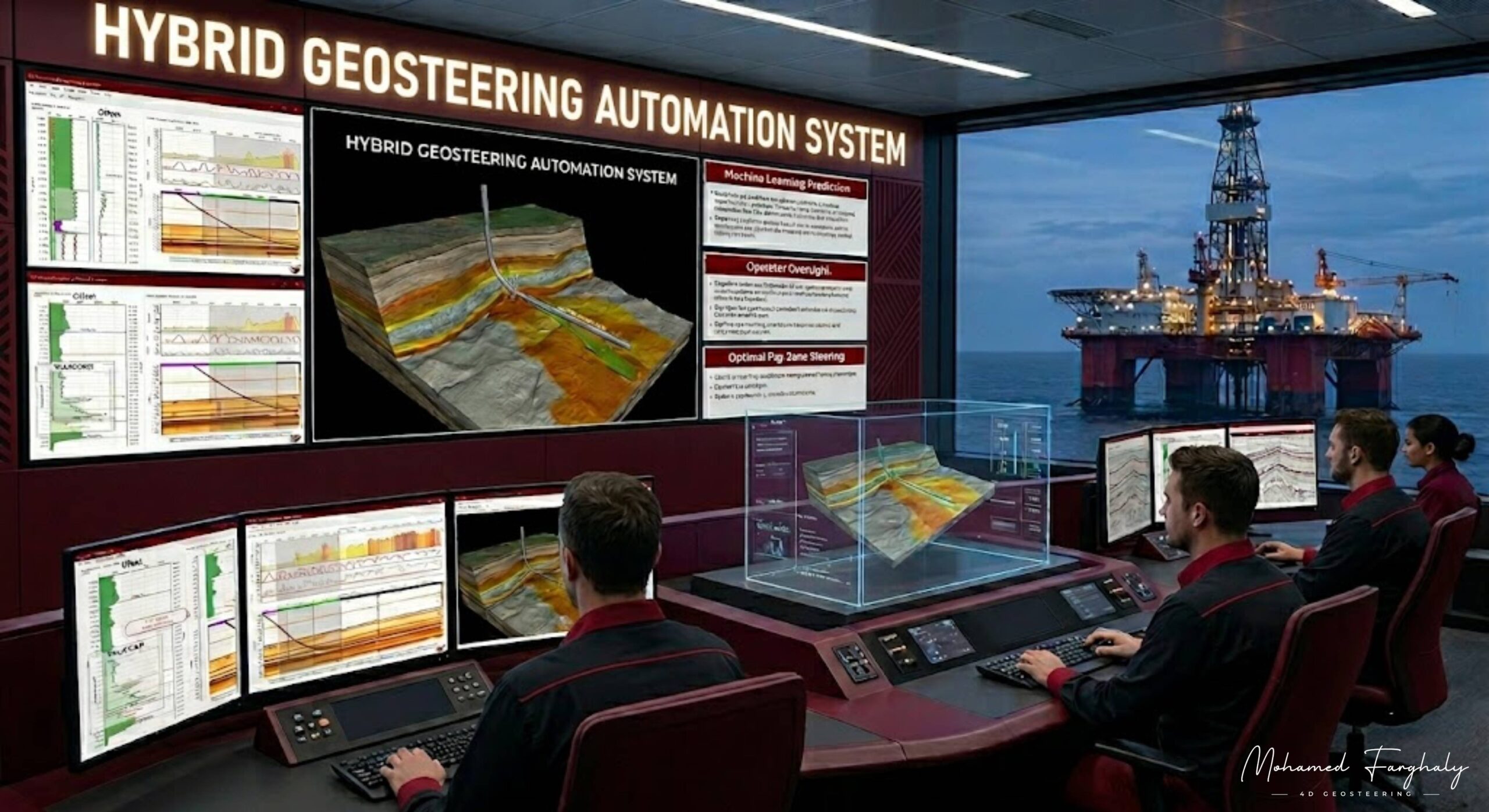
A hybrid geosteering system is an integrated workflow that combines automated algorithms with expert geological interpretation to guide drilling decisions. Instead of relying entirely on software or solely on human judgment, hybrid systems merge both strengths into a single adaptive decision-making process.
These systems typically connect:
- Real-time MWD/LWD data streams
- Automated subsurface modeling and updates
- Machine learning-based pattern recognition
- Human geologist interpretation and validation
- Continuous well trajectory optimization
This integration creates a dynamic system where models are constantly refined while drilling progresses.
How Hybrid Geosteering Systems Operate
During drilling operations, hybrid systems continuously analyze incoming logging data such as gamma ray, resistivity, density, and inclination measurements. Automated models quickly update the geological interpretation and predict formation boundaries ahead of the bit.
At the same time, geosteering engineers evaluate the output by considering:
- Geological consistency with offset wells
- Structural and stratigraphic trends
- Uncertainty ranges in model predictions
- Operational constraints such as drilling safety and tool limits
Instead of producing a single deterministic answer, the system presents multiple steering scenarios ranked by probability and geological plausibility. The final decision is made through collaboration between the system and the interpreter.
This approach is known as a human-in-the-loop geosteering workflow.
Advantages of Hybrid Systems in Geosteering
Hybrid systems are becoming essential in modern drilling environments due to their ability to improve both speed and reliability.
1) Faster Real-Time Decisions
Automated processing reduces interpretation time, allowing faster responses to changing subsurface conditions while drilling.
2) Higher Geological Confidence
Human validation ensures that automated predictions remain consistent with realistic geological models.
3) Improved Handling of Uncertainty
Hybrid workflows explicitly manage uncertainty, enabling engineers to evaluate risk before adjusting the well path.
4) Enhanced Reservoir Navigation
Continuous optimization improves the ability to stay within thin or complex reservoir zones, increasing production efficiency.
Core Technologies Behind Hybrid Geosteering
Modern hybrid systems are built on a combination of advanced digital tools, including:
- Machine learning algorithms for log pattern detection
- Ensemble methods (such as EnRML) for probabilistic modeling
- Real-time geosteering platforms with cloud-based processing
- Digital twin models of subsurface geology
- Automated trajectory optimization engines
These technologies work together to continuously refine the understanding of the subsurface while drilling is ongoing.
The Role of Geoscientists in Hybrid Systems
Rather than replacing geoscientists, hybrid geosteering systems redefine their role. The geologist becomes a real-time decision strategist, responsible for validating automated outputs, interpreting geological context, and guiding the final steering direction.
This shift allows experts to focus on high-level geological reasoning while automation handles repetitive computation and rapid data processing.
Future Direction of Geosteering Automation
Hybrid systems represent a major step toward intelligent drilling operations. As reservoirs become more complex and thin-bed targets more common, the need for integrated human–machine workflows continues to grow.
The future of geosteering is centered on collaborative intelligence, where automation enhances decision-making rather than replacing it, leading to more precise, efficient, and reliable well placement strategies.
🔗 Keywords
Well Correlation, Offset Wells, Formation Tops, Gamma Ray Correlation, Resistivity Trends, LWD Data, Structural Dip, Fault Detection, Stratigraphic Variation, Reservoir Modeling, 3D Geosteering Models, Well Placement Optimization, Geological Uncertainty.