Pre-Drill Planning Objectives in the Oil & Gas Industry
April 15, 2023 ·1 minute reading
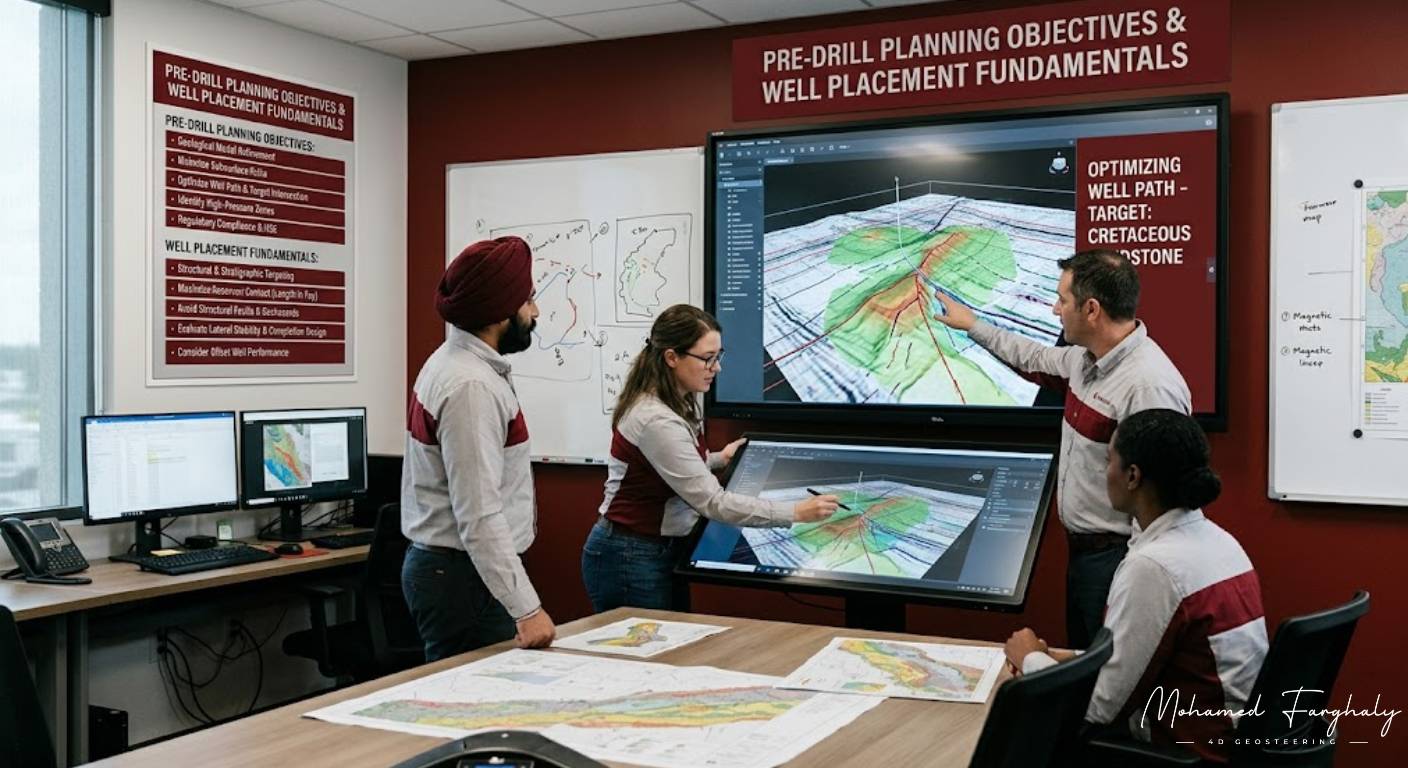
Before drilling begins, success is already being shaped. Pre-drill planning defines how efficiently, safely, and profitably a well will be executed—especially in today’s complex drilling environments.
1. Define Clear Well Objectives
Every well has a purpose—exploration, appraisal, or production. Planning focuses on identifying the target formation, expected hydrocarbons, and measurable goals like depth and reservoir exposure.
2. Optimize Well Placement
Designing the ideal trajectory is key to maximizing reservoir contact. By using seismic data, geological models, and offset wells, teams can position the well within the most productive zones.
3. Identify and Mitigate Risks
Anticipating issues such as abnormal pressure, unstable formations, or lost circulation helps reduce non-productive time. Planning includes preparing solutions before problems occur.
4. Develop an Efficient Drilling Program
This includes selecting the right BHA, drill bits, mud systems, and casing design to ensure smooth and safe operations from start to finish.
5. Ensure Safety and Compliance
Pre-drill planning integrates safety procedures, environmental considerations, and regulatory requirements to protect people, assets, and the environment.
6. Control Costs and Evaluate Economics
Accurate cost estimation and time planning ensure the well remains economically viable and aligned with project budgets.
7. Prepare for Real-Time Data Integration
Setting up MWD and LWD systems allows continuous monitoring and better decision-making during drilling, especially for geosteering operations.
8. Align the Team
Clear communication between geologists, engineers, and rig crews ensures everyone works toward the same objectives with minimal delays.