Reservoir Exposure Strategies: Maximizing Production Efficiency
April 20, 2023 ·2 minutes reading
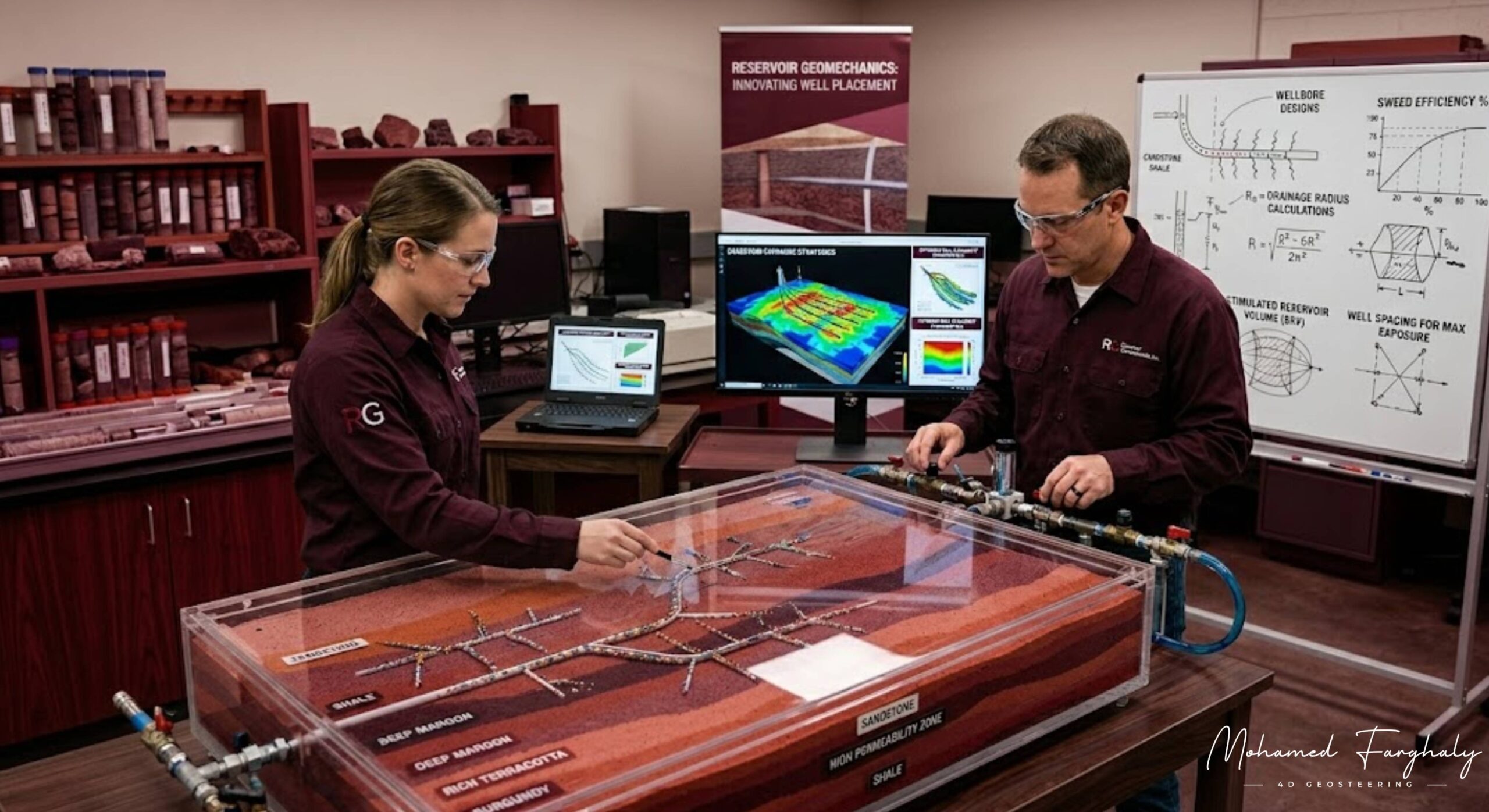
In geosteering, drilling a well represents only part of the equation; geoscientists and engineers focus on how much of the reservoir the wellbore effectively exposes. Reservoir exposure strategies prioritize maximizing contact with productive zones, ensuring that every meter drilled contributes to higher recovery and better well performance.
Landing and Sweet Spot Optimization
Specifically, reservoir exposure refers to the length and quality of the wellbore in the reservoir. The objective requires teams not just to enter the formation, but to remain within the most productive interval for as long as possible. This becomes especially critical in horizontal and high-angle wells, where extended contact with the reservoir directly enhances production rates. One key strategy involves landing optimization, where engineers place the wellbore at the ideal vertical position—near the top, middle, or base—based on fluid distribution and rock properties. For example, staying slightly above a water contact delays water breakthrough, while targeting zones with higher porosity improves flow efficiency.
Navigating Structural Complexity
Additionally, sweet spot tracking serves as an important approach. Reservoirs rarely remain uniform; they contain variations in lithology, porosity, and permeability. Geosteering teams use real-time data from Logging-While-Drilling (LWD) tools to identify and follow the most productive layers. By continuously adjusting the trajectory, the well remains in the highest-quality rock. Structural navigation also plays a critical role. Formations often dip, fault, or change laterally. Geosteering ensures alignment with the structure, maintaining consistent reservoir contact despite geological complexity.
Strategies for Thin Reservoirs
In thin reservoirs, precision drilling becomes the dominant strategy. With only a small vertical window available, even minor deviations lead to exiting the target zone. This requires high-resolution measurements, accurate interpretation, and quick decision-making to keep the well on track. Furthermore, engineers aim to maximize lateral length within the reservoir. The longer the well stays in the productive zone, the greater the exposure and potential production. However, operators must balance this with operational constraints such as torque, drag, and wellbore stability.
The Role of Real-Time Data
Real-time decision-making sits at the heart of all these strategies. By integrating geological models with continuous LWD and Measurement-While-Drilling (MWD) data, geosteering teams adapt instantly to subsurface changes. This dynamic approach transforms drilling from a fixed plan into a responsive process.
In conclusion, reservoir exposure strategies ensure that well placement delivers real value. Instead of simply reaching the reservoir, the focus shifts to optimizing contact, improving recovery, and making every section of the well count.