Directional Drilling Evolution: Transforming Subsurface Access
April 27, 2023 ·2 minutes reading
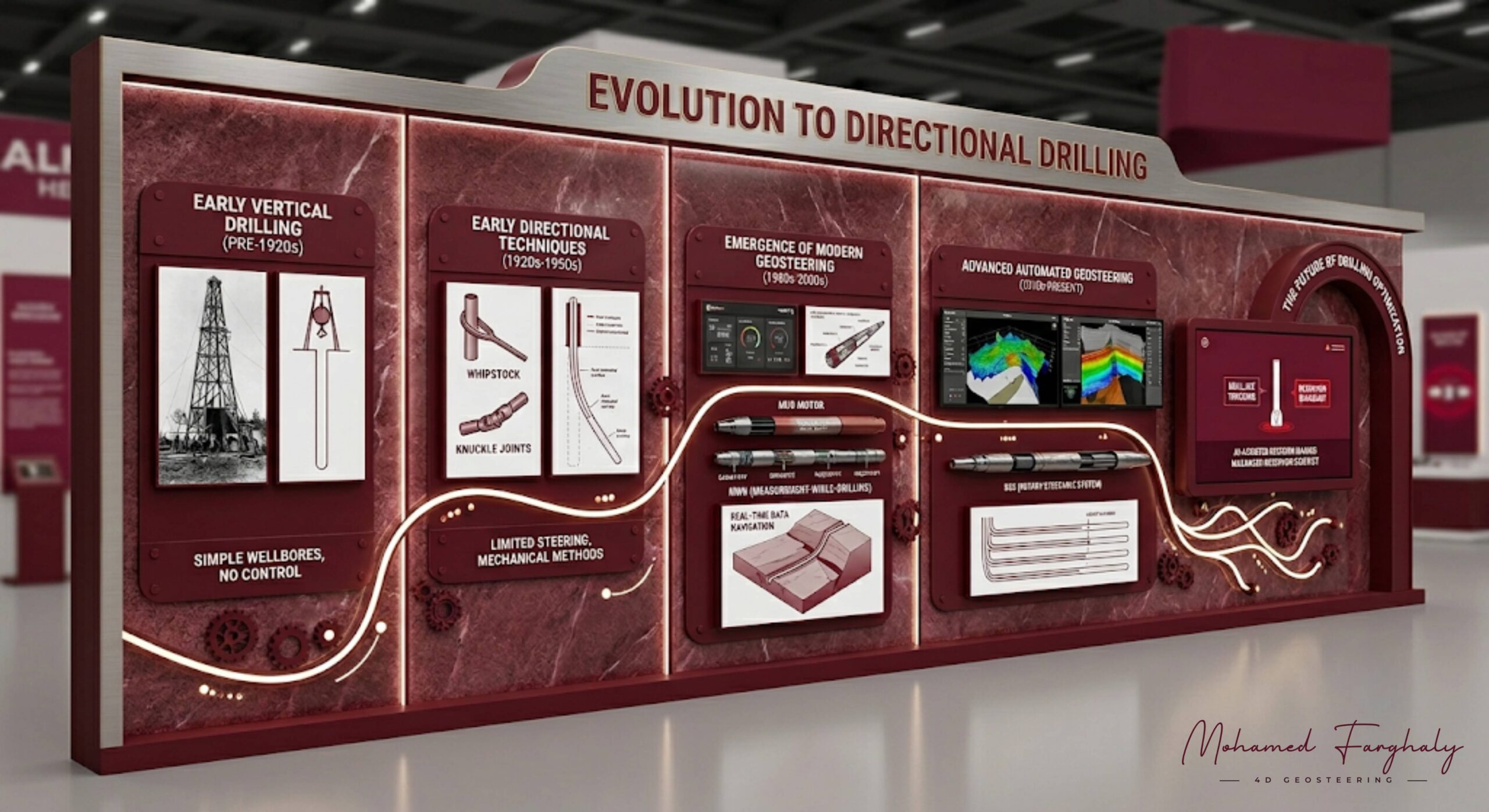
The oil and gas industry historically relied on vertical drilling, but modern operations now leverage directional drilling to overcome subsurface challenges. For many years, operators drilled wells straight down because it offered the simplest approach. However, as reservoirs became more complex and energy demand increased, they faced major limitations with vertical wells. In many cases, geographical constraints—such as mountains, cities, or environmentally sensitive areas—made drilling directly above the reservoir impossible.
The Breakthrough of Directional Drilling
This challenge led to the development of this steerable technology, which represents one of the most important advancements in drilling history. It allowed engineers to guide the wellbore away from vertical and reach targets located far from the drilling rig. Initially, teams achieved only small deviations; however, even minor control represented a massive technological breakthrough during the early stages of development.
Accelerating Technological Innovation
As technology improved, the industry realized that steerable wells offered far more than just obstacle avoidance. This approach improved reservoir access, increased hydrocarbon recovery, and reduced the number of surface locations required. Several technologies accelerated this evolution:
- Downhole Mud Motors: Engineers used these to build and control angles more effectively.
- Measurement While Drilling (MWD): These tools provided real-time directional information, helping teams monitor trajectories while operations remained in progress.
- Logging While Drilling (LWD): These tools added geological data, allowing teams to interpret formations in real time.
From Trajectory Control to Geosteering
These innovations created the foundation for modern geosteering. Once engineers gained the ability to guide wells accurately underground, they focused on keeping the wellbore within the most productive parts of the reservoir. This transformed simple trajectory control into intelligent well placement supported by geology and data interpretation.
Modern Impact on Reservoir Development
Today, this advanced methodology enables horizontal wells, multilateral wells, and extended reach drilling. Ultimately, these capabilities maximize reservoir contact and improve field performance. The evolution of this technique did not just change how teams drill; it completely transformed how the industry develops reservoirs. For more information on industry standards, you can visit the Society of Petroleum Engineers (SPE).