AI-assisted geosteering
May 1, 2023 ·3 minutes reading
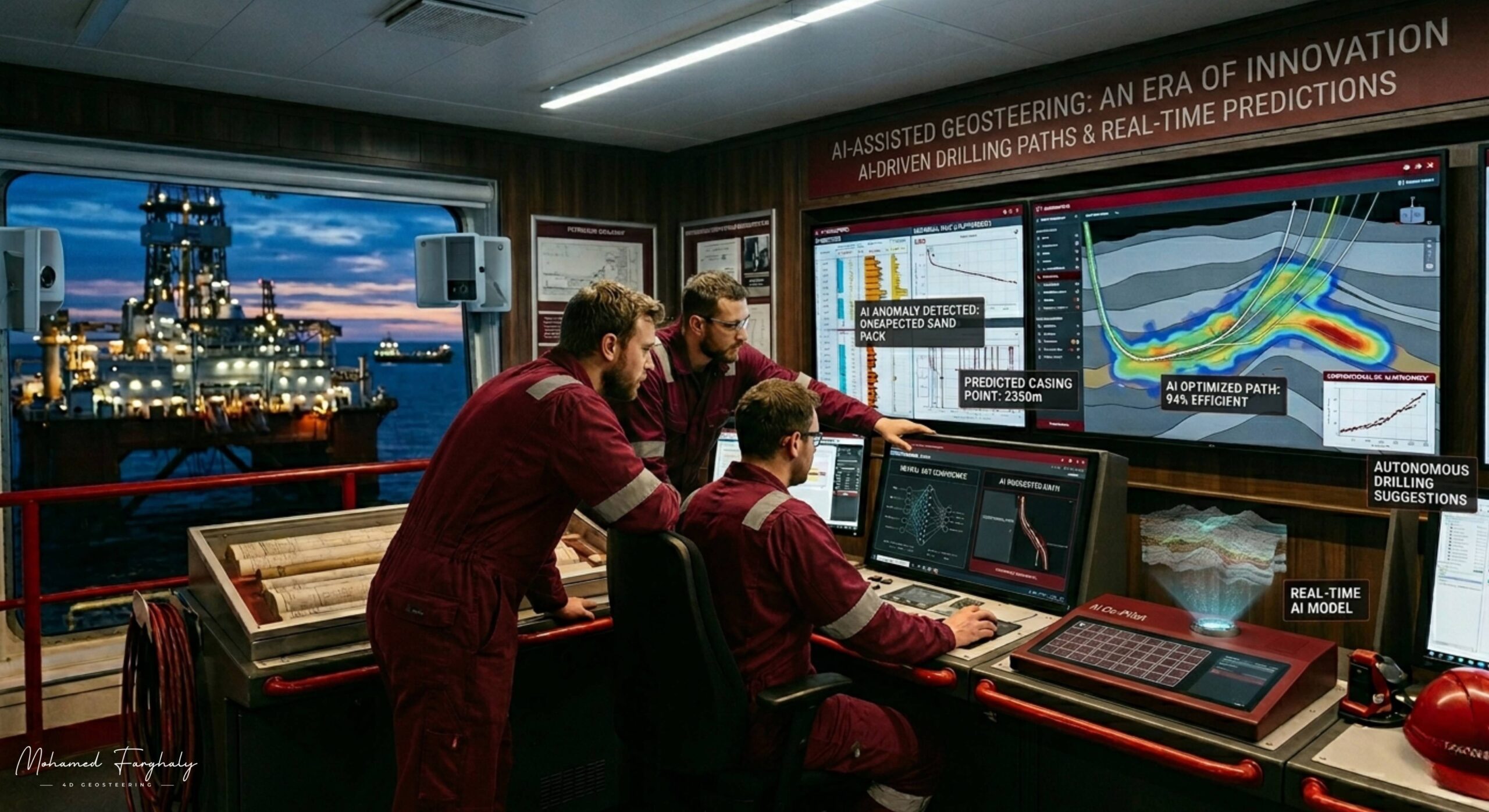
What if a drilling team could predict geological changes before the drill bit reached them?
This is the main idea behind AI-assisted geosteering. Today, drilling teams receive huge amounts of real-time data from MWD, LWD, mud logging, drilling parameters, formation evaluation tools, and geological models.
The challenge is not only collecting this data. The real challenge is understanding it fast enough to make accurate steering decisions while drilling continues.
What Is AI-Assisted Geosteering?
AI-assisted geosteering uses Artificial Intelligence and machine learning to support real-time well placement decisions.
It helps geologists, geosteerers, and drilling engineers analyze data faster. It also helps them detect geological patterns earlier and reduce uncertainty during drilling operations.
AI does not replace human experts. It works as a support tool that helps teams make faster and more confident decisions.
Why AI Is Important in Geosteering
Modern wells generate large volumes of data every second. In complex reservoirs, even a small steering decision can affect well performance.
Traditional geosteering depends heavily on manual interpretation and continuous monitoring. This can become difficult when several data streams arrive at the same time.
AI can process real-time drilling data quickly. It can compare current measurements with offset wells, geological models, and previous drilling results.
This helps the team identify formation changes, unexpected drilling behavior, and possible reservoir boundaries earlier.
Better Well Placement with Predictive Geosteering
Predictive geosteering helps drilling teams look ahead instead of only reacting to current data.
AI-assisted systems can forecast possible geological scenarios along the planned well path. This supports better trajectory decisions and improves well placement accuracy.
In thin reservoirs and horizontal wells, this can be especially valuable. Better well placement can increase reservoir contact, reduce unnecessary corrections, and improve drilling efficiency.
AI Improves Team Collaboration
AI-assisted geosteering also helps teams work more consistently across large drilling campaigns.
It can reduce repetitive manual tasks and support faster communication between geologists, drilling engineers, and real-time operation centers.
As digital drilling continues to grow, AI is becoming more connected with 3D geological models, cloud platforms, and automated drilling optimization systems.
Human Expertise Remains Essential
AI can analyze data quickly, but human judgment is still critical.
Geologists and geosteerers understand the regional geology, structural setting, reservoir behavior, and operational risks. These skills remain essential for successful geosteering.
The best results come when AI supports experienced professionals. Together, they can make smarter, faster, and more accurate drilling decisions in complex reservoirs.