Real-time operation centers
April 30, 2023 ·2 minutes reading
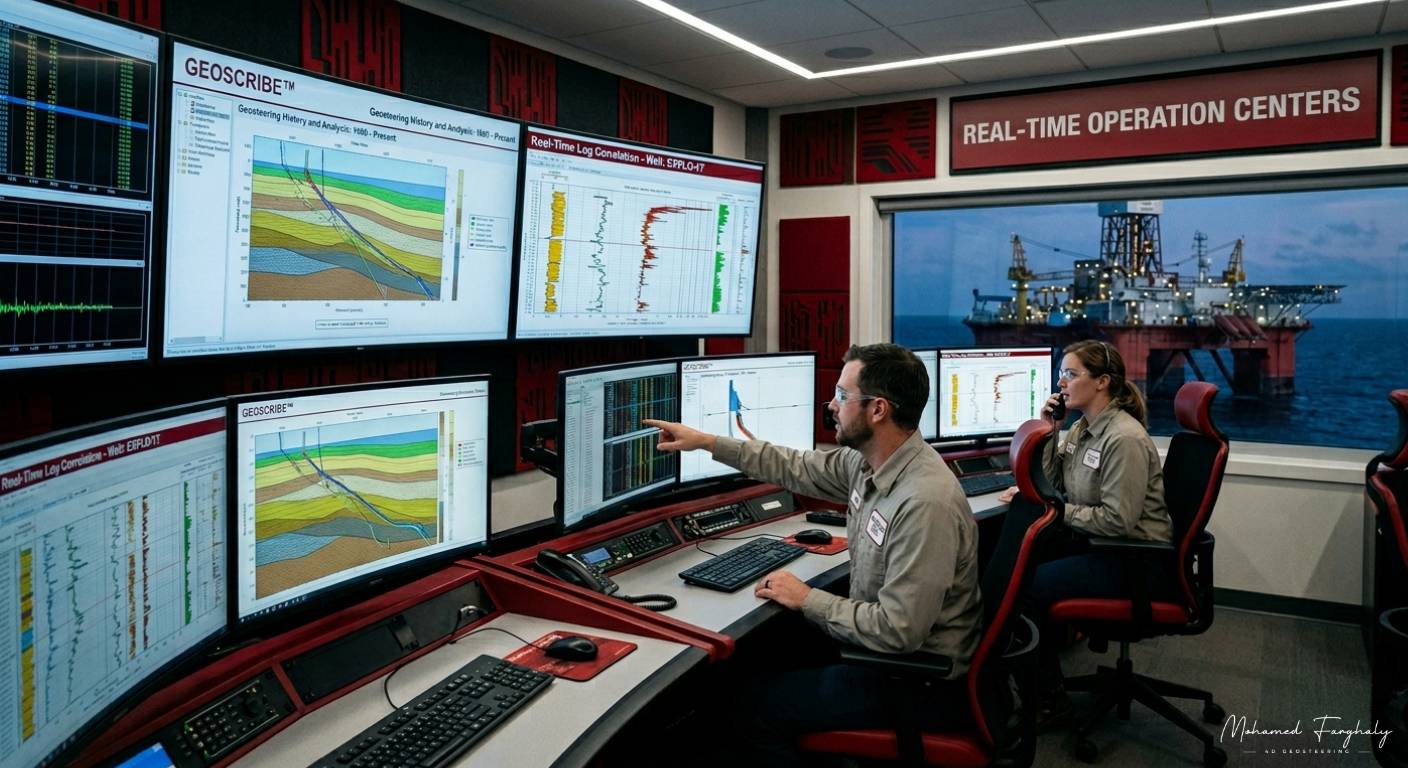
Real-Time Operation Centers, also known as RTOCs, have changed the way drilling teams monitor and manage wells. In modern drilling, the rig generates large amounts of data every second. This includes directional data, drilling parameters, mud logging data, gamma ray, resistivity, and other LWD measurements.
In the past, teams often received this information late. Decisions took longer because communication moved between the rig, office, and technical teams. Today, Real-Time Operation Centers allow engineers and geoscientists to monitor drilling operations as they happen.
What Is a Real-Time Operation Center?
A Real-Time Operation Center is a centralized environment where specialists follow live drilling data from the rig. Geologists, geosteerers, drilling engineers, petrophysicists, and directional drillers can work together in one connected workflow.
This helps the team understand the well condition faster and support better decisions while drilling continues.
Why RTOCs Are Important for Geosteering
Real-time monitoring is very important in horizontal drilling and geosteering. In thin reservoirs, a small change in well trajectory can move the well out of the target zone.
RTOCs help geosteerers compare the planned well path with live geological responses. They can track gamma ray trends, resistivity changes, formation behavior, inclination, and azimuth. This helps the team decide whether to build angle, drop angle, hold angle, or adjust the well path.
The Role of MWD and LWD Data
MWD provides real-time directional data, such as inclination and azimuth. LWD provides formation data, such as gamma ray, resistivity, density, and neutron logs.
When teams combine MWD and LWD data, they get a clearer picture of the subsurface. This improves real-time interpretation and helps keep the well inside the best reservoir interval.
Benefits of Real-Time Operation Centers
Real-Time Operation Centers help drilling teams make faster decisions, reduce drilling risk, improve well placement, and reduce non-productive time. They also improve communication between the rig and office teams.
Modern RTOCs may also use 3D visualization, live geological models, dashboards, and predictive monitoring tools. These technologies help teams detect problems early and improve drilling performance.
Real-time operation centers are now essential for modern drilling and geosteering. They connect people, data, and technology in one live workflow. By using real-time MWD and LWD data, teams can make better decisions, reduce risk, and improve reservoir understanding.