Algorithm-based steering
May 22, 2023· 2 minutes reading
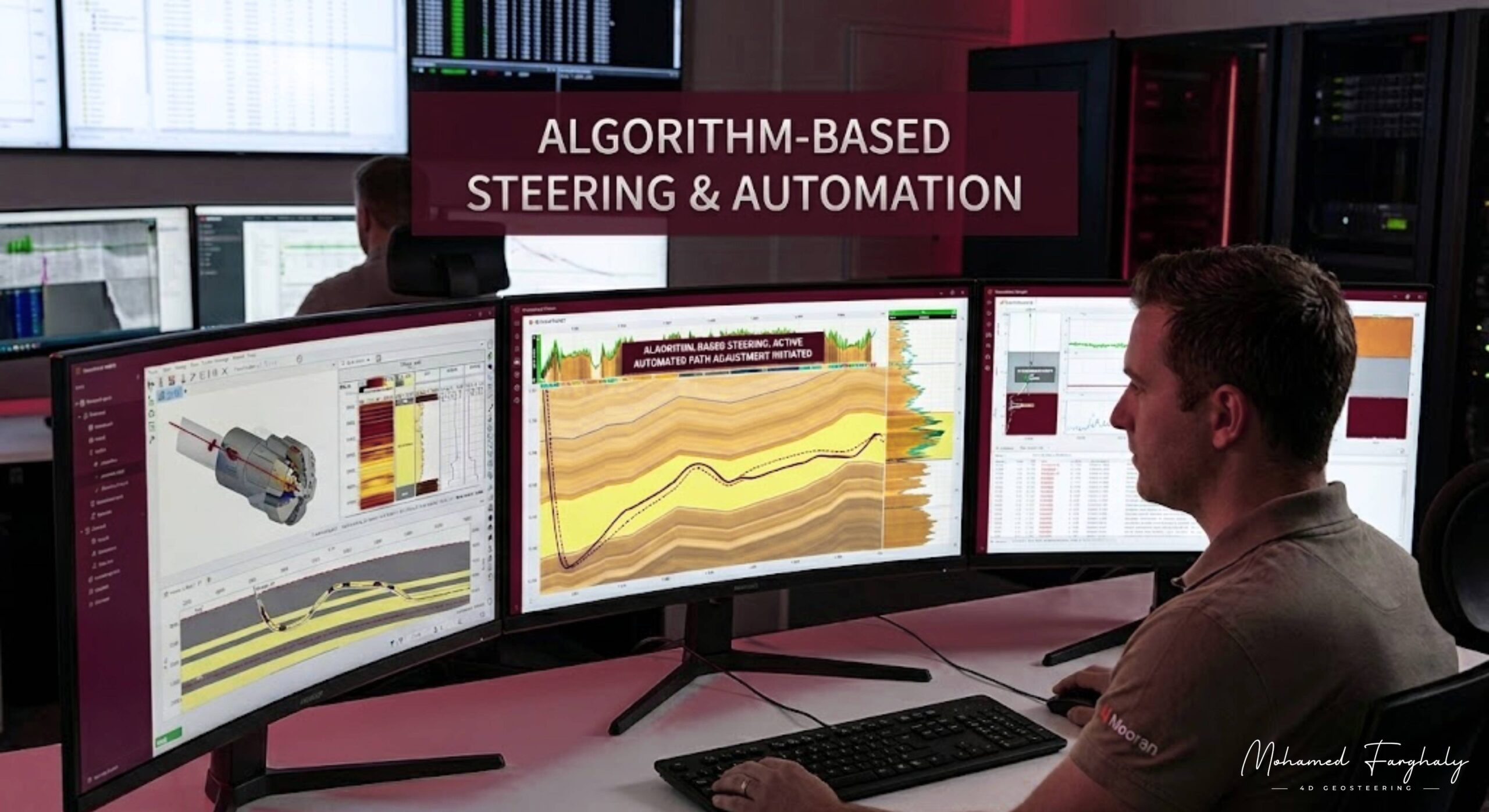
“What if the well could steer itself… while still thinking like a geologist?”
This question is no longer science fiction in the oil and gas industry. It reflects the core idea behind algorithm-based steering in geosteering automation. Real-time data, mathematical models, and decision logic work together to guide the wellbore with minimal human intervention.
In modern geosteering workflows, staying within the target reservoir zone is critical. It helps maximize production and reduce drilling risks. Traditionally, geosteering depended heavily on human interpretation of LWD/MWD data, real-time correlation, and geological intuition. While effective, this approach can be slow, subjective, and sensitive to uncertainty.
How Algorithm-Based Steering Works
This is where algorithm-based steering systems transform the game. These systems use predefined decision rules, statistical models, and machine learning algorithms. They evaluate incoming real-time data and recommend or execute steering actions automatically. Instead of waiting for manual interpretation, the system updates its understanding of the well position continuously.
At the core of this automation is a feedback loop. Measurement-while-drilling data, such as gamma ray, resistivity, and inclination, enters the system in real time. Algorithms compare this data against a pre-built geological model. Then, the system calculates the probability of staying within the reservoir. It also determines the optimal next drilling direction.
This allows for faster reactions to boundary approaches and thin-bed transitions. As a result, drilling teams can respond earlier and improve well placement accuracy.
Why It Matters
Advanced implementations also include probabilistic steering logic. In this approach, multiple geological scenarios are evaluated at the same time. Rather than relying on a single “best guess,” the algorithm ranks possible outcomes. Then, it selects the steering decision that maximizes reservoir exposure and reduces uncertainty.
This is especially powerful in heterogeneous and structurally complex reservoirs. In these conditions, manual interpretation can struggle to keep up with rapid changes.
Another key advantage is consistency. Unlike human-driven decisions, algorithm-based steering applies the same logic under all conditions. This reduces variability between different geosteering teams and shifts. It also improves operational efficiency, drilling response time, and well placement accuracy.
As digital oilfields evolve, algorithm-based steering is becoming a core pillar of automated geosteering systems. It bridges the gap between human expertise and machine precision.
🔗 Keywords
Well Correlation, Offset Wells, Formation Tops, Gamma Ray Correlation, Resistivity Trends, LWD Data, Structural Dip, Fault Detection, Stratigraphic Variation, Reservoir Modeling, 3D Geosteering Models, Well Placement Optimization, Geological Uncertainty.