Data dependency
May 24, 2023· 1 minute reading
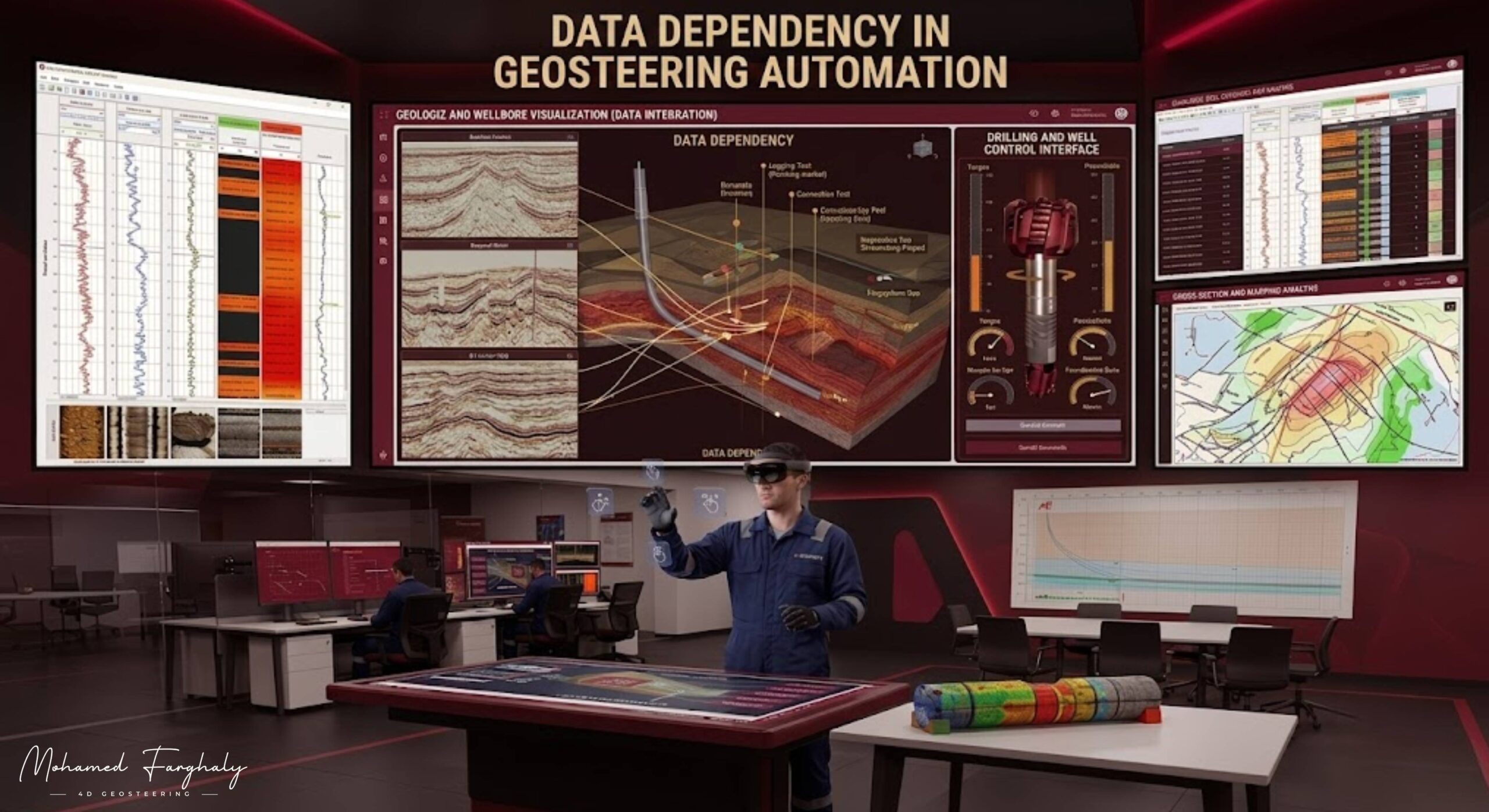
Data dependency is one of the most important factors in geosteering automation. Even advanced algorithms cannot make accurate steering decisions if the incoming data is incomplete, delayed, or unreliable.
Automated geosteering systems depend on real-time inputs from Logging While Drilling (LWD) tools, Measurement While Drilling (MWD) data, geological models, and drilling parameters. Together, these sources help the system understand the well’s position inside the reservoir.
Why Reliable Data Matters
Because automation relies on live data, small errors can create large drilling problems. For example, inaccurate resistivity, gamma ray, or directional survey readings may cause the system to misread formation boundaries. As a result, the well may move away from the target zone.
In addition, delayed telemetry can reduce the value of real-time decision-making. If the system receives data too late, steering recommendations may no longer match the actual drilling situation.
Reducing Data Risk
Modern geosteering platforms reduce this risk through data validation, quality control, and integration. Instead of depending on one measurement, they combine several data sources to build a clearer subsurface picture.
This approach improves confidence in steering decisions. Moreover, it helps engineers detect errors before they affect well placement.
As AI-assisted geosteering and automated workflows continue to grow, reliable data becomes even more important. High-quality real-time measurements, accurate geological models, and dependable telemetry remain the foundation of successful well placement.
🔗 Keywords
Well Correlation, Offset Wells, Formation Tops, Gamma Ray Correlation, Resistivity Trends, LWD Data, Structural Dip, Fault Detection, Stratigraphic Variation, Reservoir Modeling, 3D Geosteering Models, Well Placement Optimization, Geological Uncertainty.