Inclination Control in Geosteering
June 3, 2023· 2 minutes reading
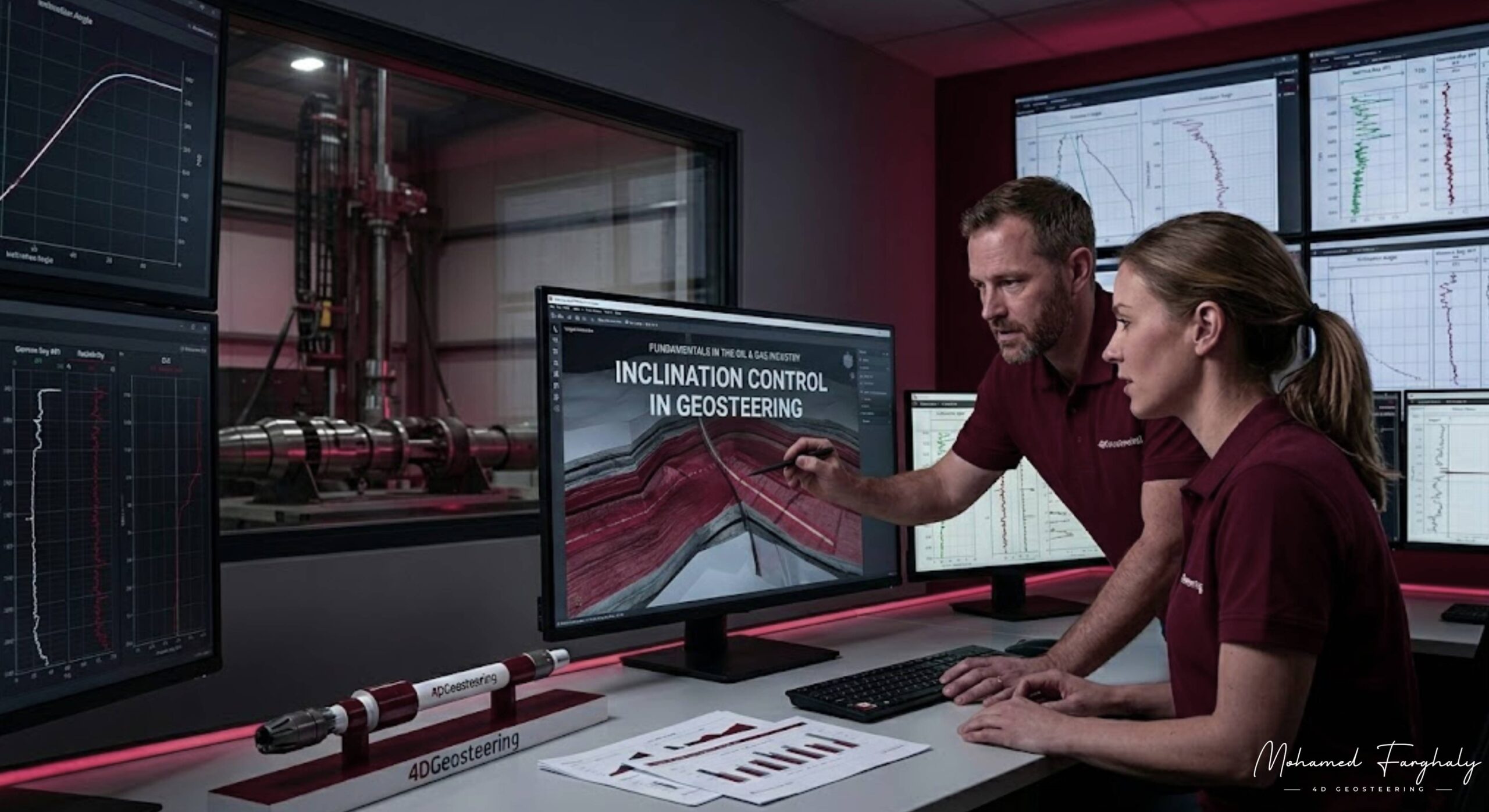
In the oil and gas industry, the success of a well relies on precision. Geosteering—the practice of adjusting the wellbore trajectory based on real-time geological feedback—is a vital skill for modern petroleum professionals. At the heart of this process is inclination control, which ensures the drill bit stays within the productive reservoir “sweet spot.”
Why Inclination Control is Essential
Effective inclination control directly impacts reservoir contact. In thin shale plays or complex thin-bedded reservoirs, the pay zone can be narrow. Without precise control, the wellbore may inadvertently exit the productive formation and drill into non-productive basement rock.
By maintaining the correct inclination, you optimize the Net-to-Gross ratio of the well, ensuring the lateral section remains in the optimal geological window to maximize production.
The Mechanics of Wellbore Directional Control
Directional drillers manage the well path using sophisticated Bottom-Hole Assemblies (BHA). Controlling inclination requires a balance of mechanical force and geological interpretation.
The Build-Hold-Drop Profile
Most wells follow a standard geometric profile that requires specific inclination management:
- Build: Increasing the angle from the vertical to the horizontal plane.
- Hold: Maintaining a constant angle to track along the reservoir bedding.
- Drop: Decreasing the angle when required by the target path.
Steering Technologies
- Mud Motors (Bent Subs): These use an offset angle in the motor housing. By “sliding” the drill string, the driller creates a steering force to change the inclination.
- Rotary Steerable Systems (RSS): The industry standard for geosteering. RSS allows continuous rotation of the drill string while internal pads exert force on the borehole wall. This improves hole cleaning and reduces the risk of getting stuck.
The Geosteering Feedback Loop
Inclination control is most effective when integrated into a continuous feedback loop:
- Data Collection: MWD (Measurement-While-Drilling) tools capture inclination, while LWD (Logging-While-Drilling) sensors track rock boundaries.
- Interpretation: The geosteerer compares real-time LWD logs against the pre-drilled geological model.
- Adjustment: If the bit approaches a boundary, the geosteerer updates the inclination target.
- Execution: The directional driller steers the BHA to nudge the path back into the pay zone.
Overcoming Common Challenges
Mastering inclination control requires addressing several operational hurdles:
- Formation Anisotropy: Variations in rock hardness can cause the bit to “walk,” requiring micro-corrections.
- Borehole Tortuosity: Excessive steering can create “doglegs” that complicate casing installation.
- Data Latency: Experienced geosteerers must account for signal delays to avoid “over-steering” or over-correcting.
🔗 Keywords
Drilling Rig, Drilling Mud, MWD, LWD, Directional Drilling, Geosteering, Well Placement, Oil Reservoir, Surface Logging, Borehole Imaging, Electromagnetic Resistivity LWD Tool, Bottom Hole Assembly, Study of Real-Time LWD Data, LWD Interpretation, Borehole Image Log, Dip Calculation Methods, Shale Gas Sweet Spot, Accurate Reservoir Boundary Detection, Machine Learning, Artificial Intelligence, The Future of Automated Geosteering, Ensemble-Based Well Log Interpretation, Digital Twins in Drilling, Remote Operations Centers