Rig Types and Components
May 10, 2023· 2 minutes reading
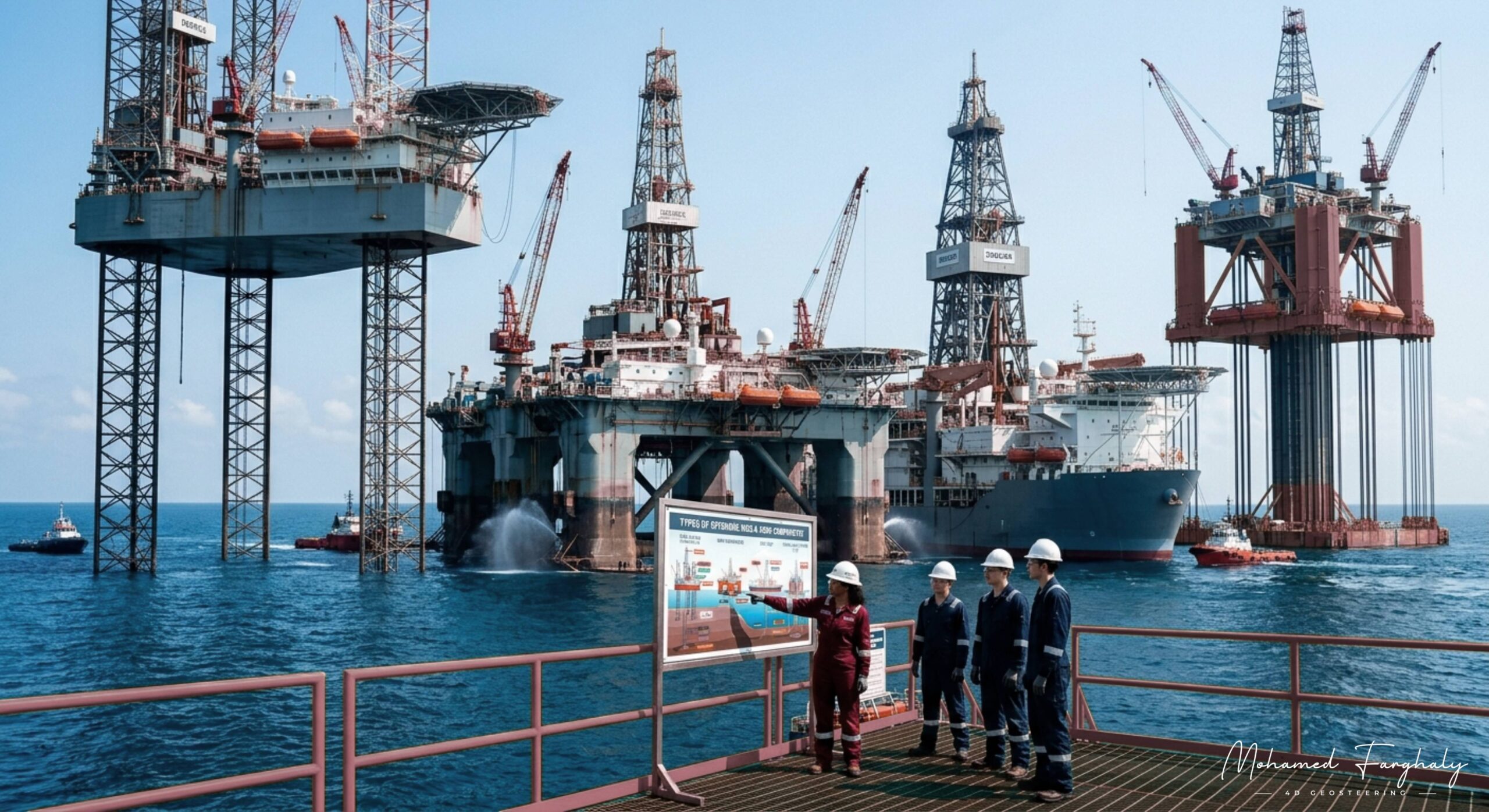
Understanding rig types and components is essential for anyone working in drilling, directional drilling, well placement, or geosteering. A drilling rig is not just a tall steel structure. Instead, it is a complete system that combines mechanical power, surface equipment, downhole tools, and real-time data to drill wells safely and efficiently.
Main Types of Drilling Rigs
Drilling rigs are usually classified by where they operate. Land rigs work onshore and can range from small mobile units to large rigs designed for deep and complex wells. They are commonly used in oil reservoirs, gas fields, and shale gas developments.
Offshore rigs operate in marine environments. Jack-up rigs work in shallow water, while semi-submersible rigs handle deeper and rougher conditions. Drillships are used for ultra-deepwater drilling because they can move easily and operate in very deep areas. Therefore, the choice of rig depends on water depth, well target, formation complexity, and drilling objectives.
Key Rig Components
The main rig types and components work together to support the full drilling process. Each part has a specific role in drilling, safety, circulation, and real-time data collection.
- Derrick or Mast: Supports vertical movement and allows the crew to handle drill pipe safely.
- Hoisting System: Lifts and lowers heavy equipment, including the drill string and Bottom Hole Assembly.
- Rotary System: Provides the rotation needed to drill the well. In modern rigs, the top drive often controls this process.
- Bottom Hole Assembly: Includes the drill bit, stabilizers, motors, and measurement tools used near the wellbore.
- Circulation System: Pumps drilling mud down the drill string and back to the surface.
- Drilling Mud System: Cools the bit, removes cuttings, controls pressure, and helps protect the wellbore.
- Surface Logging Equipment: Monitors mud returns and provides useful information about drilled formations.
- MWD and LWD Tools: Collect directional and formation data while drilling, supporting better geosteering decisions.
Modern Rig Technology
Modern drilling rigs also use advanced measurement systems. MWD tools measure drilling direction and toolface data, while LWD tools record formation properties while drilling. As a result, engineers can study real-time LWD data and improve LWD interpretation during active operations.
These technologies support better geosteering decisions. For example, resistivity tools, borehole imaging, and image logs help detect reservoir boundaries and improve formation evaluation. This becomes especially important when drilling horizontal wells or targeting thin productive zones.
Why Rig Systems Matter in Geosteering
In geosteering, the drilling rig must deliver accurate control and reliable data. Good rig types and components improve well placement, reduce drilling risk, and help keep the well inside the target reservoir. Also, remote operations centers, artificial intelligence, and digital twins now make rig operations smarter and more connected.
Because of these developments, drilling rigs are becoming more than mechanical systems. They are advanced platforms that combine equipment, people, and real-time data to drill better wells.
🔗 Keywords
Drilling Rig, Drilling Mud, MWD, LWD, Directional Drilling, Geosteering, Well Placement, Oil Reservoir, Surface Logging, Borehole Imaging, Electromagnetic Resistivity LWD Tool, Bottom Hole Assembly, Study of Real-Time LWD Data, LWD Interpretation, Borehole Image Log, Dip Calculation Methods, Shale Gas Sweet Spot, Accurate Reservoir Boundary Detection, Machine Learning, Artificial Intelligence, The Future of Automated Geosteering, Ensemble-Based Well Log Interpretation, Digital Twins in Drilling, Remote Operations Centers