Digital Twins in Drilling
May 30, 2023· 2 minutes reading
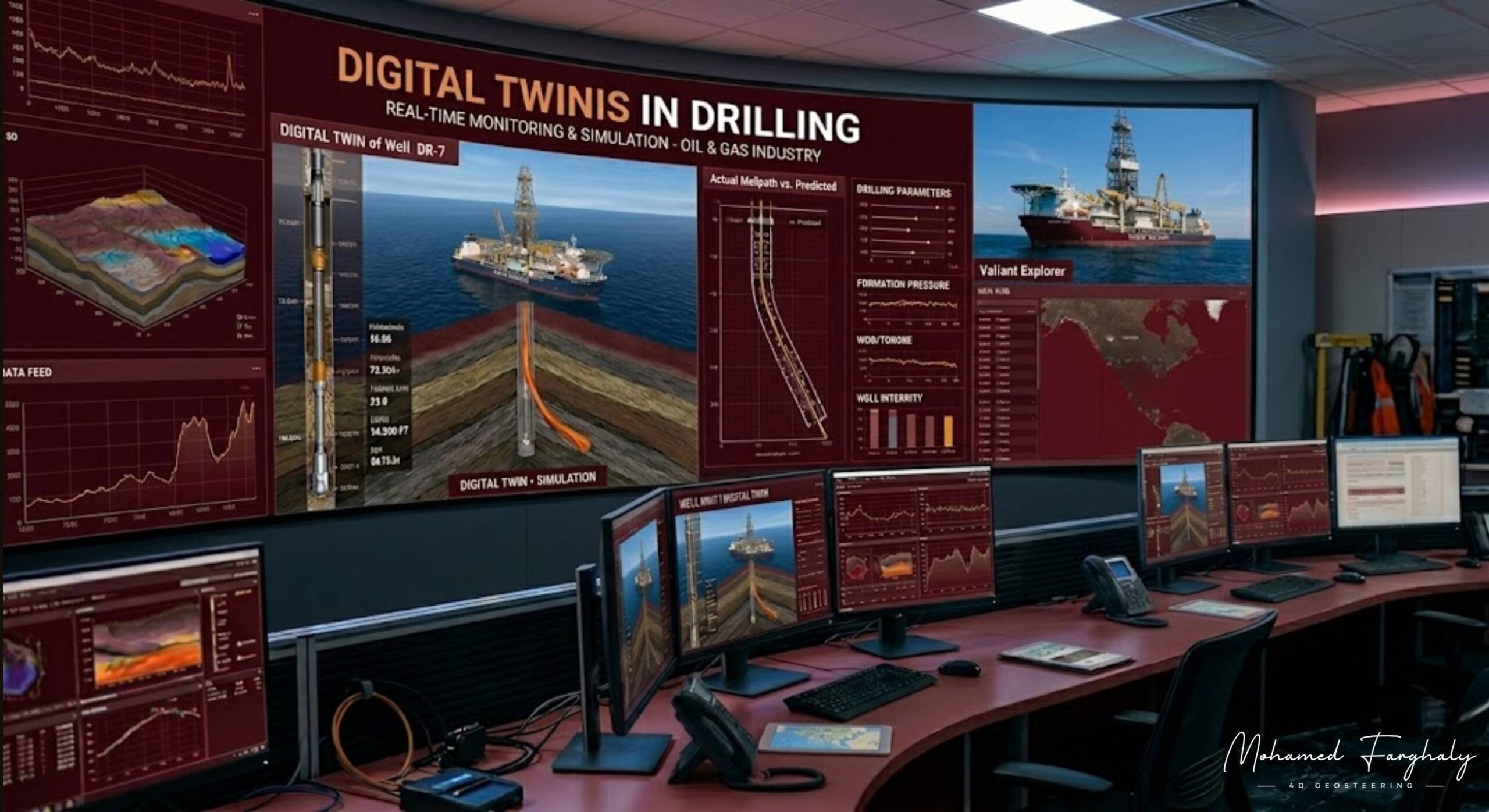
Digital twins in drilling help geosteering teams test decisions before applying them in the well. They create a live virtual model of the drilling operation. As a result, teams can predict risks, improve well placement, and make faster real-time decisions.
What Are Digital Twins in Drilling?
A digital twin is a real-time digital copy of the well. It updates continuously using LWD, MWD, and surface drilling data.
In geosteering, this model helps teams compare the planned well path with the actual well position. Therefore, geosteerers can detect changes earlier and respond with more confidence.
How Virtual Well Models Support Geosteering
The main value of a digital twin is prediction. Instead of reacting only after a problem appears, teams can test possible drilling scenarios first.
For example, they can check whether to hold angle, build inclination, drop, or adjust the trajectory. This helps the team choose the safest and most effective action.
Why Prediction Matters in Horizontal Wells
Prediction is especially important in horizontal wells and thin reservoirs. In these cases, small steering errors can move the well out of the target zone.
Because of this, digital twin technology helps reduce uncertainty. It also supports better reservoir contact and more accurate geosteering decisions.
Real-Time Data for Better Well Placement
Digital twins depend on continuous data from the well. LWD tools provide gamma ray, resistivity, density, and neutron readings.
Meanwhile, MWD tools provide inclination, azimuth, and drilling direction. Together, these measurements give a clearer view of the formation.
In addition, the model can compare actual drilling results with the original geological plan. If the formation changes, the team can react faster.
Using Simulation Before Steering Decisions
Simulation gives geosteering teams a safer way to evaluate drilling choices. Before making a steering move, they can review possible outcomes inside the virtual model.
This is useful when the well is close to a reservoir boundary. It helps the team avoid sudden exits from the productive zone. Also, it improves confidence during complex directional drilling operations.
Digital Twin Technology with AI
Digital twin technology becomes stronger when combined with artificial intelligence and machine learning. AI can detect patterns in drilling and geological data.
Machine learning can also improve predictions as more data becomes available. As a result, geosteering teams can make better decisions over time.
Why Digital Twins Matter in Modern Drilling
Modern drilling requires fast and accurate decisions. However, speed alone is not enough. Teams also need reliable predictions before they adjust the well path.
For geosteering, this means fewer surprises and better well placement. Digital twins connect real-time data with simulation, giving teams a smarter way to guide the well.
🔗 Keywords
Drilling Rig, Drilling Mud, MWD, LWD, Directional Drilling, Geosteering, Well Placement, Oil Reservoir, Surface Logging, Borehole Imaging, Electromagnetic Resistivity LWD Tool, Bottom Hole Assembly, Study of Real-Time LWD Data, LWD Interpretation, Borehole Image Log, Dip Calculation Methods, Shale Gas Sweet Spot, Accurate Reservoir Boundary Detection, Machine Learning, Artificial Intelligence, The Future of Automated Geosteering, Ensemble-Based Well Log Interpretation, Digital Twins in Drilling, Remote Operations Centers