The Drilling Mud
June 6, 2023 ·2 minutes reading
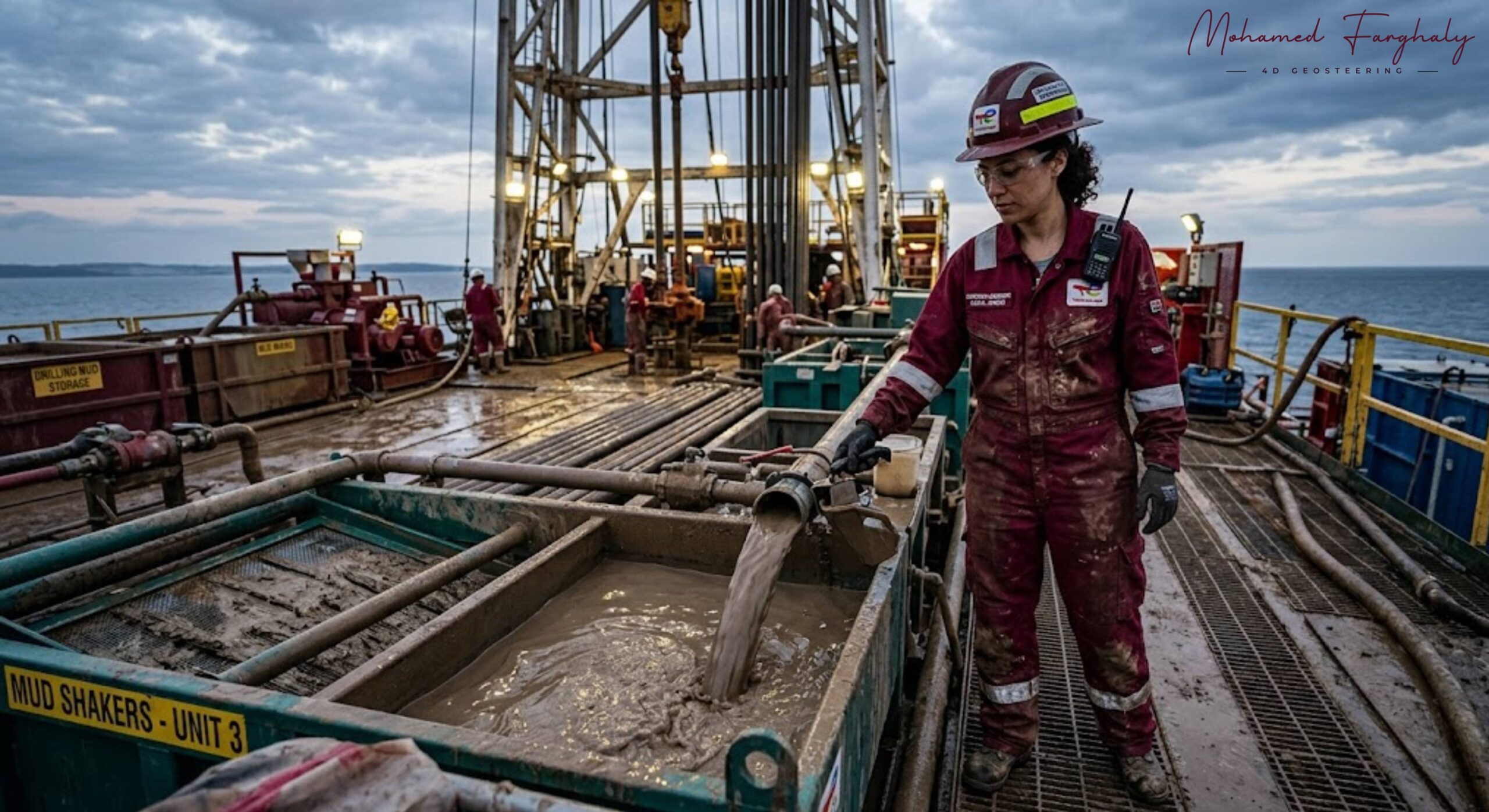
Drilling Mud is much more than a “dirty fluid.” It plays a critical role in safe drilling, stable wellbore conditions, and accurate geosteering decisions. In modern drilling operations, mud performance helps downhole tools work properly and supports better real-time well placement.
This engineered fluid system controls formation pressure, stabilizes the wellbore, cools the drill bit, and carries rock cuttings to the surface. Without proper mud control, drilling teams would struggle to keep the well stable, especially in complex directional drilling operations.
Why Drilling Mud Matters
Geosteering depends on reliable downhole conditions. Tools such as MWD and LWD need a stable environment to send accurate measurements. When mud performance is poor, the data can become noisy or misleading. As a result, weak mud control can reduce interpretation quality and make reservoir navigation more difficult.
Every mud property has a purpose. Density helps balance formation pressure and lowers the risk of well control problems. Viscosity improves cuttings transport and keeps the hole clean. In addition, chemical composition helps control formation reactions and protects wellbore stability.
These properties also influence LWD interpretation. Clean and stable borehole conditions allow sensors to measure the formation more clearly. Because of this, the mud system supports better real-time data analysis and stronger steering decisions.
Mud System and Real-Time Data
The mud system also helps prevent problems that can interrupt operations. For example, unstable conditions may lead to stuck pipe, poor hole cleaning, or pressure issues. These problems can slow drilling and delay important geosteering adjustments.
To reduce these risks, teams monitor mud performance from the rig, surface logging systems, and downhole tools. This continuous monitoring helps engineers respond quickly when subsurface conditions change. As a result, the well can stay closer to the planned reservoir target.
Today, advanced technologies improve how drilling teams manage fluid behavior. Machine learning and artificial intelligence can help detect patterns in mud data, drilling parameters, and formation response. Digital twins and remote operations centers also use this data as part of real-time drilling simulations.
Drilling Mud is not just a circulating fluid. It is a key part of safe drilling, clean data acquisition, and accurate well placement. In modern geosteering, strong mud performance helps teams drill with more stability, confidence, and control.
🔗 Keywords
Drilling Rig, Drilling Mud, MWD, LWD, Directional Drilling, Geosteering, Well Placement, Oil Reservoir, Surface Logging, Borehole Imaging, Electromagnetic Resistivity LWD Tool, Bottom Hole Assembly, Study of Real-Time LWD Data, LWD Interpretation, Borehole Image Log, Dip Calculation Methods, Shale Gas Sweet Spot, Accurate Reservoir Boundary Detection, Machine Learning, Artificial Intelligence, The Future of Automated Geosteering, Ensemble-Based Well Log Interpretation, Digital Twins in Drilling, Remote Operations Centers