Shut-in Procedures in Artificial Lift Systems
August 3, 2023· 3 minutes reading
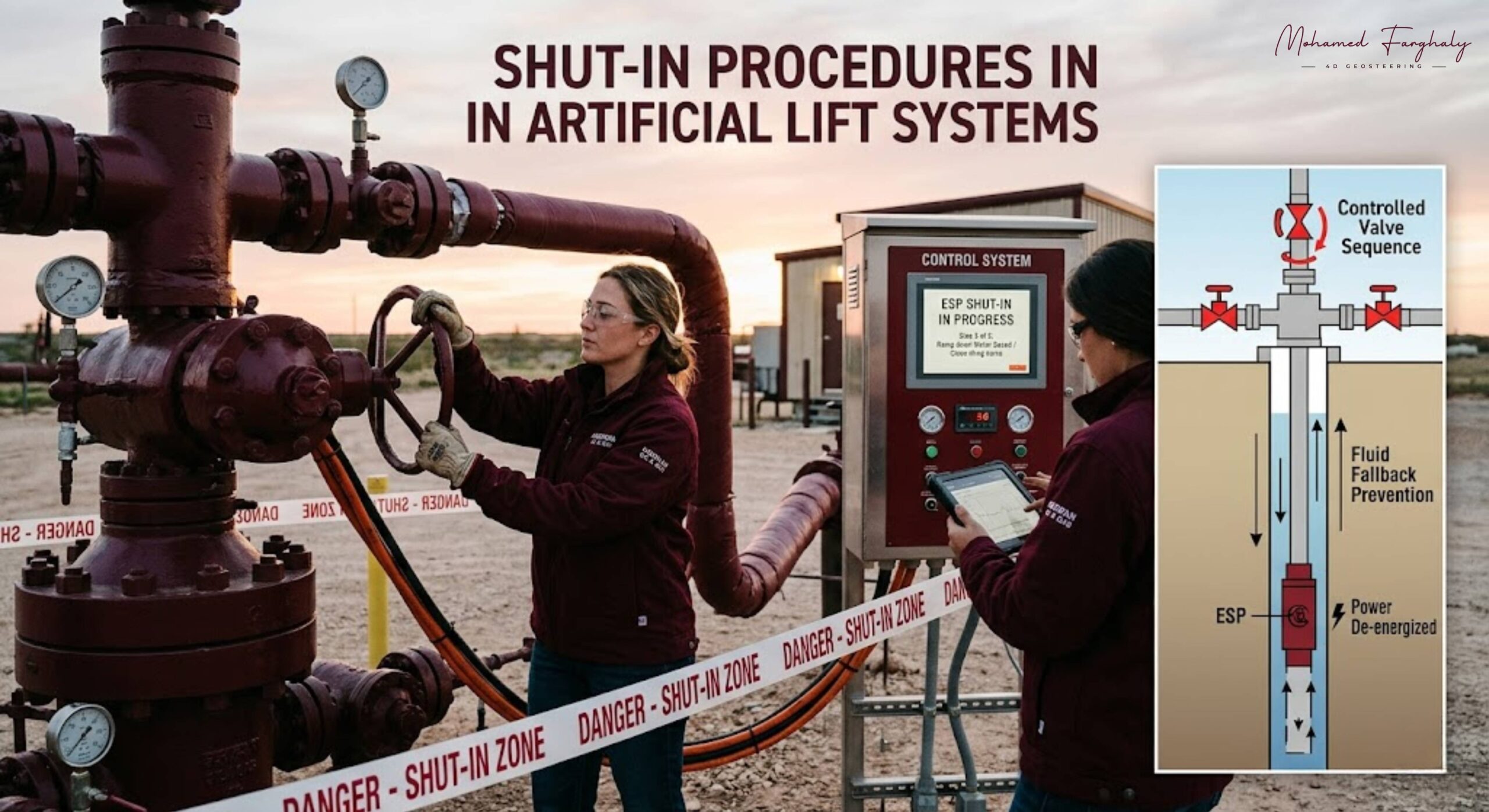
In oil and gas operations, maintaining well control is a key factor in safe and efficient production. Shut-in procedures in artificial lift systems are essential operations used to temporarily stop production, stabilize the well, and control pressure conditions.
During geosteering operations, where real-time geological data guides horizontal well placement, understanding well behavior during shut-in periods helps engineers evaluate reservoir performance and make better operational decisions. Artificial lift systems such as gas lift, electrical submersible pumps (ESPs), and rod pumps directly influence fluid movement and pressure changes inside the wellbore.
What Is a Shut-In Procedure?
A shut-in procedure is the controlled process of stopping fluid production by shutting specific surface valves and stopping artificial lift equipment. The purpose is to maintain well integrity, prevent uncontrolled flow, protect equipment, and allow engineers to analyze pressure buildup.
A proper shut-in helps operators understand reservoir pressure, identify production problems, and maintain safe operating conditions.
Shut-In Procedures in Artificial Lift Systems
Each artificial lift method requires specific shut-in considerations because the system affects how fluids move through the well.
In gas lift systems, shut-in usually involves stopping injected gas and managing production valves. Engineers monitor tubing and casing pressure to understand pressure recovery and detect possible flow instability or gas migration.
For electrical submersible pumps (ESPs), the pump is stopped before isolating the well. This prevents mechanical and electrical issues caused by sudden pressure changes or improper shutdown. Pressure buildup after shut-in can provide valuable information about reservoir response and well productivity.
In rod pump systems, the pump is stopped and the well is isolated while fluid level and pressure changes are monitored. These observations help evaluate pump performance and production efficiency after restarting the well.
Importance in Geosteering Operations
Although geosteering focuses mainly on placing wells within the optimal reservoir zone, shut-in data can improve reservoir understanding. Pressure behavior during shut-in periods can reveal formation changes, reservoir connectivity, and possible water or gas breakthrough.
By combining shut-in pressure information with real-time LWD measurements and formation evaluation data, geosteering teams can better understand the reservoir and optimize well placement.
Best Practices for Safe Shut-In
Effective shut-in operations depend on accurate communication between drilling, production, and reservoir teams. Following the correct valve sequence, monitoring pressure continuously, and understanding artificial lift system behavior are necessary to avoid equipment damage and maintain well control.
A controlled shut-in provides valuable reservoir information while protecting the well and supporting long-term production performance.
🔗 Keywords
Drilling Rig, Drilling Mud, MWD, LWD, Directional Drilling, Geosteering, Well Placement, Oil Reservoir, Surface Logging, Borehole Imaging, Electromagnetic Resistivity LWD Tool, Bottom Hole Assembly, Study of Real-Time LWD Data, LWD Interpretation, Borehole Image Log, Dip Calculation Methods, Shale Gas Sweet Spot, Accurate Reservoir Boundary Detection, Machine Learning, Artificial Intelligence, The Future of Automated Geosteering, Ensemble-Based Well Log Interpretation, Digital Twins in Drilling, Remote Operations Centers