Activation Mechanisms in Packers and Zonal Isolation
July 6, 2023· 3 minutes reading
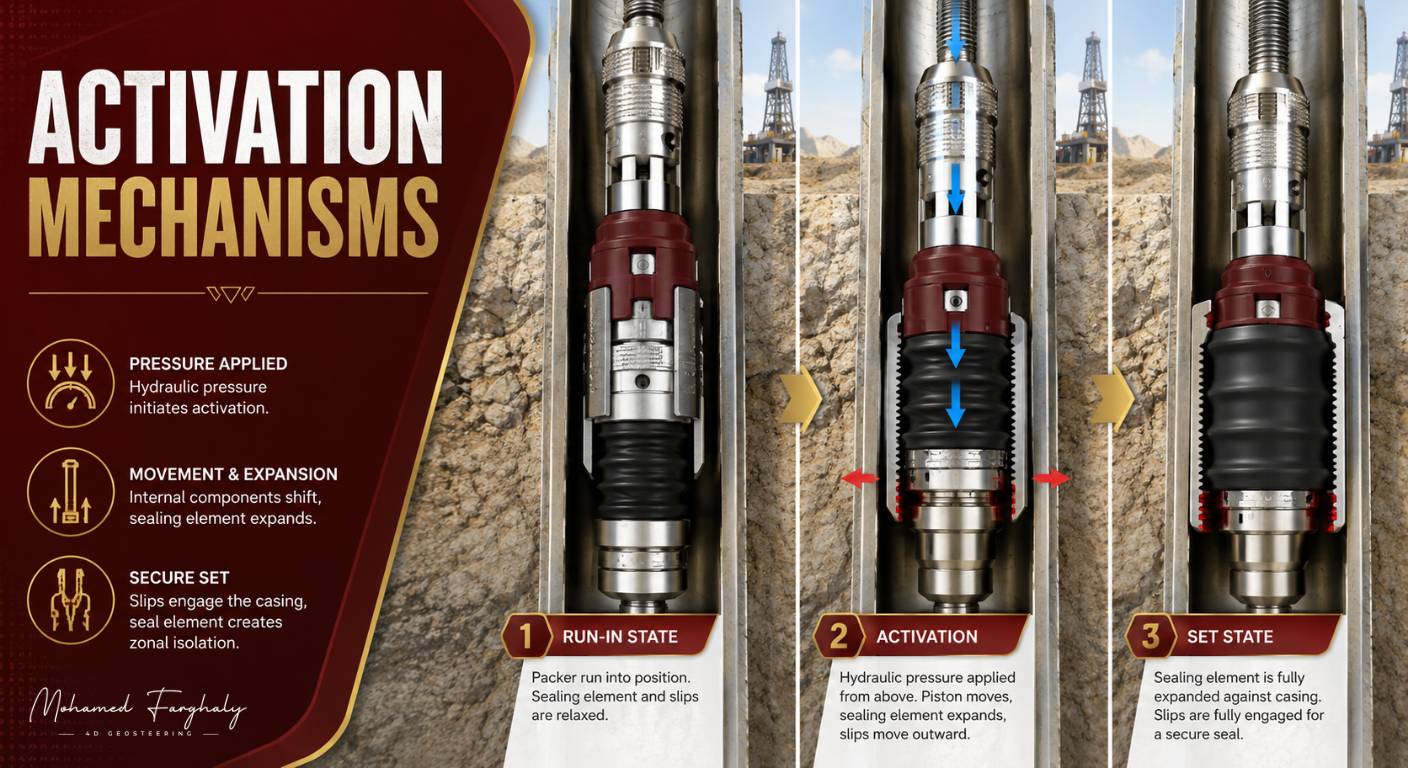
Activation mechanisms determine how and when a packer begins its setting sequence downhole. A reliable activation system ensures that the packer remains inactive while it is being run into the well and responds only when the required operating condition is reached.
In modern completions, activation must be predictable because an incorrect trigger can lead to premature setting, incomplete activation, or difficulty reaching the planned depth.
How Packer Activation Begins
A packer normally stays in a run-in condition until a specific trigger starts the activation sequence.
That trigger may depend on a controlled change in:
- Applied pressure
- Differential pressure
- Axial force
- Rotational movement
- Downhole temperature
- Fluid exposure
- An electrical or electronic command
The selected trigger must remain stable during normal deployment but respond accurately when operators intentionally initiate activation.
Activation Thresholds
Most activation systems use a predefined activation threshold.
For pressure-controlled systems, the mechanism may remain locked until downhole pressure reaches a specified value. Once that threshold is exceeded, an internal component moves or releases and allows the setting sequence to begin.
The activation threshold must provide a sufficient safety margin above normal operating conditions.
If the threshold is too low, accidental activation can occur. If it is too high, operators may need excessive pressure or force to start the process.
Sequential Activation
Some packer systems use several internal steps rather than activating immediately after receiving the trigger.
A typical sequence may involve:
Trigger → Release → Movement → Locking
The trigger first releases a retaining component. Internal movement then transfers energy through the tool until the mechanism reaches its final locked position.
This controlled sequence helps prevent uncontrolled movement and allows the packer to remain stable after activation.
Preventing Premature Activation
Premature activation is one of the main concerns during packer deployment.
Pressure fluctuations, temperature changes, shock, vibration, or unexpected forces can potentially affect sensitive mechanisms.
Engineers therefore design activation systems with safeguards such as:
- Shear components
- Locking mechanisms
- Pressure chambers
- Rupture devices
- Mechanical retainers
- Controlled release systems
These features help ensure that normal running conditions do not accidentally initiate the setting sequence.
Downhole Conditions Affecting Activation
Actual downhole conditions can influence the force or pressure required to activate a packer.
Important factors include hydrostatic pressure, temperature, tubing movement, friction, differential pressure, and tool depth.
For example, increasing depth changes the hydrostatic environment around the tool. Temperature can also affect materials and internal pressure conditions.
Engineers therefore calculate activation requirements using expected downhole conditions rather than relying only on surface values.
Activation Reliability
A successful activation mechanism must operate at the intended moment and complete the full sequence without interruption.
Engineers commonly evaluate:
- Required activation pressure or force
- Safety margin
- Downhole temperature
- Hydrostatic conditions
- Tool tolerances
- Pressure fluctuations
- Expected tubing movement
- Reliability of the release system
Careful activation planning reduces the risk of premature activation, delayed activation, or incomplete setting and helps ensure predictable packer operation at the planned downhole location.
🔗 Keywords
Drilling Rig, Drilling Mud, MWD, LWD, Directional Drilling, Geosteering, Well Placement, Oil Reservoir, Surface Logging, Borehole Imaging, Electromagnetic Resistivity LWD Tool, Bottom Hole Assembly, Study of Real-Time LWD Data, LWD Interpretation, Borehole Image Log, Dip Calculation Methods, Shale Gas Sweet Spot, Accurate Reservoir Boundary Detection, Machine Learning, Artificial Intelligence, The Future of Automated Geosteering, Ensemble-Based Well Log Interpretation, Digital Twins in Drilling, Remote Operations Centers
