Sealing Performance: The Key to Reliable Zonal Isolation
July 7, 2023· 3 minutes reading
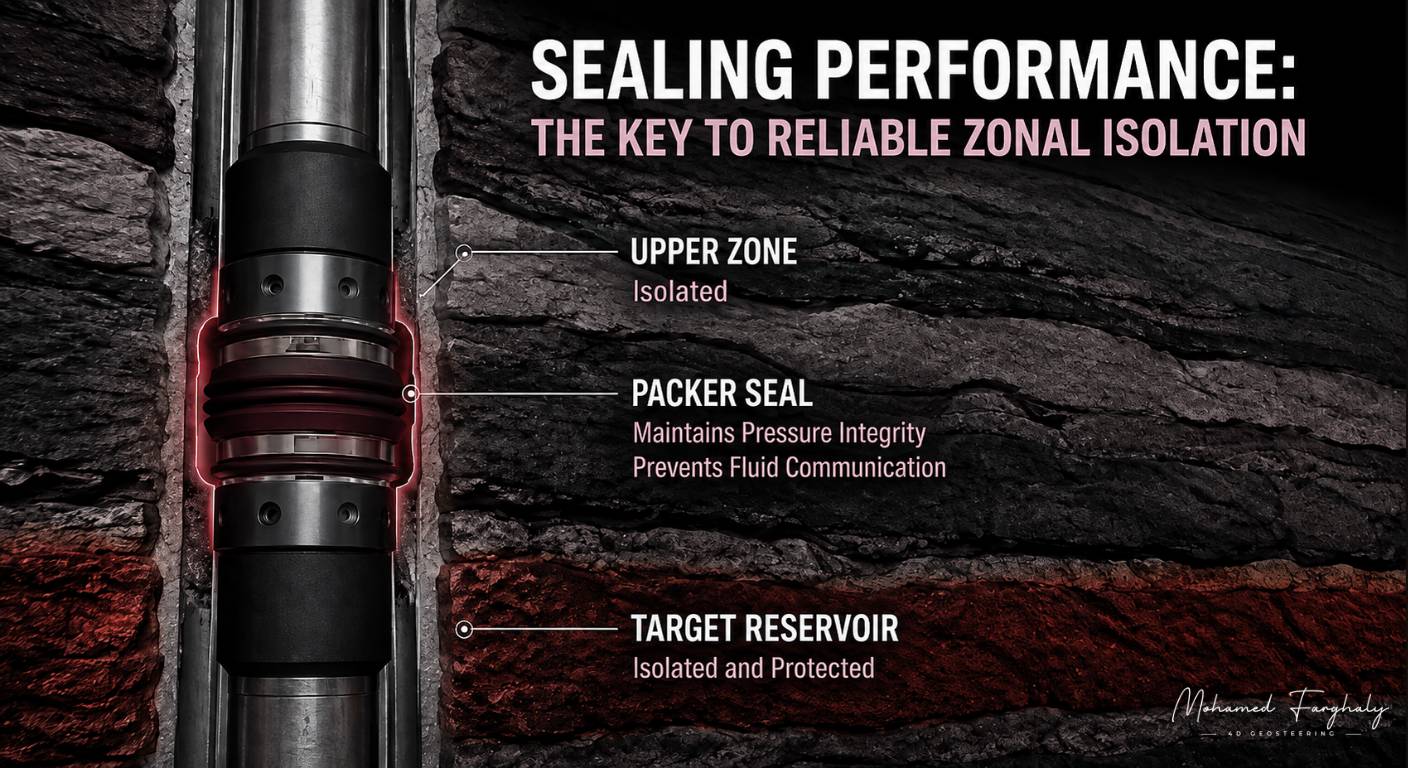
In well completion, sealing performance in packers and zonal isolation determines how effectively the completion keeps different subsurface intervals separated. A reliable seal helps control unwanted fluid movement and protects the integrity of the completed well.
For geosteering and well placement teams, sealing performance becomes especially important when a well crosses several geological intervals. The final well position may place the completion close to formation boundaries, pressure differences, or fluid contacts. Therefore, the seal must continue working under changing downhole conditions.
What Defines Good Sealing Performance?
A high-performing seal maintains isolation between zones even when the surrounding environment changes.
Differential pressure is one of the most important factors. The seal must withstand pressure differences between isolated intervals without allowing fluid to bypass the barrier.
Temperature stability also matters. Downhole temperatures can change during production, shut-in periods, or other well operations. These changes may cause materials and tubulars to expand or contract. The sealing system must maintain effective contact despite those movements.
Another important factor is wellbore geometry. Irregular surfaces, washouts, or changes in hole diameter can create potential leak paths. Strong sealing performance depends on maintaining reliable contact around the required isolation interval.
Why Seal Integrity Matters
Poor sealing can allow communication between zones. As a result, fluids may migrate from one formation interval to another. This movement can reduce production control and make reservoir behavior more difficult to manage.
Reliable sealing, however, helps preserve the intended completion architecture. It keeps pressure and fluids within the correct intervals while supporting controlled production from the planned zones.
In highly deviated and horizontal wells, this becomes particularly valuable. Geosteering can place the well accurately inside the target formation, but the completion must preserve that placement advantage afterward.
Sealing Performance Under Real Downhole Conditions
A seal does not operate in a static environment. Pressure, temperature, mechanical loads, and formation conditions can change during the life of the well.
Because of this, good sealing performance is not only about creating an initial barrier. The seal must continue to perform reliably as downhole conditions evolve.
Engineers therefore look for stable isolation and the absence of unwanted fluid communication between zones. Consistent behavior gives confidence that the completion continues to protect the intended reservoir intervals.
The Role of Sealing Performance in Zonal Isolation
Ultimately, sealing performance in packers and zonal isolation is about maintaining dependable separation between subsurface zones.
Strong seal integrity helps protect pressure control, reduce unwanted fluid movement, and preserve the value of accurate well placement. In geosteered wells, this ensures that the completion supports the reservoir strategy established during drilling.
🔗 Keywords
Drilling Rig, Drilling Mud, MWD, LWD, Directional Drilling, Geosteering, Well Placement, Oil Reservoir, Surface Logging, Borehole Imaging, Electromagnetic Resistivity LWD Tool, Bottom Hole Assembly, Study of Real-Time LWD Data, LWD Interpretation, Borehole Image Log, Dip Calculation Methods, Shale Gas Sweet Spot, Accurate Reservoir Boundary Detection, Machine Learning, Artificial Intelligence, The Future of Automated Geosteering, Ensemble-Based Well Log Interpretation, Digital Twins in Drilling, Remote Operations Centers
