Drilling Fluid Influence on Wellbore Stability
August 4, 2023· 2 minutes reading
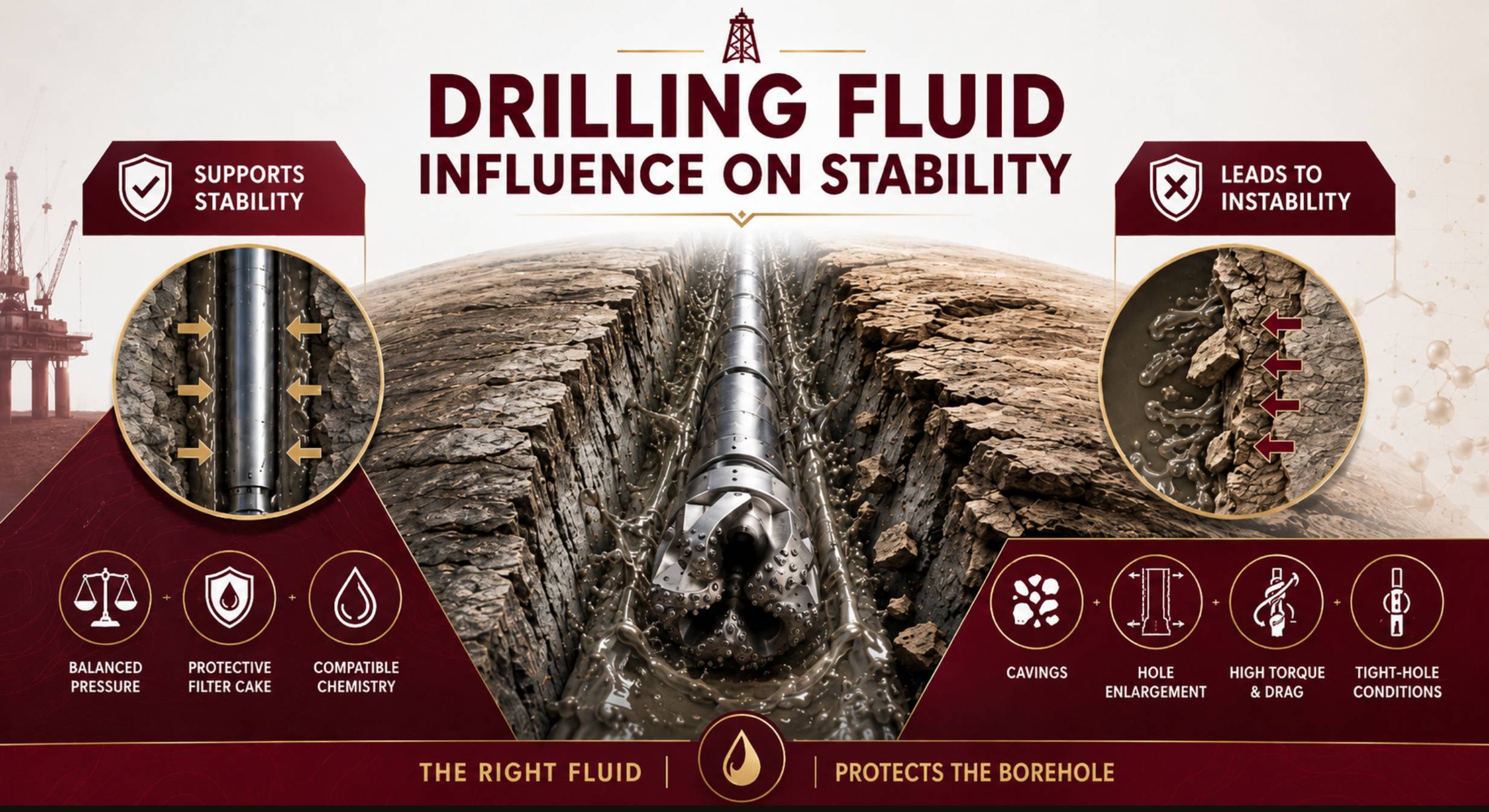
Drilling fluid influence on stability is not limited to carrying cuttings or cooling the bit. The fluid also applies pressure to the borehole wall and interacts directly with the formation. Because of this, its properties can strongly affect whether the hole remains stable or gradually deteriorates.
This becomes especially important in shale and other sensitive formations.
How Drilling Fluid Affects the Borehole
Drilling fluid helps support the wellbore by applying pressure against the formation.
When the pressure is properly balanced, it helps the borehole resist the stresses acting around it. If the pressure is too low, the formation may not receive enough support and the risk of instability can increase.
The chemical behavior of the fluid also matters.
In reactive shale, water and fluid filtrate can enter the formation and interact with clay minerals. This can cause the rock to:
- Hydrate
- Swell
- Soften
- Disperse
- Lose strength
The longer the formation remains exposed, the greater this effect may become.
Important fluid properties include:
- Mud weight
- Salinity
- Water activity
- Fluid chemistry
- Filtration control
- Temperature
- Exposure time
Each of these factors can influence how the rock behaves around the borehole.
From Fluid Interaction to Instability
Consider a reactive shale interval that initially drills normally.
As drilling fluid continues contacting the formation, filtrate may penetrate the rock. The shale can begin to weaken, and small fragments may start falling into the well.
The drilling team may then notice:
- Increased cavings
- Higher torque and drag
- Poor hole cleaning
- Tight-hole conditions
- Irregular or enlarged borehole sections
If the interaction continues, the borehole may become progressively less stable.
This is why drilling fluid should be treated as part of the wellbore stability system, not simply as a circulation medium.
A properly designed fluid can provide mechanical support while also limiting harmful interaction with sensitive formations.
The right drilling fluid does more than clean the hole. It helps preserve the strength of the rock that keeps the wellbore open.
🔗 Keywords
Drilling Rig, Drilling Mud, MWD, LWD, Directional Drilling, Geosteering, Well Placement, Oil Reservoir, Surface Logging, Borehole Imaging, Electromagnetic Resistivity LWD Tool, Bottom Hole Assembly, Study of Real-Time LWD Data, LWD Interpretation, Borehole Image Log, Dip Calculation Methods, Shale Gas Sweet Spot, Accurate Reservoir Boundary Detection, Machine Learning, Artificial Intelligence, The Future of Automated Geosteering, Ensemble-Based Well Log Interpretation, Digital Twins in Drilling, Remote Operations Centers
