Shale Gas Sweet Spot Identification
August 4, 2023· 2 minutes reading
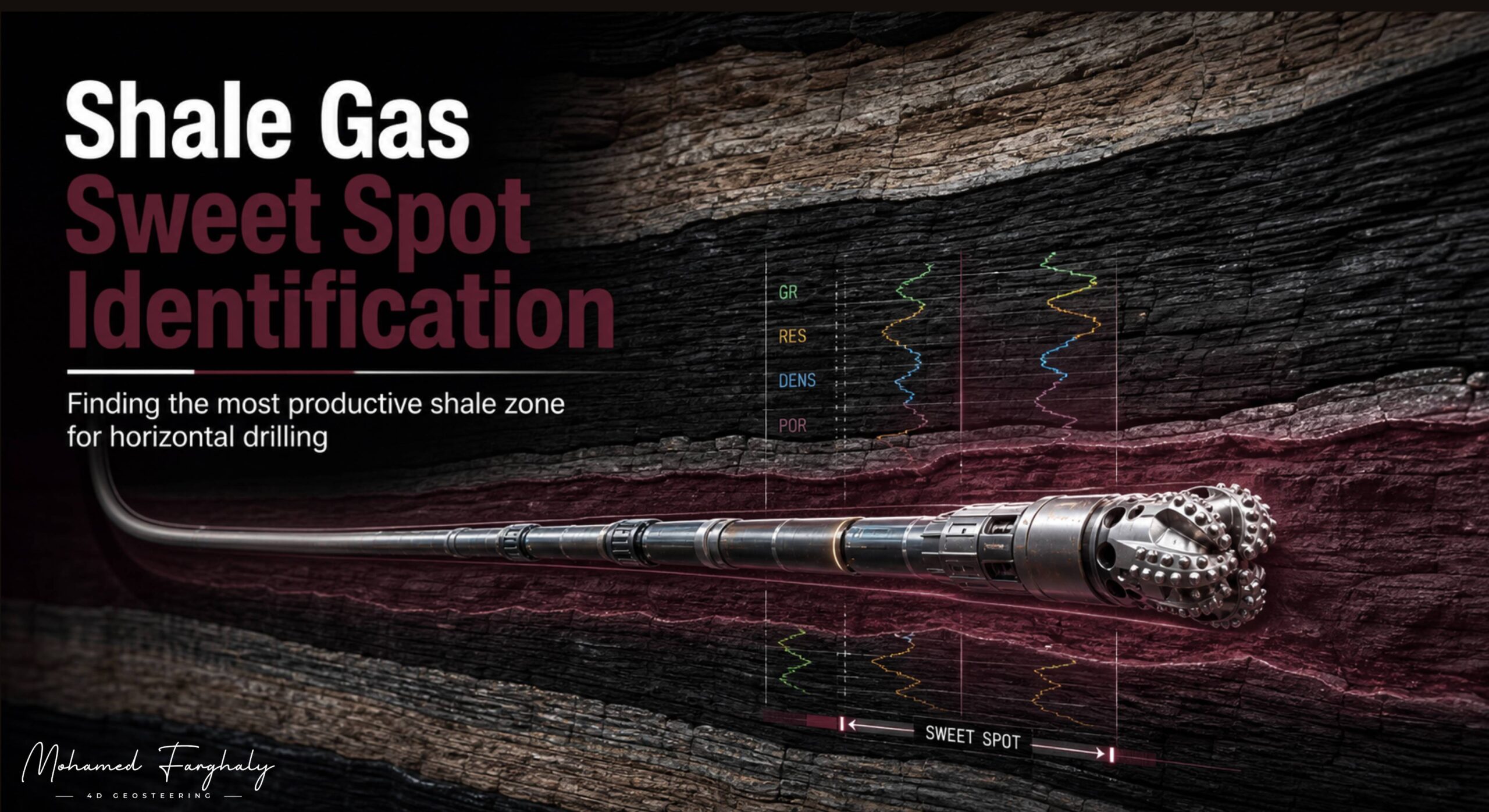
Shale gas sweet spot identification helps geosteering teams place horizontal wells in the most productive parts of the reservoir. In shale formations, success is not only about staying inside the reservoir. It is about staying inside the interval that can deliver the highest production value.
In shale reservoirs, not all zones behave the same way. Some intervals contain better porosity, higher organic content, stronger brittleness, or improved permeability. Because of this variation, geosteering must focus on more than formation contact. It must guide the well toward the best-quality rock.
Finding the Best Reservoir Zone
Real-time LWD data plays a major role in identifying productive shale intervals. Measurements such as gamma ray, resistivity, density, neutron porosity, and sonic response help geosteerers evaluate formation quality while drilling.
For example, gamma ray can indicate shale content and organic-rich zones. Resistivity may help highlight hydrocarbon-bearing intervals. Meanwhile, density and porosity measurements support rock quality interpretation. When these data sources are combined, the team can make better steering decisions.
As drilling continues, small changes in log response can reveal important reservoir variations. Therefore, continuous monitoring is essential. A slight shift above or below the target zone may move the well away from the most productive interval.
Role of MWD and LWD in Geosteering
MWD and LWD work together during shale gas drilling. MWD data defines the well trajectory, inclination, azimuth, and directional position. On the other hand, LWD data helps identify the formation properties around the wellbore.
Together, these measurements allow geosteering teams to adjust the well path with more confidence. Instead of following only the planned trajectory, the team can respond to real reservoir behavior. This improves well placement and helps maintain contact with the sweet spot.
In horizontal wells, this becomes even more important. Long lateral sections must stay within the best interval for maximum production. If the well exits the target zone, production efficiency may drop. As a result, accurate geosteering directly affects the final well performance.
Beyond Logs: Fractures and Stress
Effective sweet spot evaluation also depends on natural fractures and stress distribution. These factors control how the reservoir responds during drilling and production. They also influence hydraulic fracturing efficiency.
A zone with good rock quality may still perform poorly if stress conditions are unfavorable. Likewise, natural fractures can improve flow, but they may also create drilling challenges. For this reason, geosteering decisions should consider both petrophysical data and geomechanical behavior.
Why Sweet Spot Identification Matters
Many drilling plans focus on reaching the reservoir. However, shale gas development requires a more precise goal. The well must reach the right part of the reservoir and stay there for as long as possible.
Shale gas sweet spot identification turns geosteering from simple reservoir navigation into value-based well placement. It helps operators improve production potential, reduce uncertainty, and make better real-time decisions.
In the end, a successful shale gas well is not defined only by reservoir contact. It is defined by how much of the lateral section stays inside the highest-value rock. That is why identifying and following the sweet spot remains one of the most important goals in modern geosteering.
🔗 Keywords
Drilling Rig, Drilling Mud, MWD, LWD, Directional Drilling, Geosteering, Well Placement, Oil Reservoir, Surface Logging, Borehole Imaging, Electromagnetic Resistivity LWD Tool, Bottom Hole Assembly, Study of Real-Time LWD Data, LWD Interpretation, Borehole Image Log, Dip Calculation Methods, Shale Gas Sweet Spot, Accurate Reservoir Boundary Detection, Machine Learning, Artificial Intelligence, The Future of Automated Geosteering, Ensemble-Based Well Log Interpretation, Digital Twins in Drilling, Remote Operations Centers