Density and Rheology Control in Drilling Fluid
Oct 2, 2023· 2 minutes reading
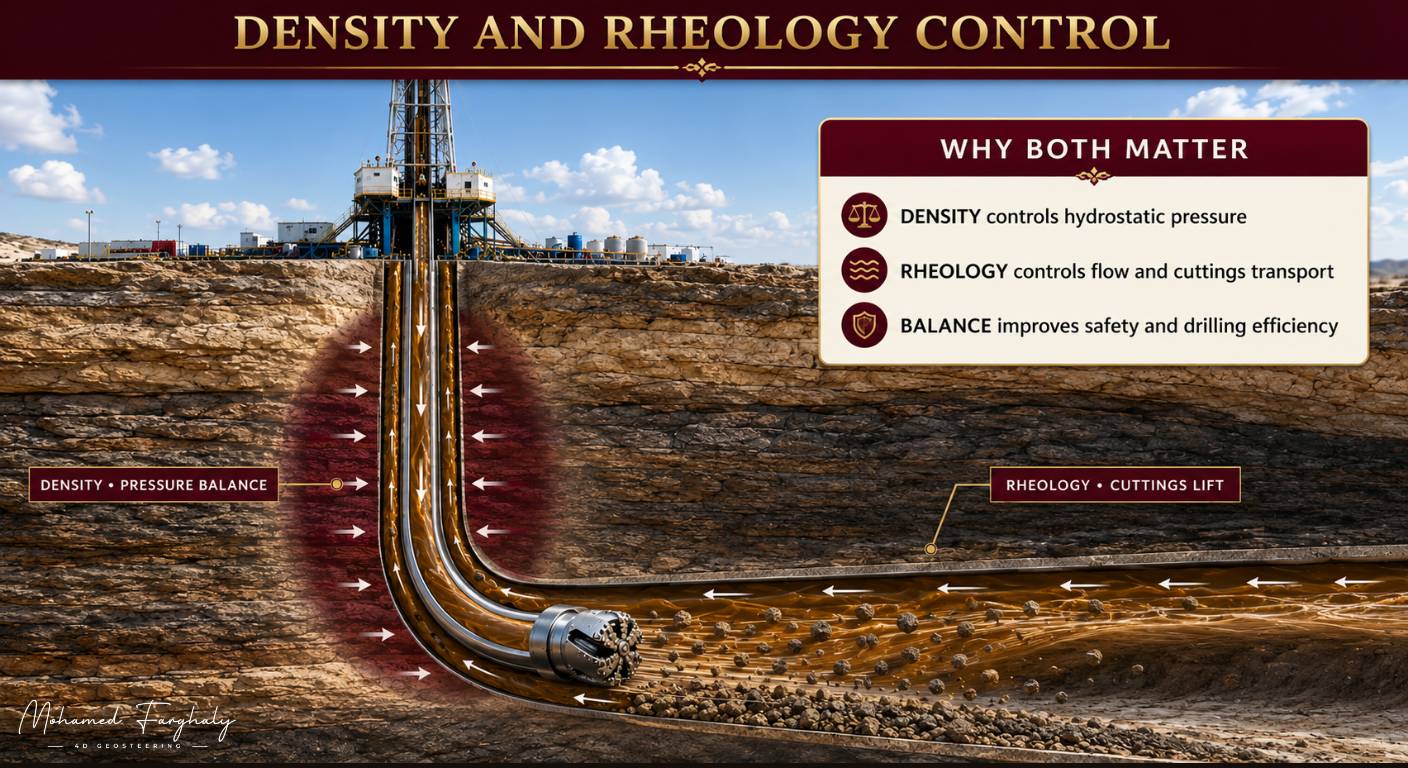
Density and rheology control directly affect drilling safety, efficiency, and wellbore quality. Although both properties describe drilling-fluid behavior, each performs a different function. Density manages downhole pressure, while rheology controls how the fluid flows and carries drilled cuttings.
Therefore, engineers must monitor both properties throughout the operation. Even a small change can influence hole cleaning, circulation pressure, and drilling performance.
Why Drilling-Fluid Density Matters
Drilling-fluid density, commonly called mud weight, creates hydrostatic pressure inside the wellbore. The drilling team must maintain enough pressure to control formation fluids and prevent unwanted influxes. However, excessive density can increase the risk of lost circulation or formation damage.
As drilling progresses, downhole conditions may change. For example, drilled solids can increase the mud weight, while contamination or dilution may reduce it. Consequently, engineers regularly measure density and adjust the fluid when necessary.
Accurate density control becomes especially important in narrow pressure windows. In these sections, only a small difference may separate insufficient well control from excessive pressure. Therefore, consistent monitoring helps the team remain within safe operating limits.
How Rheology Controls Fluid Movement
Rheology describes how drilling fluid flows under different forces and circulation conditions. Key rheological properties include plastic viscosity, yield point, and gel strength. Together, they determine how effectively the fluid transports cuttings, suspends solids, and moves through the circulation system.
Proper rheology helps lift cuttings from the bit and carry them toward the surface. In addition, it prevents solids from settling when circulation stops. This becomes particularly important in deviated and horizontal sections, where cuttings can collect along the lower side of the wellbore.
However, very high viscosity can increase pump pressure and reduce drilling efficiency. In contrast, very low viscosity may provide poor hole cleaning and allow cuttings to accumulate. Engineers must therefore create a balanced flow profile rather than simply making the fluid thicker.
The team monitors flow behavior through regular surface tests and available real-time drilling data. If the readings move outside the planned range, they can adjust the fluid system before the change develops into a larger operational problem.
Ultimately, effective density and rheology control creates a stable circulation system. It supports pressure management, improves cuttings transport, reduces avoidable drilling problems, and helps the well progress safely toward its planned target.
🔗 Keywords
Drilling Rig, Drilling Mud, MWD, LWD, Directional Drilling, Geosteering, Well Placement, Oil Reservoir, Surface Logging, Borehole Imaging, Electromagnetic Resistivity LWD Tool, Bottom Hole Assembly, Study of Real-Time LWD Data, LWD Interpretation, Borehole Image Log, Dip Calculation Methods, Shale Gas Sweet Spot, Accurate Reservoir Boundary Detection, Machine Learning, Artificial Intelligence, The Future of Automated Geosteering, Ensemble-Based Well Log Interpretation, Digital Twins in Drilling, Remote Operations Centers
