Fluid Loss Control in Drilling Fluids
Oct 2, 2023· 2 minutes reading
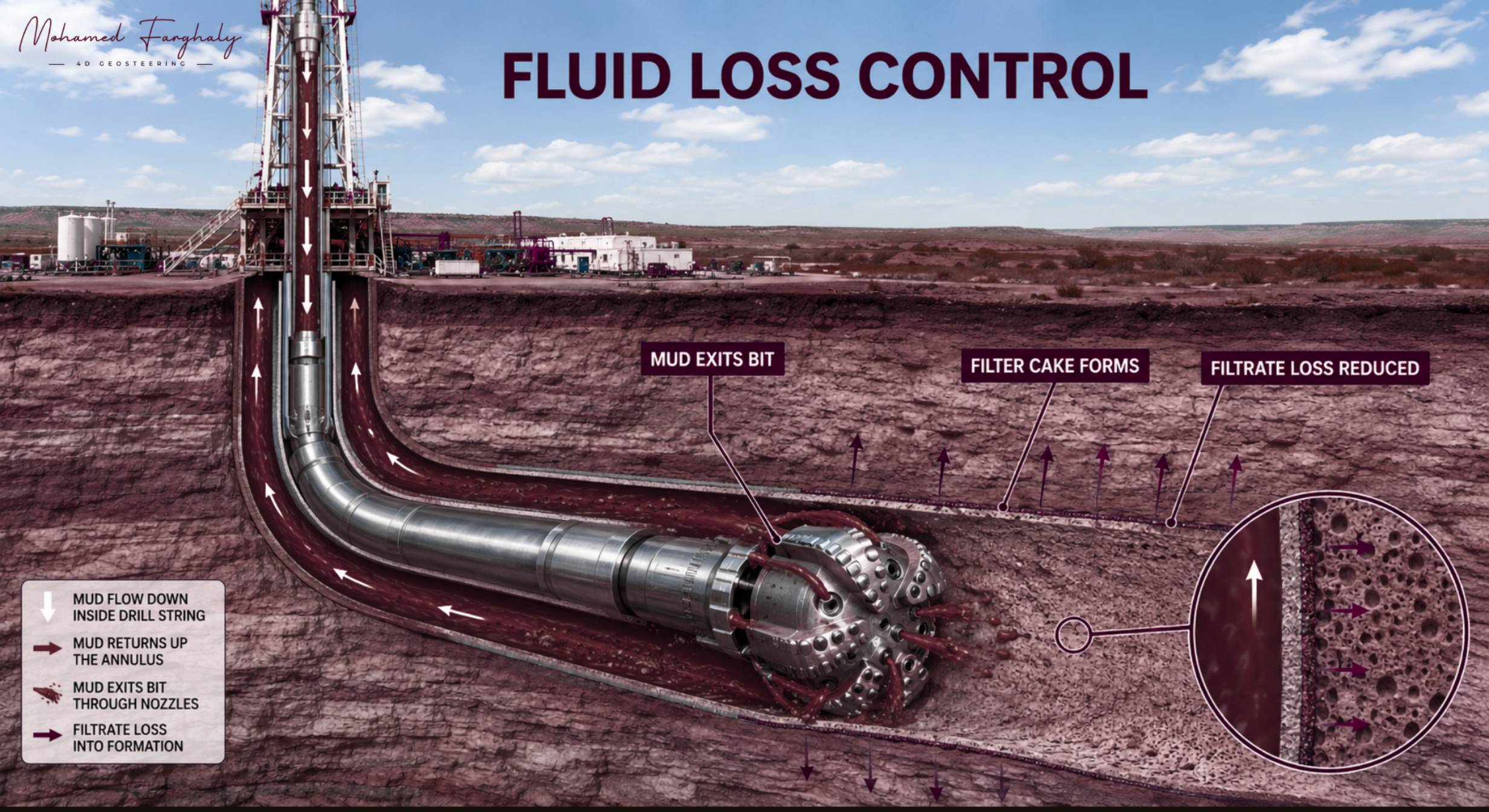
Fluid loss control prevents the liquid phase of drilling fluid from escaping excessively into permeable rock. When the well exposes sandstone, fractured zones, or other porous sections, pressure can push liquid from the mud into the surrounding pores.
As a result, solids remain on the borehole wall and form a filter cake. A thin, smooth, and low-permeability filter cake limits further fluid movement. However, poor control can create a thick and irregular layer that increases operational risk.
Why Fluid Loss Requires Control
Excessive filtrate loss can change the condition of the near-wellbore area. It may also increase differential sticking risk because the drill string can press against a thick filter cake. In addition, excessive buildup reduces the effective hole diameter and creates extra drag during drilling or tripping.
For this reason, drilling-fluid engineers measure fluid loss and adjust the treatment before these effects become severe. They commonly use standard filtration tests to evaluate performance under controlled pressure and temperature. For demanding downhole conditions, high-pressure, high-temperature tests provide a more representative result.
Still, the fluid-loss value alone does not tell the entire story. Engineers also inspect the thickness, texture, and strength of the filter cake. An effective treatment should reduce filtrate volume while producing a thin and durable barrier.
Creating an Effective Filter Cake
Fluid-loss-control additives help seal the small openings through which filtrate could escape. These materials include polymers, starches, cellulose-based products, and carefully selected bridging particles. Each product works differently; therefore, engineers select the treatment according to the fluid system and expected downhole conditions.
Particle size also matters. Larger particles bridge pore openings, while smaller particles fill the spaces between them. Meanwhile, polymers help reduce the permeability of the developing filter cake. Together, these materials create a tighter barrier against further liquid movement.
However, adding too much treatment can increase costs and negatively affect fluid performance. Therefore, the team should use test results to guide each adjustment instead of applying unnecessary quantities.
Continuous monitoring remains essential because temperature, pressure, drilled solids, and contamination can change filtration behavior during the operation. When engineers identify a rising trend early, they can restore performance before a thick filter cake develops.
Ultimately, effective fluid loss control protects the borehole, reduces sticking risk, supports smoother drilling, and maintains a cleaner well profile. The goal is not to stop all filtration. Instead, the goal is to create a controlled, low-permeability seal that keeps filtrate loss within the planned range.
🔗 Keywords
Drilling Rig, Drilling Mud, MWD, LWD, Directional Drilling, Geosteering, Well Placement, Oil Reservoir, Surface Logging, Borehole Imaging, Electromagnetic Resistivity LWD Tool, Bottom Hole Assembly, Study of Real-Time LWD Data, LWD Interpretation, Borehole Image Log, Dip Calculation Methods, Shale Gas Sweet Spot, Accurate Reservoir Boundary Detection, Machine Learning, Artificial Intelligence, The Future of Automated Geosteering, Ensemble-Based Well Log Interpretation, Digital Twins in Drilling, Remote Operations Centers
