Data-driven vs experience-driven decisions
Nov 1, 2023· 3 minutes reading
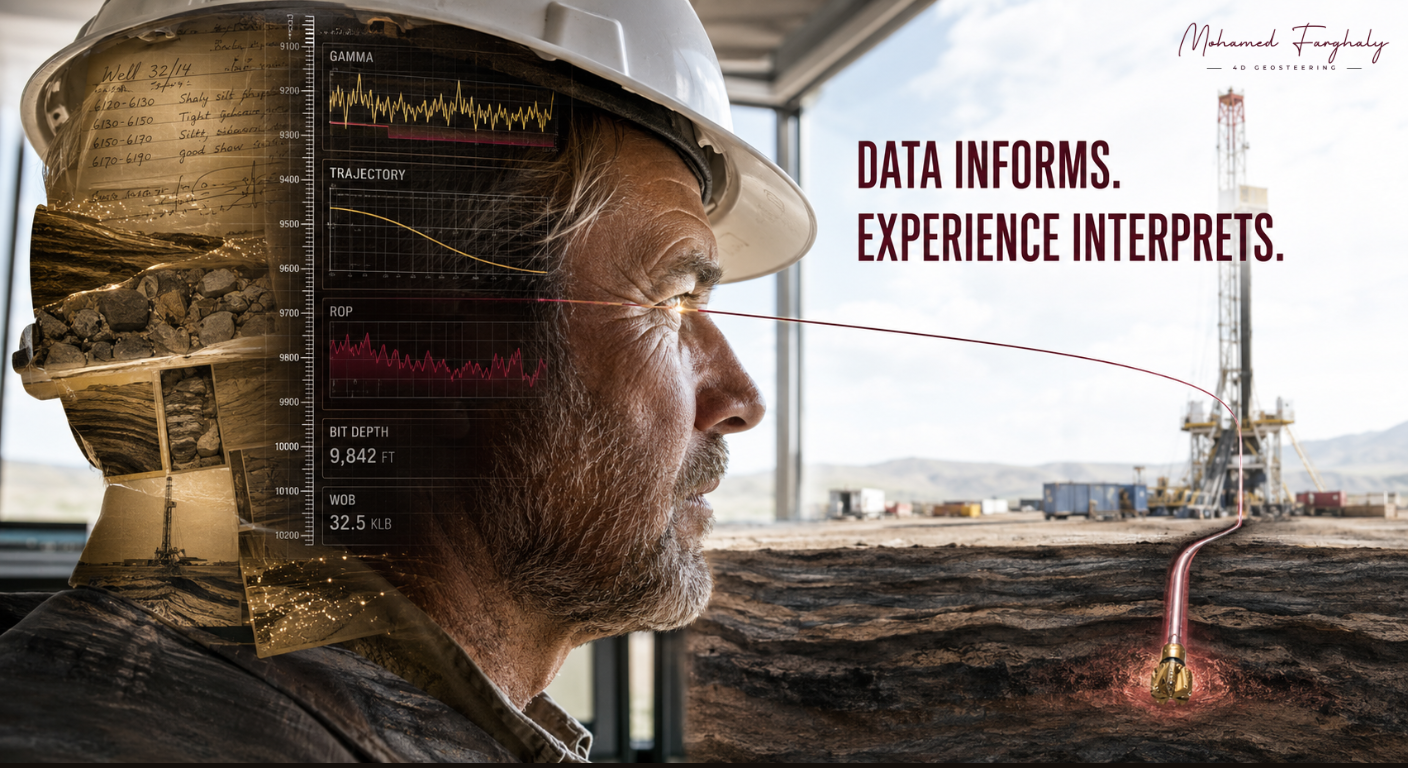
Drilling teams often make critical choices under pressure. While data provides measurable evidence, experience adds practical judgment built through years of field exposure. Therefore, effective decision-making depends on understanding how these two approaches support each other.
How Data and Experience Guide Decisions
Data-driven decisions rely on real-time measurements such as drilling parameters, surveys, formation responses, vibration levels, and pressure trends. These inputs help teams identify changes, compare conditions, and recognize patterns.
For example, a sudden change in torque or rate of penetration may indicate a formation transition or a developing downhole problem. Because the data records this change immediately, the team can investigate before the situation becomes more serious.
Experience-driven decisions work differently. An experienced professional may recognize that several small changes signal a problem, even when no individual measurement crosses an alarm limit. Previous wells, operational knowledge, and familiarity with local formations help that person interpret what the numbers mean.
| Comparison point | Data-driven decisions | Experience-driven decisions |
|---|---|---|
| Primary foundation | Measurements, trends, and recorded evidence | Field knowledge and lessons from previous operations |
| Main strength | Provides measurable and traceable information | Adds operational context and practical judgment |
| Response trigger | Alarms, limits, patterns, or trend changes | Recognized behavior or familiar warning signs |
| Consistency | Applies defined criteria across operations | May differ according to the individual’s expertise |
| Main limitation | Data may contain noise, delay, or sensor errors | Judgment may include bias or outdated assumptions |
| Best application | Monitoring and identifying measurable changes | Interpreting uncertainty and complex conditions |
| Strongest result | Supports decisions with objective evidence | Explains what the evidence may mean operationally |
However, each approach has limitations. Data can contain noise, delays, or sensor errors. Meanwhile, experience may introduce personal bias or depend too heavily on past conditions that do not match the current well.
Combining Evidence With Operational Judgment
Strong drilling decisions use data as evidence and experience as context. First, the team checks the quality and consistency of the available measurements. Next, experienced personnel interpret the operational meaning of those measurements. Finally, the team compares possible actions and considers their risks.
For instance, the data may show increasing vibration while drilling. Instead of reacting to one reading, the team reviews the trend, operating parameters, and recent formation response. Experienced personnel can then determine whether the change requires an immediate adjustment or continued monitoring.
Digital systems also strengthen this process. They process large volumes of information, highlight unusual behavior, and present relevant trends quickly. Nevertheless, people still need to examine the situation, assess uncertainty, and select the most suitable response.
Ultimately, data-driven and experience-driven decisions should not compete. Data explains what the system measures, while experience helps clarify why it may be happening. When teams combine both, they can make faster, clearer, and more reliable drilling decisions.
🔗 Keywords
Drilling Rig, Drilling Mud, MWD, LWD, Directional Drilling, Geosteering, Well Placement, Oil Reservoir, Surface Logging, Borehole Imaging, Electromagnetic Resistivity LWD Tool, Bottom Hole Assembly, Study of Real-Time LWD Data, LWD Interpretation, Borehole Image Log, Dip Calculation Methods, Shale Gas Sweet Spot, Accurate Reservoir Boundary Detection, Machine Learning, Artificial Intelligence, The Future of Automated Geosteering, Ensemble-Based Well Log Interpretation, Digital Twins in Drilling, Remote Operations Centers
