Time-critical vs non-time-critical decisions
Nov 2, 2023· 2 minutes reading
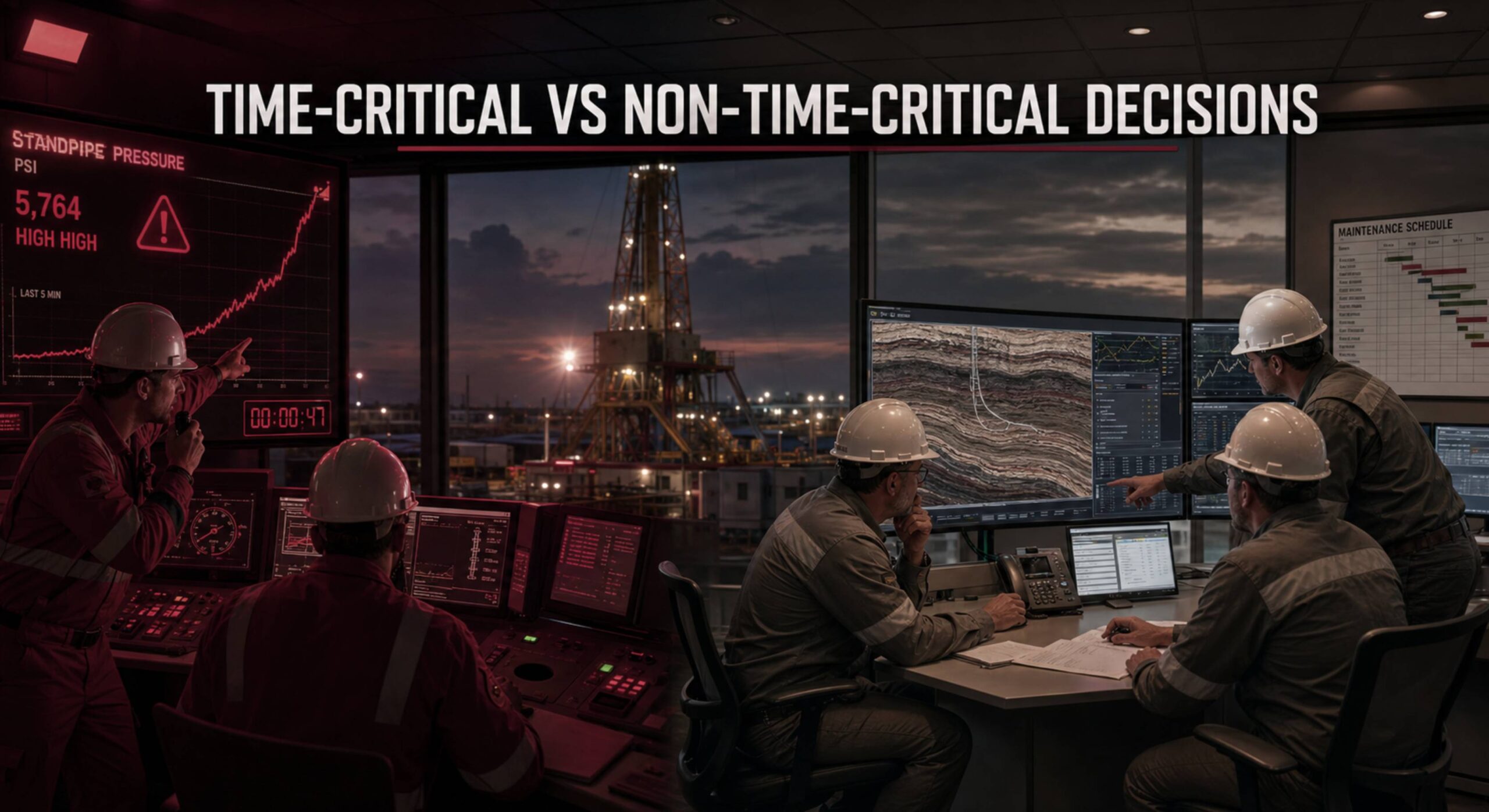
In oil and gas operations, every decision affects safety, cost, or performance. However, not every situation requires the same response speed. Understanding time-critical vs non-time-critical decisions helps operational teams prioritize risks, use real-time data effectively, and avoid unnecessary delays.
Time-critical decisions require immediate action because conditions can change within seconds or minutes. During drilling operations, examples include responding to sudden pressure changes, detecting a kick, managing lost circulation, preventing wellbore instability, or correcting an unexpected well trajectory deviation.
In these situations, delayed action can increase non-productive time, damage equipment, compromise well control, or threaten personnel safety. Therefore, teams rely on real-time data from MWD, LWD, surface logging, and drilling monitoring systems. Clear communication and a defined decision hierarchy also help the right person act without unnecessary approval delays.
Non-time-critical decisions allow more time for analysis, discussion, and validation. Examples include optimizing future drilling parameters, updating geological models, reviewing equipment performance, planning maintenance, or evaluating long-term well placement strategies.
Although these decisions do not demand an immediate response, they still influence operational success. Teams can compare multiple data sources, consult specialists, assess economic impacts, and test different scenarios before choosing the best action. Consequently, a structured review process often produces stronger and more reliable results.
Balancing Speed and Accuracy in Real-Time Operations
Effective real-time decision making in oil and gas depends on correctly classifying each situation. Treating every decision as urgent can create stress, rushed judgments, and inefficient use of resources. In contrast, treating a critical event as routine can lead to severe operational consequences.
Operators should define decision thresholds, responsibilities, escalation paths, and response times before operations begin. Moreover, digital dashboards and automated alerts can highlight abnormal conditions, allowing teams to focus on the decisions that require immediate attention.
Ultimately, successful operations balance speed with accuracy. Time-critical decisions protect the well, equipment, and people through rapid action, while non-time-critical decisions support deeper analysis and long-term optimization. When teams understand the difference, they make safer, faster, and more valuable operational decisions.
🔗 Keywords
Drilling Rig, Drilling Mud, MWD, LWD, Directional Drilling, Geosteering, Well Placement, Oil Reservoir, Surface Logging, Borehole Imaging, Electromagnetic Resistivity LWD Tool, Bottom Hole Assembly, Study of Real-Time LWD Data, LWD Interpretation, Borehole Image Log, Dip Calculation Methods, Shale Gas Sweet Spot, Accurate Reservoir Boundary Detection, Machine Learning, Artificial Intelligence, The Future of Automated Geosteering, Ensemble-Based Well Log Interpretation, Digital Twins in Drilling, Remote Operations Centers