Predictive Maintenance Systems: Detecting Equipment Failure Before It Happens
Dec 16, 2023· 2 minutes reading
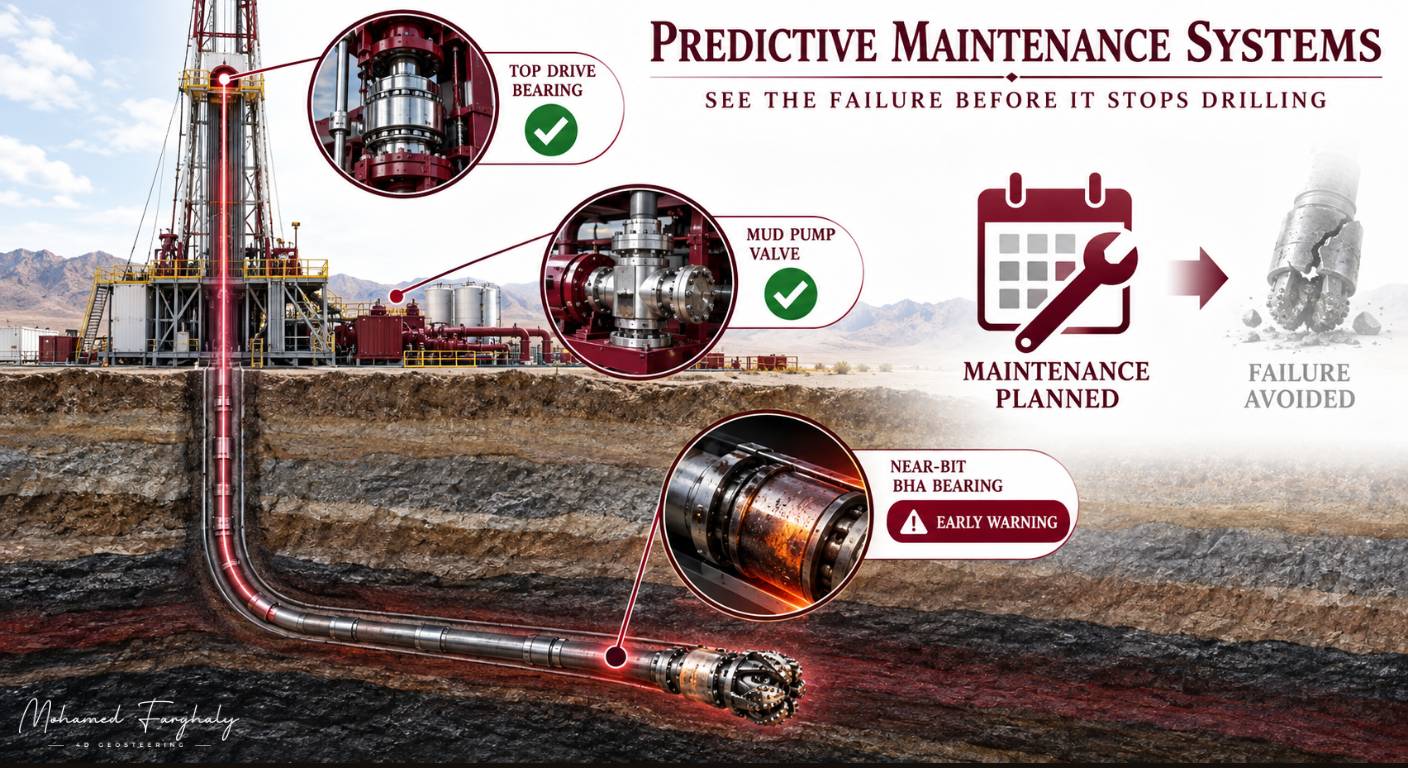
Equipment rarely fails without warning. Before a pump, compressor, top drive, motor, or bearing stops working, its operating behaviour usually begins to change. Predictive maintenance systems detect these changes, assess their severity, and estimate when maintenance will become necessary.
How Predictive Maintenance Systems Detect Failure
A predictive maintenance system collects equipment-condition data through installed sensors. Depending on the asset, it may monitor vibration, temperature, pressure, rotational speed, electrical current, lubricant condition, flow rate, and power consumption.
First, the system establishes a baseline that represents normal equipment behaviour under different speeds and operating loads. Then, it continuously compares new measurements with this expected behaviour.
However, one unusual reading does not always indicate a fault. For example, vibration may increase normally when equipment speed changes. In contrast, vibration that continues rising under a stable load may indicate imbalance, misalignment, looseness, or bearing damage.
Therefore, an effective system examines several related measurements together. A slight temperature increase may appear harmless on its own. However, if it occurs with rising vibration and higher power consumption, the combined pattern provides stronger evidence of friction or component wear.
The system also evaluates how quickly the condition changes and how long the abnormal behaviour continues. This approach helps distinguish temporary operational variations from genuine equipment deterioration. As a result, it can reduce unnecessary alarms while drawing attention to developing problems.
Advanced systems go beyond detecting abnormal behaviour. They compare the observed pattern with known fault signatures to identify the probable problem, affected component, severity, and confidence level.
From Prediction to Maintenance Action
After detecting deterioration, the system can estimate the component’s remaining useful life. This estimate indicates how long the equipment may continue operating before its condition reaches an unacceptable level.
To calculate it, the system analyses the current degradation rate, historical equipment behaviour, operating load, and previous failure patterns. Moreover, it updates the estimate whenever new measurements arrive.
Remaining useful life does not represent an exact failure date. Instead, it provides a probable time range with a degree of uncertainty. Engineers must consider that uncertainty, the asset’s criticality, and the consequences of failure before deciding when to intervene.
A useful predictive maintenance system must produce more than a warning. It should identify the affected asset, explain the detected change, show the severity, and indicate whether deterioration is stable or accelerating.
Maintenance teams can then inspect the equipment, confirm the fault, arrange the required spare parts, and select an appropriate maintenance window. Afterward, inspection findings should return to the system. This feedback confirms whether the prediction was correct and helps improve future alerts.
Ultimately, predictive maintenance systems connect equipment monitoring, fault detection, failure prediction, and maintenance action. When reliable data and engineering judgement support this process, teams gain an earlier and clearer view of equipment health.
🔗 Keywords
Drilling Rig, Drilling Mud, MWD, LWD, Directional Drilling, Geosteering, Well Placement, Oil Reservoir, Surface Logging, Borehole Imaging, Electromagnetic Resistivity LWD Tool, Bottom Hole Assembly, Study of Real-Time LWD Data, LWD Interpretation, Borehole Image Log, Dip Calculation Methods, Shale Gas Sweet Spot, Accurate Reservoir Boundary Detection, Machine Learning, Artificial Intelligence, The Future of Automated Geosteering, Ensemble-Based Well Log Interpretation, Digital Twins in Drilling, Remote Operations Centers
