Directional Drilling Objectives in the Oil and Gas Industry
June 1, 2023· 3 minutes reading
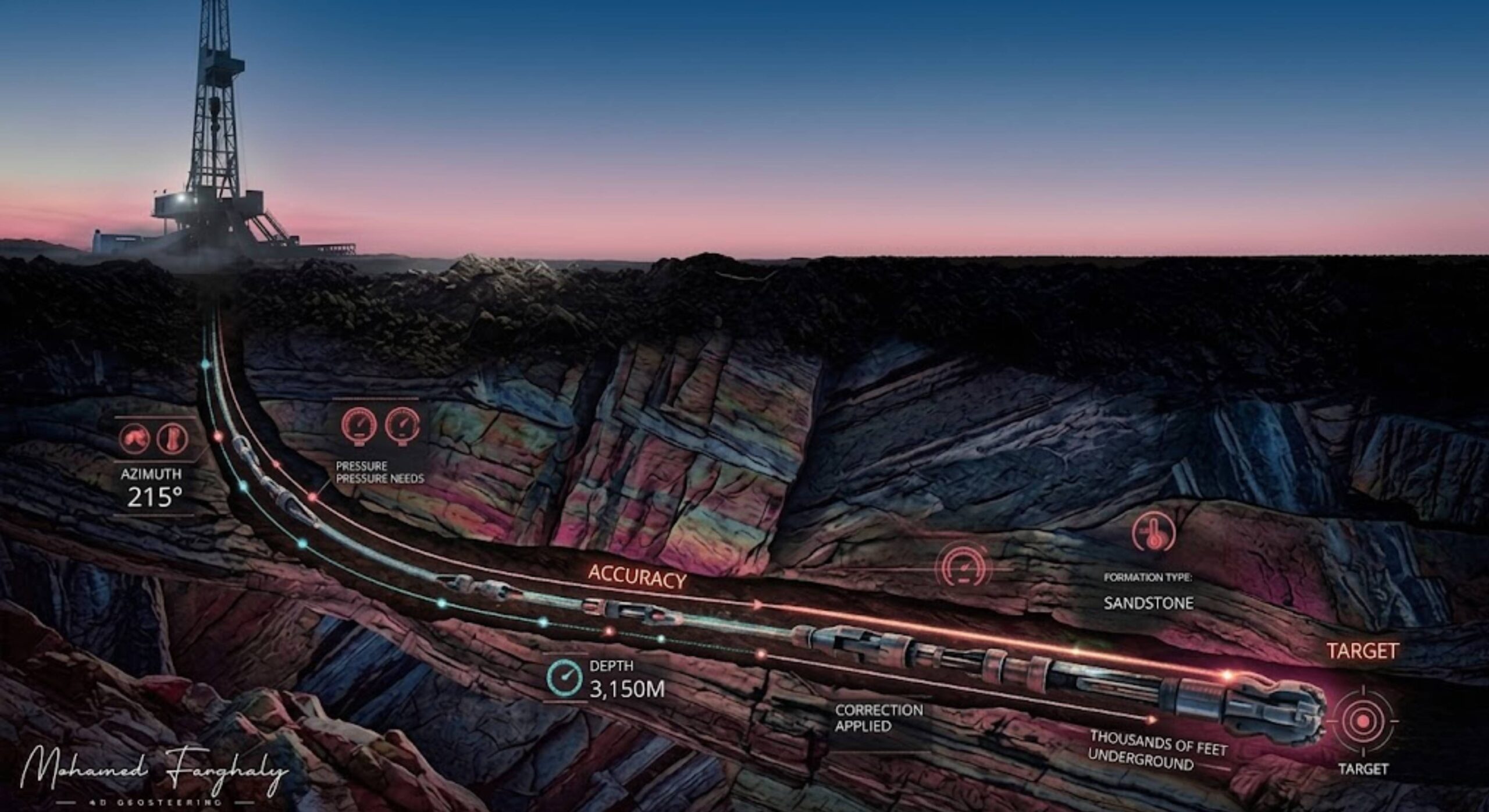
Directional drilling is the practice of controlling the trajectory of a wellbore to reach a specific underground target. Unlike traditional vertical drilling, which focuses on reaching a single depth, directional drilling is a sophisticated engineering method. This approach is essential for accessing complex geological formations and maximizing reservoir recovery.
Primary Objectives of Directional Drilling
The core objectives of directional drilling are driven by the need for economic efficiency, reservoir optimization, and operational safety.
1. Reaching Inaccessible Targets
Operators frequently use directional drilling to access hydrocarbon reservoirs located beneath restricted or environmentally sensitive areas. This is particularly common in offshore operations where companies drill multiple wells from a single platform. This process, often called cluster drilling, significantly reduces infrastructure costs. Furthermore, it allows for the development of reservoirs located beneath cities, mountains, or lakes where a standard vertical rig cannot be safely or legally placed.
2. Maximizing Reservoir Exposure
In modern operations, the goal is to increase the contact area between the well and the hydrocarbon-bearing rock. By turning the wellbore horizontal, a single well stays within a productive layer for a long distance. Consequently, this increases the drainage area and enhances production rates. Additionally, Extended Reach Drilling (ERD) allows operators to reach targets at extreme horizontal distances. Therefore, it enables the exploitation of fields that were previously considered unreachable or “stranded.”
3. Sidetracking and Re-entry
Sidetracking occurs when an existing well is deviated from its original path to start a new hole. This is vital for bypassing obstructions, such as a collapsed section or a stuck drill string that would otherwise ruin the well. Furthermore, engineers can re-enter an old, depleted vertical well and steer into an untapped part of the reservoir. This method is far more cost-effective than drilling a new well from the surface.
4. Wellbore Anti-Collision
When drilling multiple wells from one pad, preventing the new wellbore from hitting existing wells is a major priority. Therefore, engineers use advanced survey techniques and precise trajectory planning. These methods maintain safe separation distances and ensure that all operations avoid high-cost accidents or environmental leaks.
5. Navigating Complex Geology
Steering the wellbore to cross a fault at a specific angle is often necessary to stabilize the well or to reach a specific reservoir block. Similarly, navigating around or through shifting salt formations is difficult. Directional drilling allows operators to bypass these geological hazards effectively.
Fundamentals of Achieving Objectives
To meet these goals, the industry relies on a combination of hardware and precise planning. Engineers use specialized software to calculate the most efficient 3D path by considering target coordinates, geological constraints, and anti-collision requirements.
For downhole control, Rotary Steerable Systems (RSS) allow for the continuous rotation of the drill string, which improves “hole cleaning” and reduces friction in long, horizontal wells. Alternatively, Mud Motors use hydraulic power from drilling fluid to rotate the bit independently, providing precise directional control. Finally, Measurement While Drilling (MWD) technology transmits survey data to the surface in real time. As a result, engineers can monitor the bit’s position and make instant adjustments to the direction.
🔗 Keywords
Drilling Rig, Drilling Mud, MWD, LWD, Directional Drilling, Geosteering, Well Placement, Oil Reservoir, Surface Logging, Borehole Imaging, Electromagnetic Resistivity LWD Tool, Bottom Hole Assembly, Study of Real-Time LWD Data, LWD Interpretation, Borehole Image Log, Dip Calculation Methods, Shale Gas Sweet Spot, Accurate Reservoir Boundary Detection, Machine Learning, Artificial Intelligence, The Future of Automated Geosteering, Ensemble-Based Well Log Interpretation, Digital Twins in Drilling, Remote Operations Centers