Machine Learning in Geosteering
Nov 14, 2025 · 2 minutes reading
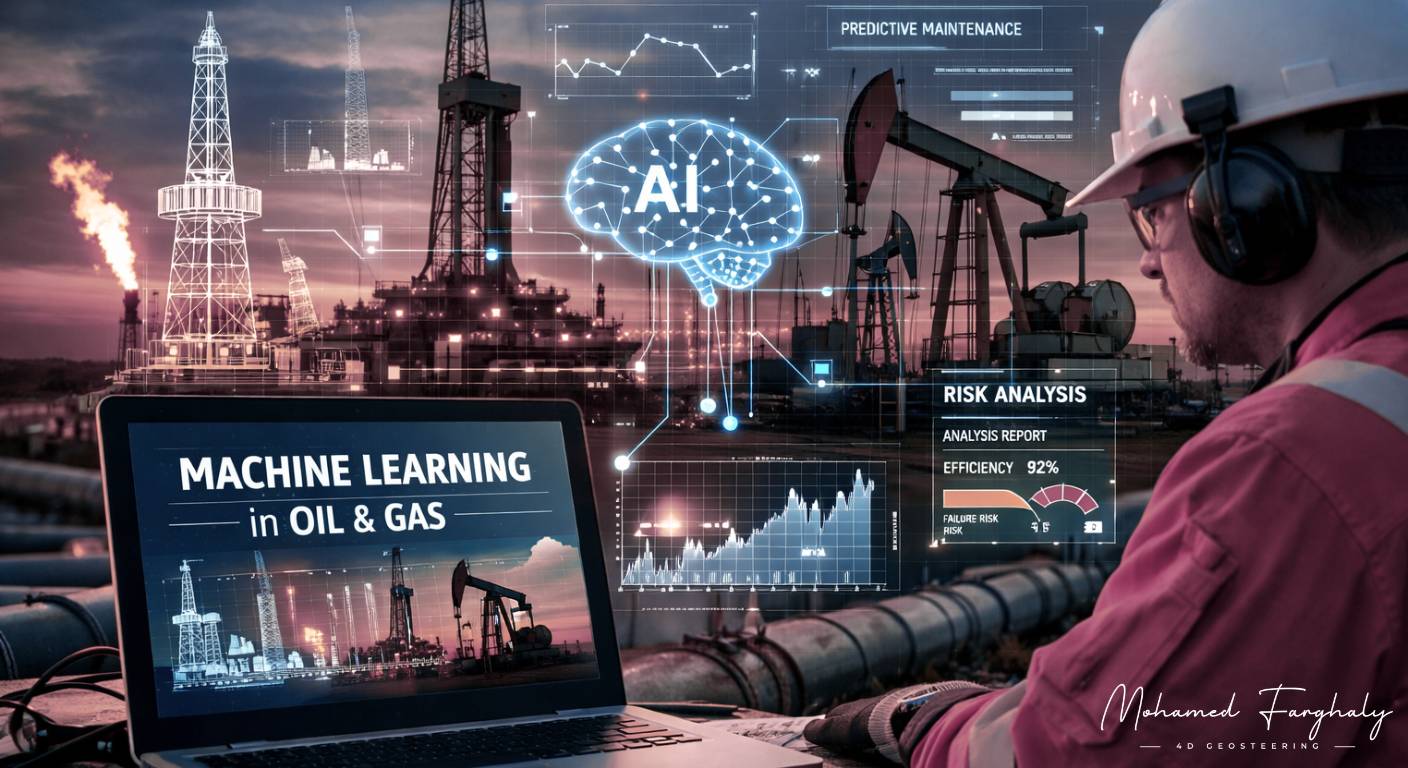
What if geosteering decisions could improve automatically with every well drilled? That is exactly what machine learning in geosteering is starting to achieve — transforming large volumes of data into faster, smarter, and more accurate geosteering decisions.
In modern drilling operations, geosteering generates massive amounts of data from LWD, MWD, and surface measurements. Machine learning uses this data to identify patterns, predict formation behavior, and support real-time geosteering interpretation. Instead of relying only on manual analysis, geosteerers can now enhance their decisions using data-driven insights.
The real value of machine learning in geosteering lies in its ability to recognize trends that may not be obvious to the human eye. By analyzing historical and real-time data, machine learning models can improve well placement, optimize trajectory adjustments, and increase overall geosteering accuracy.
In directional drilling and horizontal wells, where geosteering requires continuous decision-making, machine learning can assist by predicting formation boundaries and identifying sweet spots. This allows for more proactive geosteering operations rather than reactive adjustments.
When integrated with real-time LWD data and Measurement While Drilling (MWD), machine learning becomes a powerful tool for enhancing geosteering workflows. It combines trajectory data with formation evaluation to provide recommendations that support precise and efficient geosteering decisions.
One of the key advantages of machine learning in geosteering is its ability to reduce uncertainty. By continuously learning from new data, it improves prediction accuracy over time, helping geosteerers make better decisions under complex geological conditions.
Many still see geosteering as a fully manual process, but the integration of machine learning is changing that perspective. It does not replace the geosteerer — it strengthens decision-making by adding a powerful layer of data analysis.
If you want to understand the future of geosteering, start with machine learning. It is where data becomes intelligence, and intelligence drives more accurate and efficient geosteering decisions.
🔗 Keywords
Drilling Rig, Drilling Mud, MWD, LWD, Directional Drilling, Geosteering, Well Placement, Oil Reservoir, Surface Logging, Borehole Imaging, Electromagnetic Resistivity LWD Tool, Bottom Hole Assembly, Study of Real-Time LWD Data, LWD Interpretation, Borehole Image Log, Dip Calculation Methods, Shale Gas Sweet Spot, Accurate Reservoir Boundary Detection, Machine Learning, Artificial Intelligence, The Future of Automated Geosteering, Ensemble-Based Well Log Interpretation, Digital Twins in Drilling, Remote Operations Centers