Fluid handling in Artificial Lift Systems
July 3, 2023· 3 minutes reading
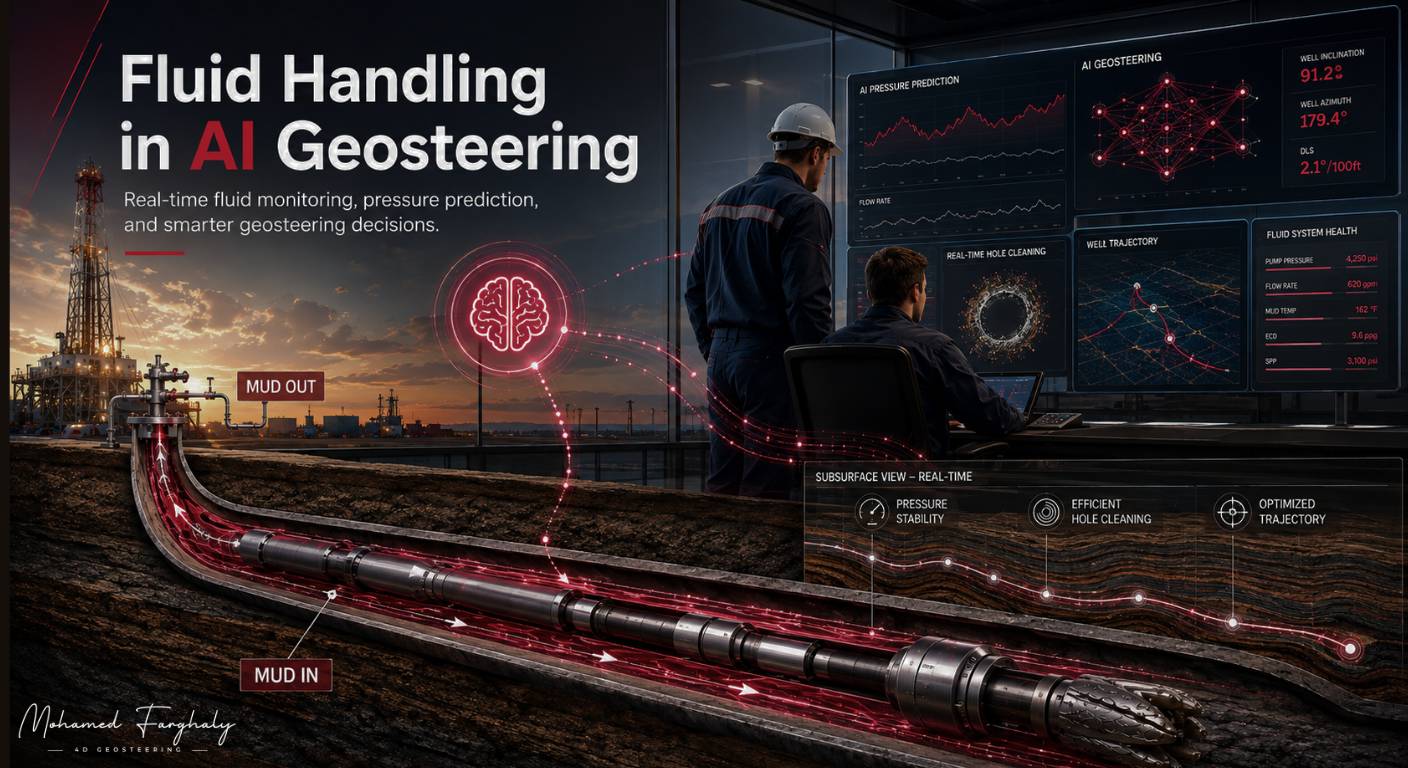
Fluid handling in artificial intelligence in geosteering connects real-time drilling-fluid information with intelligent monitoring and decision-support systems. Although AI does not replace the drilling-fluid engineer or geosteering team, it can continuously analyze fluid behavior and identify changes that may affect drilling stability, data quality, and well placement.
Modern drilling operations already use automated fluid measurements, real-time hydraulics models, and continuous monitoring to improve drilling performance. AI can take this further by recognizing patterns across large streams of surface and downhole data.
Real-Time Fluid Data Analysis
During drilling, fluid systems generate continuous information such as flow rate, pressure, temperature, density, rheology, pit volume, and equivalent circulating density (ECD). Instead of reviewing these measurements independently, AI algorithms can analyze their relationships and detect abnormal behavior earlier.
For example, an unexpected relationship between flow, pressure, and pit volume may indicate a developing operational problem. Intelligent monitoring systems can highlight these deviations and provide the drilling team with earlier situational awareness. Real-time drilling monitoring is increasingly designed around this continuous analysis of operational parameters.
Detecting Fluid-Related Drilling Risks
Fluid behavior becomes especially important while geosteering through formations with changing pressure conditions or narrow operating windows.
AI-supported fluid handling can help teams recognize patterns associated with:
- Lost circulation
- Unexpected influxes
- Abnormal pressure behavior
- Changes in ECD
- Hole-cleaning deterioration
- Changing fluid properties
Automated drilling-fluid measurement combined with digital hydraulics modeling has already been applied to operations involving narrow pressure windows and lost-circulation risks.
Connecting Fluid Handling With Geosteering Decisions
Geosteering depends on rapid interpretation of real-time geological, petrophysical, directional, and drilling information. AI-based geosteering platforms increasingly integrate these data streams to update interpretations and guide trajectory decisions while drilling.
Fluid information adds important operational context.
If the geosteering team recommends changing inclination or drilling into a different part of the reservoir, the drilling system must still operate within safe hydraulic and mechanical limits. Therefore, AI can evaluate geological objectives together with drilling conditions rather than treating trajectory optimization as an isolated task.
From Monitoring to Predictive Fluid Handling
The major advantage of AI is its ability to move fluid handling from reactive monitoring toward predictive analysis.
Instead of waiting for a parameter to cross a fixed alarm limit, machine-learning models can search for combinations and trends that historically preceded undesirable conditions. The system can then flag the developing situation for engineers or feed the information into a broader automated drilling workflow.
As autonomous drilling evolves, integrated systems are increasingly connecting geosteering, drilling control, hydraulics, pressure management, and other operational constraints within the same decision environment.
For geosteering teams, this integration means that the question is no longer only “Where should the well go?” AI-supported fluid handling also helps determine whether the well can continue toward that geological target while maintaining suitable and stable drilling conditions.
🔗 Keywords
Drilling Rig, Drilling Mud, MWD, LWD, Directional Drilling, Geosteering, Well Placement, Oil Reservoir, Surface Logging, Borehole Imaging, Electromagnetic Resistivity LWD Tool, Bottom Hole Assembly, Study of Real-Time LWD Data, LWD Interpretation, Borehole Image Log, Dip Calculation Methods, Shale Gas Sweet Spot, Accurate Reservoir Boundary Detection, Machine Learning, Artificial Intelligence, The Future of Automated Geosteering, Ensemble-Based Well Log Interpretation, Digital Twins in Drilling, Remote Operations Centers
