Rod pump vs ESP comparison
July 3, 2023· 3 minutes reading
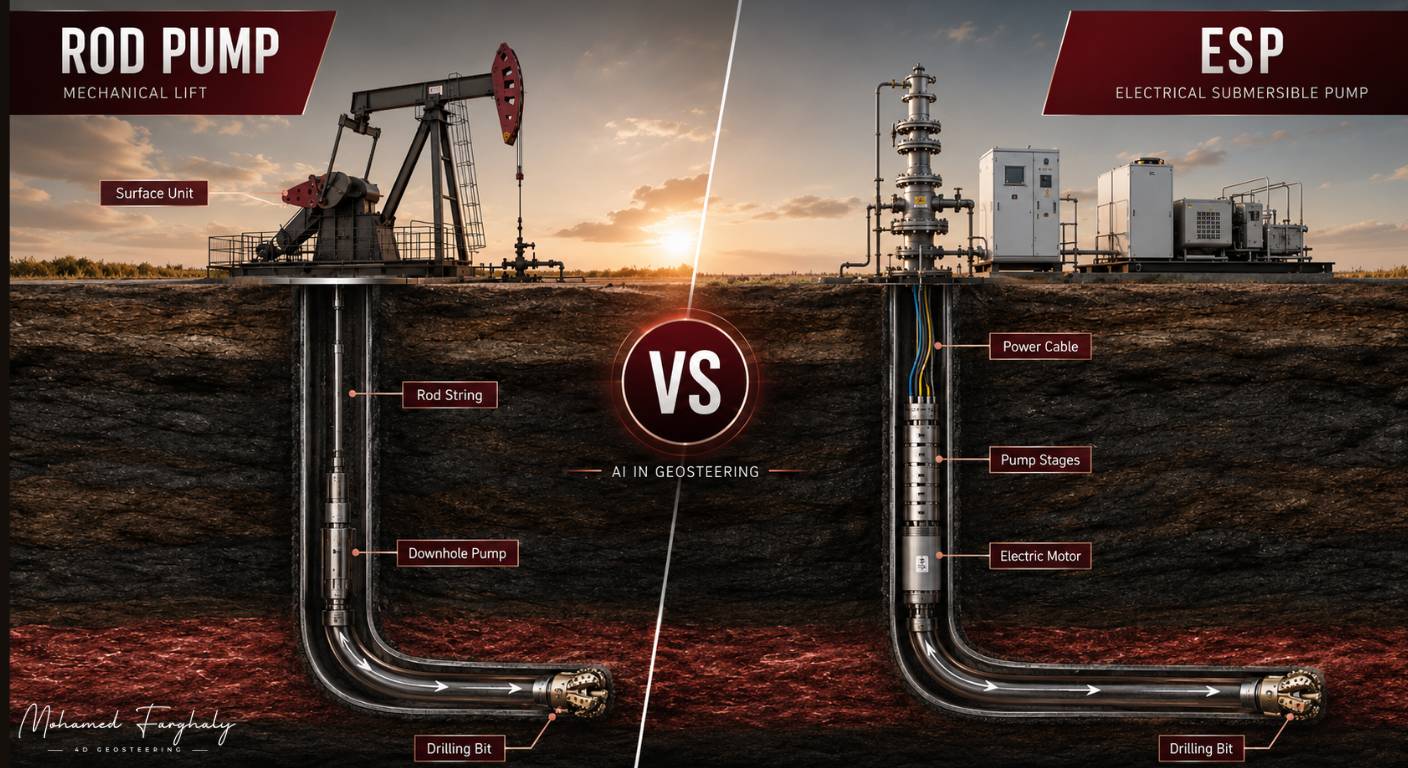
A Rod pump vs ESP comparison usually takes place during artificial lift planning. However, artificial intelligence can connect this production decision with information collected during drilling and geosteering. AI-driven geosteering interprets real-time subsurface data and helps keep the well within productive reservoir intervals. As a result, teams can build a better understanding of reservoir quality before production begins.
How Rod Pumps Work
A rod pump, also called a sucker rod pump, uses a surface pumping unit connected to a downhole pump through a string of rods. The reciprocating movement transfers fluid from the reservoir toward the surface.
Rod lift systems can provide a practical artificial lift option when well conditions and expected production rates suit their operating range. Operators can also monitor pumping performance and adjust operating parameters as reservoir conditions change.
However, well trajectory matters. In highly deviated or complex wells, rod movement and mechanical loading require careful engineering consideration.
How ESP Systems Work
An Electric Submersible Pump (ESP) uses an electrically powered downhole motor connected to multiple centrifugal pump stages. These stages increase fluid pressure and move produced fluids toward the surface.
ESPs offer a wide range of flow capacities and can support demanding production conditions. Therefore, engineers often evaluate them when a well requires substantial fluid lifting capacity.
At the same time, ESP performance depends on correct system selection, operating conditions, electrical supply, fluid characteristics, and well geometry.
Rod Pump vs ESP Comparison
The best artificial lift method depends on more than one variable.
Rod pumps rely on mechanical reciprocating motion and surface pumping equipment. They can provide straightforward operation in suitable wells.
In contrast, ESPs place an electrically driven centrifugal pumping system downhole. They can handle a broad range of production requirements and flow capacities.
Therefore, engineers should evaluate expected production rate, well deviation, fluid properties, pressure conditions, operating cost, reliability, intervention requirements, and future reservoir behavior before selecting either system.
Where Artificial Intelligence and Geosteering Help
AI can make the Rod pump vs ESP comparison more data-driven.
During geosteering, AI systems can combine real-time geological information with drilling measurements to improve well placement inside the reservoir. Modern autonomous geosteering systems already use AI to interpret subsurface information and dynamically guide the well through productive intervals.
Later, production teams can combine this improved reservoir understanding with production surveillance and artificial lift data.
For example, AI models can evaluate:
- Reservoir quality along the lateral
- Expected productivity
- Pressure behavior
- Fluid characteristics
- Well trajectory and deviation
- Production trends
- Artificial lift performance
Consequently, the artificial lift decision becomes part of a wider digital workflow rather than an isolated equipment choice.
From Geosteering to Production Optimization
Geosteering determines where the well travels through the reservoir. Artificial lift determines how the well continues producing when natural reservoir energy cannot deliver the required flow.
AI can help connect these stages. Better well placement produces better subsurface information, while digital production systems can use operating data to optimize artificial lift performance.
Therefore, the future of Rod pump vs ESP selection is not simply choosing between two pumping technologies. It involves combining reservoir understanding, well geometry, production objectives, real-time monitoring, and AI-supported analysis to select and operate the most suitable lift system.
🔗 Keywords
Drilling Rig, Drilling Mud, MWD, LWD, Directional Drilling, Geosteering, Well Placement, Oil Reservoir, Surface Logging, Borehole Imaging, Electromagnetic Resistivity LWD Tool, Bottom Hole Assembly, Study of Real-Time LWD Data, LWD Interpretation, Borehole Image Log, Dip Calculation Methods, Shale Gas Sweet Spot, Accurate Reservoir Boundary Detection, Machine Learning, Artificial Intelligence, The Future of Automated Geosteering, Ensemble-Based Well Log Interpretation, Digital Twins in Drilling, Remote Operations Centers
