Rod pump operation: Optimizing Well Performance
July 1, 2023· 2 minutes reading
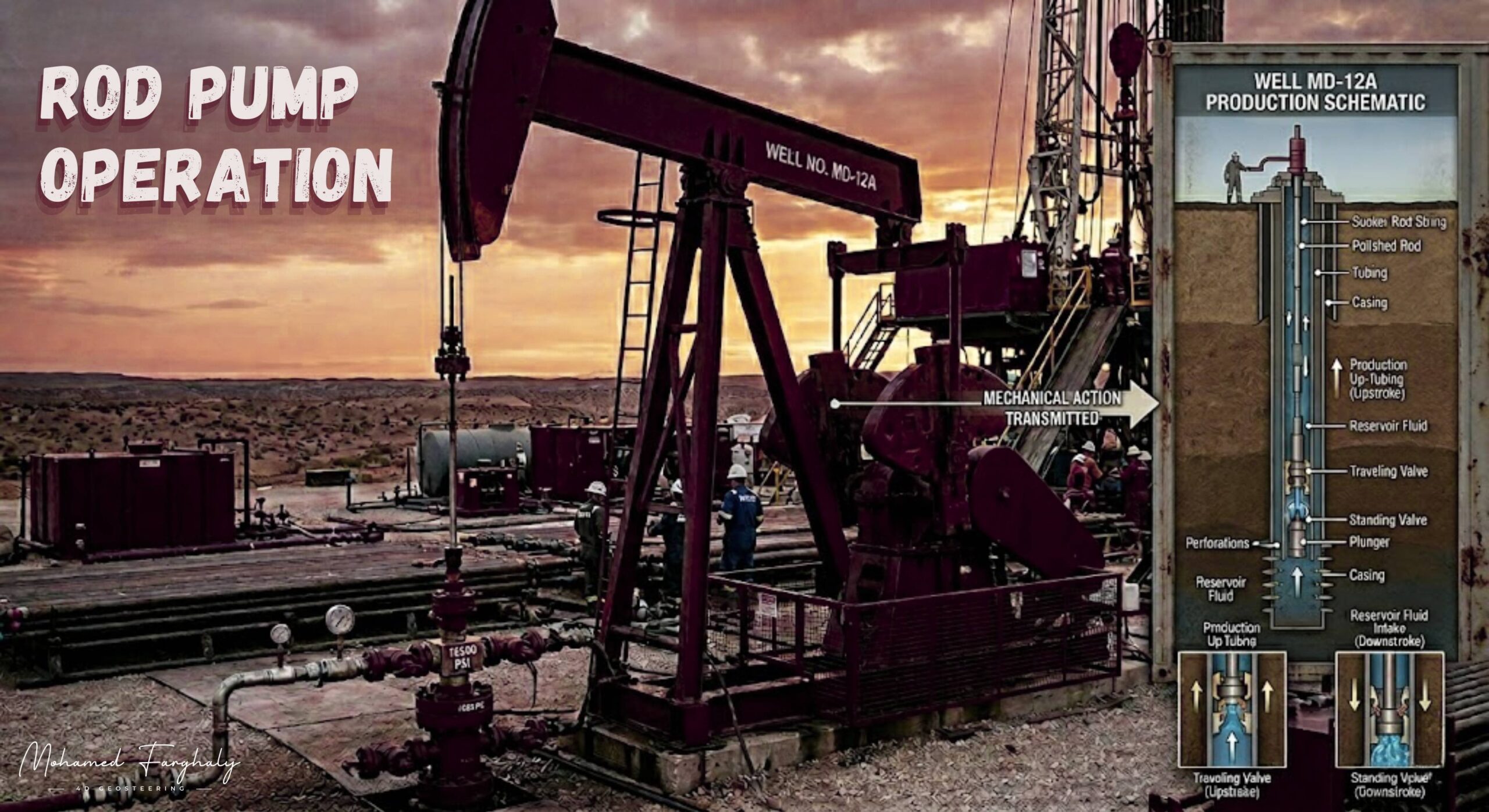
Rod pump operation, artificial lift, and geosteering are vital to oil and gas production. Geosteering keeps the wellbore in productive zones. Efficient rod pump operation then brings those hydrocarbons to the surface. Integrating these artificial lift systems in geosteering helps reduce costs and extends asset life.
Rod Pump Operation in Artificial Lift Systems
The rod pump is a primary industry workhorse. It offers great reliability and cost-efficiency. These positive displacement pumps help when natural pressure fails.
Core Components
- Surface Unit: The beam unit creating vertical motion.
- Sucker Rod String: The connector between the surface and the pump.
- Downhole Pump: The plunger assembly that moves the fluid.
Aligning Rod Pump Operation with Geosteering Strategy
Geosteering guides directional drilling toward geological targets. However, the final wellbore shape impacts rod pump operation and artificial lift. High tortuosity or dogleg severity creates resistance. This significantly hinders the performance of the artificial lift system.
Geosteering and Artificial Lift Efficiency
- Mechanical Wear: Sharp turns increase friction between the rods and tubing. This causes rapid wear and higher energy use.
- Pump Placement: Better geosteering creates smoother paths. This allows for deeper pump placement to maximize drawdown.
- Fluid Management: Geosteering defines reservoir fluid properties. This data helps engineers tune rod pump operation for specific gas-oil ratios.
Improving Artificial Lift Systems Through Geosteering
Operators should treat rod pump operation, artificial lift, and geosteering as one workflow. Collaboration leads to wells that are productive and mechanically sound.
- Pre-Drilling Coordination: Plan trajectories that are “pump-friendly.” This lowers long-term expenses.
- Advanced Monitoring: Use dynamometer data to link pump health to specific geological zones.
- Proactive Maintenance: Use better materials to offset stresses from complex well paths.
🔗 Keywords
Drilling Rig, Drilling Mud, MWD, LWD, Directional Drilling, Geosteering, Well Placement, Oil Reservoir, Surface Logging, Borehole Imaging, Electromagnetic Resistivity LWD Tool, Bottom Hole Assembly, Study of Real-Time LWD Data, LWD Interpretation, Borehole Image Log, Dip Calculation Methods, Shale Gas Sweet Spot, Accurate Reservoir Boundary Detection, Machine Learning, Artificial Intelligence, The Future of Automated Geosteering, Ensemble-Based Well Log Interpretation, Digital Twins in Drilling, Remote Operations Centers