Mud Composition Basics
Oct 1, 2023· 2 minutes reading
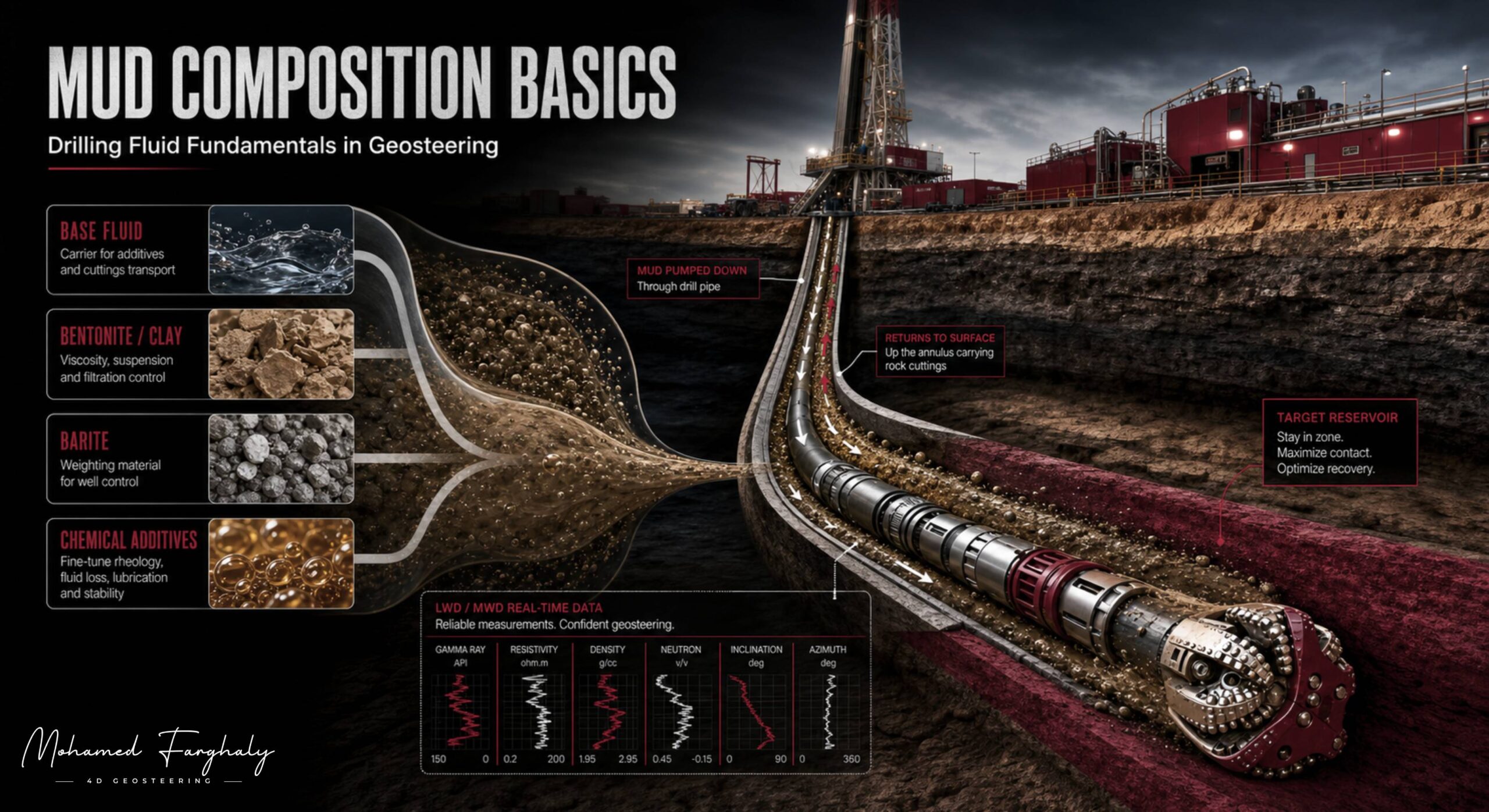
Drilling mud is more than a fluid circulating through the well—it is a carefully engineered system that supports safe drilling, protects the formation, and provides valuable information for real-time geosteering.
The composition of drilling fluid varies according to formation conditions and well objectives. However, most drilling mud systems contain three basic components: a base fluid, reactive solids, and chemical additives.
The base fluid forms the main liquid phase. In water-based mud, water or brine is used, while oil-based and synthetic-based muds rely on oil or synthetic fluids. Selecting the right system depends on formation stability, temperature, pressure, environmental requirements, and reservoir sensitivity.
Clay materials, such as bentonite, are commonly added to improve viscosity and suspend drilled cuttings. Weighting agents like barite increase mud density, helping control formation pressure and prevent unwanted fluid influx. Other drilling fluid additives manage filtration, lubricity, pH, corrosion, shale inhibition, and rheological properties.
In geosteering operations, mud composition directly affects both drilling performance and data quality. Changes in mud salinity, density, or electrical properties can influence resistivity measurements from Logging While Drilling (LWD) tools. Mud additives and contamination may also affect gas readings, cuttings analysis, and surface logging interpretation.
Maintaining stable drilling fluid properties is especially important in directional and horizontal wells. The mud must transport cuttings efficiently, reduce friction, support wellbore stability, cool the drill bit, and minimize formation damage while the well remains within the target reservoir.
Effective drilling fluid monitoring combines regular mud checks with real-time MWD, LWD, and surface logging data. When geosteerers understand the mud system and its potential effects on measurements, they can separate genuine geological changes from drilling-fluid-related responses.
Understanding mud composition basics is therefore a fundamental part of successful geosteering. A properly designed and maintained drilling fluid improves well control, measurement reliability, drilling efficiency, and accurate well placement within the most productive reservoir zone.
🔗 Keywords
Drilling Rig, Drilling Mud, MWD, LWD, Directional Drilling, Geosteering, Well Placement, Oil Reservoir, Surface Logging, Borehole Imaging, Electromagnetic Resistivity LWD Tool, Bottom Hole Assembly, Study of Real-Time LWD Data, LWD Interpretation, Borehole Image Log, Dip Calculation Methods, Shale Gas Sweet Spot, Accurate Reservoir Boundary Detection, Machine Learning, Artificial Intelligence, The Future of Automated Geosteering, Ensemble-Based Well Log Interpretation, Digital Twins in Drilling, Remote Operations Centers