The Power of Offset Wells
May 26, 2023 · 3 minutes reading
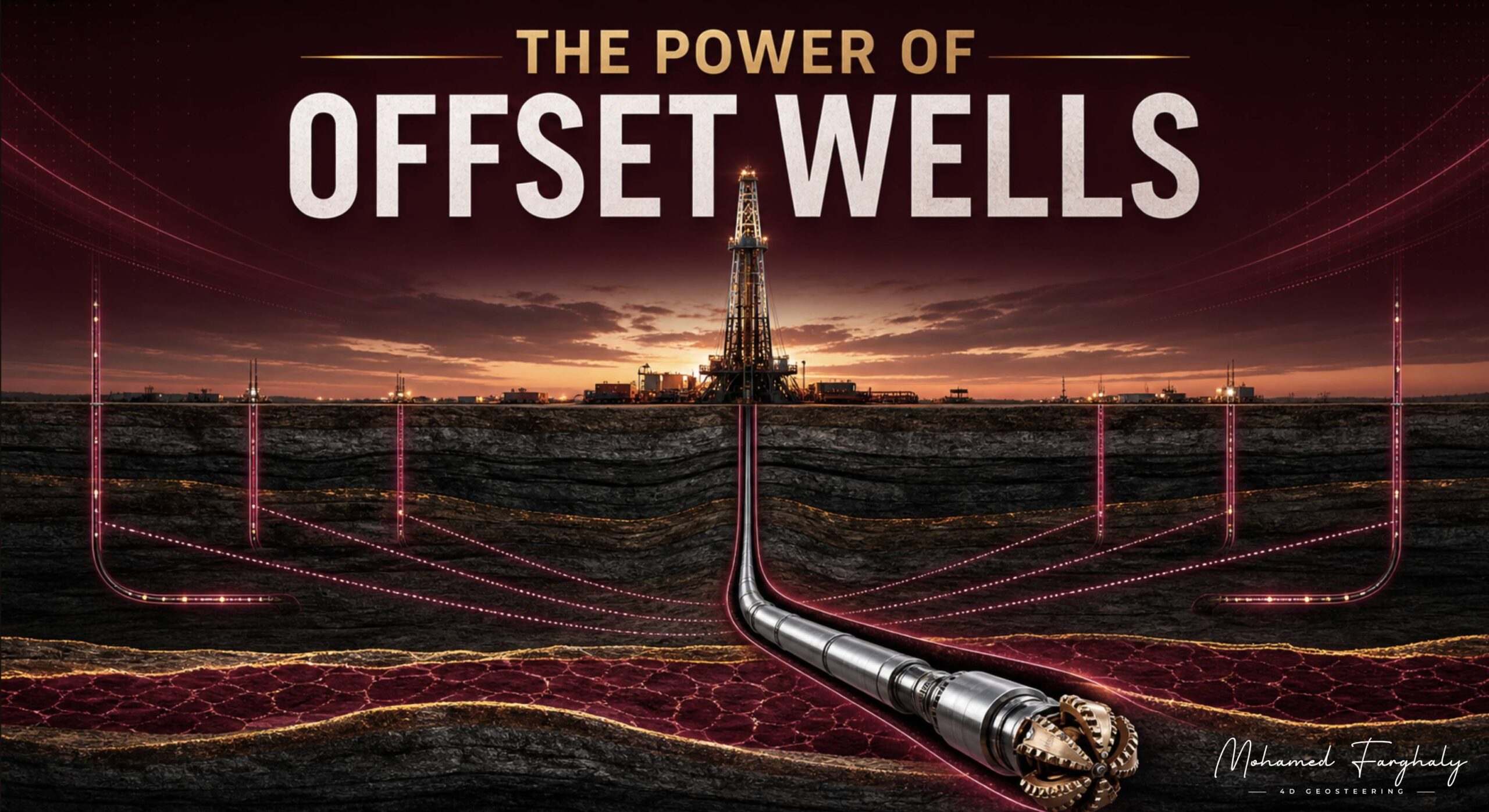
Offset wells are one of the most valuable sources of information in the oil and gas industry. Every drilled well carries lessons that can guide the next one. These wells help reduce uncertainty, improve Well Placement, and support better drilling performance.
Instead of depending only on theoretical models, teams use offset well data to understand the real subsurface. This data includes formation tops, fluid contacts, pressure behavior, lithology changes, and previous drilling results. As a result, engineers can build stronger Directional Drilling plans and prepare for challenges before drilling starts.
Why Offset Well Data Matters
Offset wells provide a practical reference for new wells. For example, nearby wells can show expected gamma ray, resistivity, porosity, and pressure trends. These patterns help geologists compare planned models with real field behavior.
In Geosteering, this comparison is especially important. Historical MWD and LWD data help define what the drilling team should expect while entering the target reservoir. When real-time LWD data matches previous trends, confidence increases. However, when the response changes, the team can quickly identify a possible fault, boundary shift, or lithology change.
This makes LWD Interpretation more reliable. It also improves the Study of Real-Time LWD Data during drilling operations.
Improving Reservoir Understanding
Advanced data from offset wells can reveal important structural details. Borehole Imaging and Borehole Image Log data help identify fractures, bedding planes, and formation dips. In addition, Dip Calculation Methods allow geoscientists to estimate formation orientation more accurately.
These insights support better trajectory control. They also improve Accurate Reservoir Boundary Detection, especially when combined with tools such as the Electromagnetic Resistivity LWD Tool.
Offset well information also helps drilling teams avoid repeated mistakes. Previous Bottom Hole Assembly designs, drilling parameters, Drilling Mud behavior, and Surface Logging results can guide better decisions. Therefore, teams can repeat successful approaches and avoid known problems.
Offset Wells and Modern Geosteering
In unconventional reservoirs, offset data becomes even more important. It helps teams identify the Shale Gas Sweet Spot and stay within the most productive zone. Patterns from earlier wells can highlight the best target intervals and improve future drilling strategies.
Today, Machine Learning, Artificial Intelligence, and Digital Twins in Drilling are making this data even more powerful. These technologies analyze historical well information to predict outcomes, optimize well paths, and support decisions in Remote Operations Centers.
Because of this, offset wells are becoming a key part of The Future of Automated Geosteering. Past and present data now work together to improve accuracy, speed, and confidence.
Offset wells prove that success leaves clues. By learning from wells already drilled, operators can reduce risk, improve efficiency, and deliver better wells.
🔗 Keywords
Drilling Rig, Drilling Mud, MWD, LWD, Directional Drilling, Geosteering, Well Placement, Oil Reservoir, Surface Logging, Borehole Imaging, Electromagnetic Resistivity LWD Tool, Bottom Hole Assembly, Study of Real-Time LWD Data, LWD Interpretation, Borehole Image Log, Dip Calculation Methods, Shale Gas Sweet Spot, Accurate Reservoir Boundary Detection, Machine Learning, Artificial Intelligence, The Future of Automated Geosteering, Ensemble-Based Well Log Interpretation, Digital Twins in Drilling, Remote Operations Centers