Why Static Geological Models Fail During Live Drilling ?
April 11, 2023· 2 minutes reading
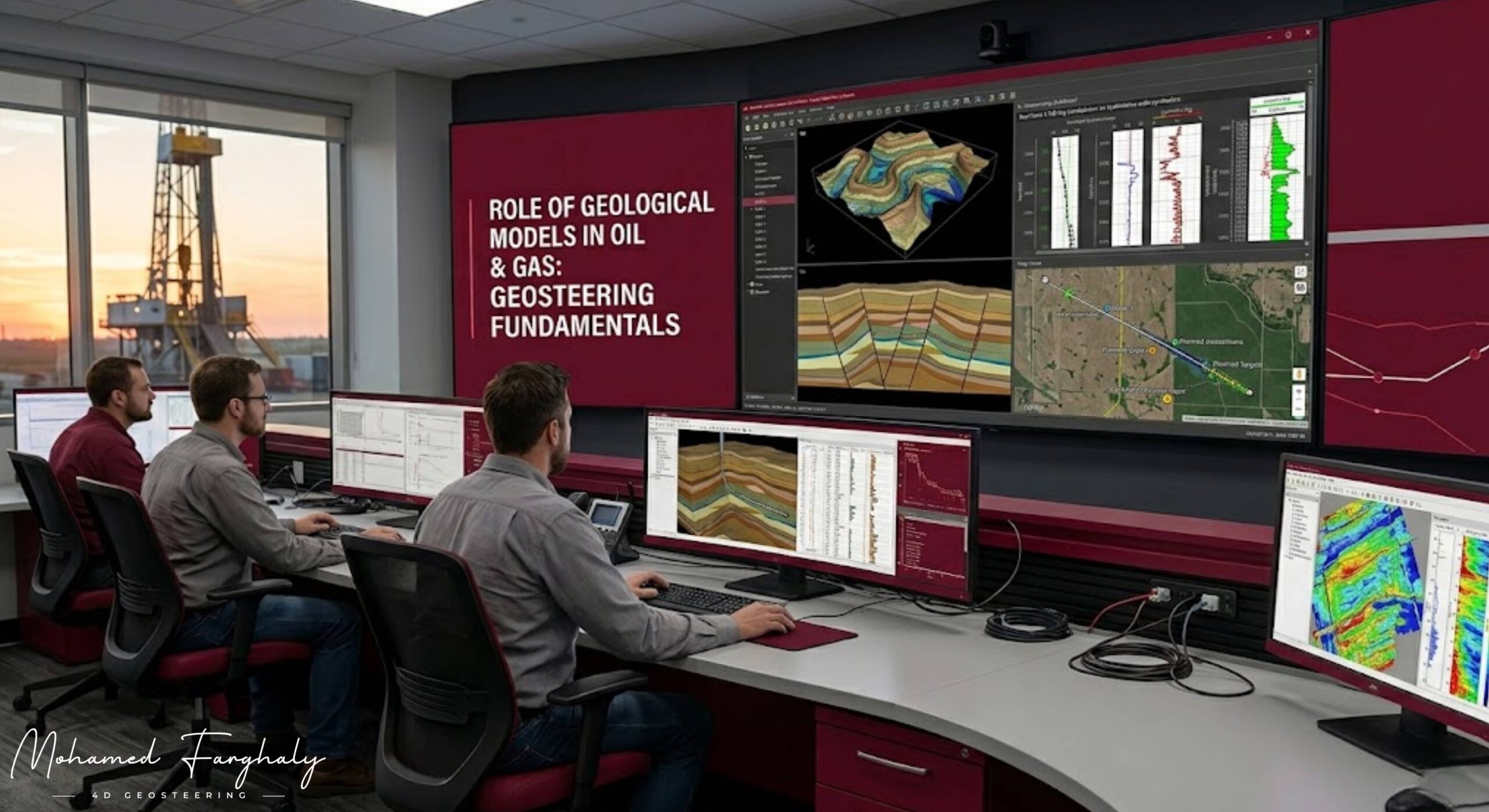
Geological models are the backbone of almost every decision made in oil and gas exploration and development. They represent a structured interpretation of the subsurface and help transform scattered geological, geophysical, and petrophysical data into a coherent 3D understanding of the reservoir.
In simple terms, a geological model is the bridge between what we know from data and what actually exists underground.
What is a Geological Model?
A geological model is a 3D digital representation of subsurface formations. It integrates different types of data such as:
- Seismic interpretation
- Well logs
- Core data
- Stratigraphic and structural analysis
The goal is to define reservoir geometry, properties, and continuity in space.
Why Geological Models Are Important
Geological models play a critical role in all stages of oil and gas development:
1. Exploration Stage
During exploration, geological models help identify potential hydrocarbon traps, predict reservoir presence, and reduce uncertainty before drilling begins.
2. Development Planning
Once a discovery occurs, asset teams use the model to design well locations, estimate reserves, and plan field development strategies.
3. Drilling and Geosteering
In real-time operations, especially in geosteering, geological models act as the initial reference for well placement. As new data comes in while drilling, the asset team continuously updates the model to reflect the true subsurface conditions.
4. Production Optimization
After operators drill the wells, they use the model to simulate reservoir behavior, optimize production strategies, and enhance recovery.
Key Role in Geosteering
One of the most critical applications of geological models is in real-time geosteering decisions. Before drilling, the model defines the expected position of the reservoir. However, subsurface uncertainty is always present.
As drilling progresses:
- The geosteering team compares LWD/MWD data with the initial model.
- Geologists identify differences between prediction and reality.
- The team updates the framework dynamically.
- The directional driller adjusts the well path accordingly.
This continuous interaction makes the geological model a living system, not a static interpretation.
Challenges in Geological Modeling
Despite their importance, geological models face several challenges:
- Limited and uneven data distribution
- High subsurface uncertainty
- Complex faulted or layered structures
- Scaling issues between static models and real-time data
Because of this, modern workflows increasingly rely on ensemble modeling, uncertainty quantification, and AI-driven updates to improve accuracy.
🔗 Keywords
Drilling Rig, Drilling Mud, MWD, LWD, Directional Drilling, Geosteering, Well Placement, Oil Reservoir, Surface Logging, Borehole Imaging, Electromagnetic Resistivity LWD Tool, Bottom Hole Assembly, Study of Real-Time LWD Data, LWD Interpretation, Borehole Image Log, Dip Calculation Methods, Shale Gas Sweet Spot, Accurate Reservoir Boundary Detection, Machine Learning, Artificial Intelligence, The Future of Automated Geosteering, Ensemble-Based Well Log Interpretation, Digital Twins in Drilling, Remote Operations Centers