Well Placement in Oil & Gas: The Geosteering Guide
April 12, 2023 · 2 minutes reading
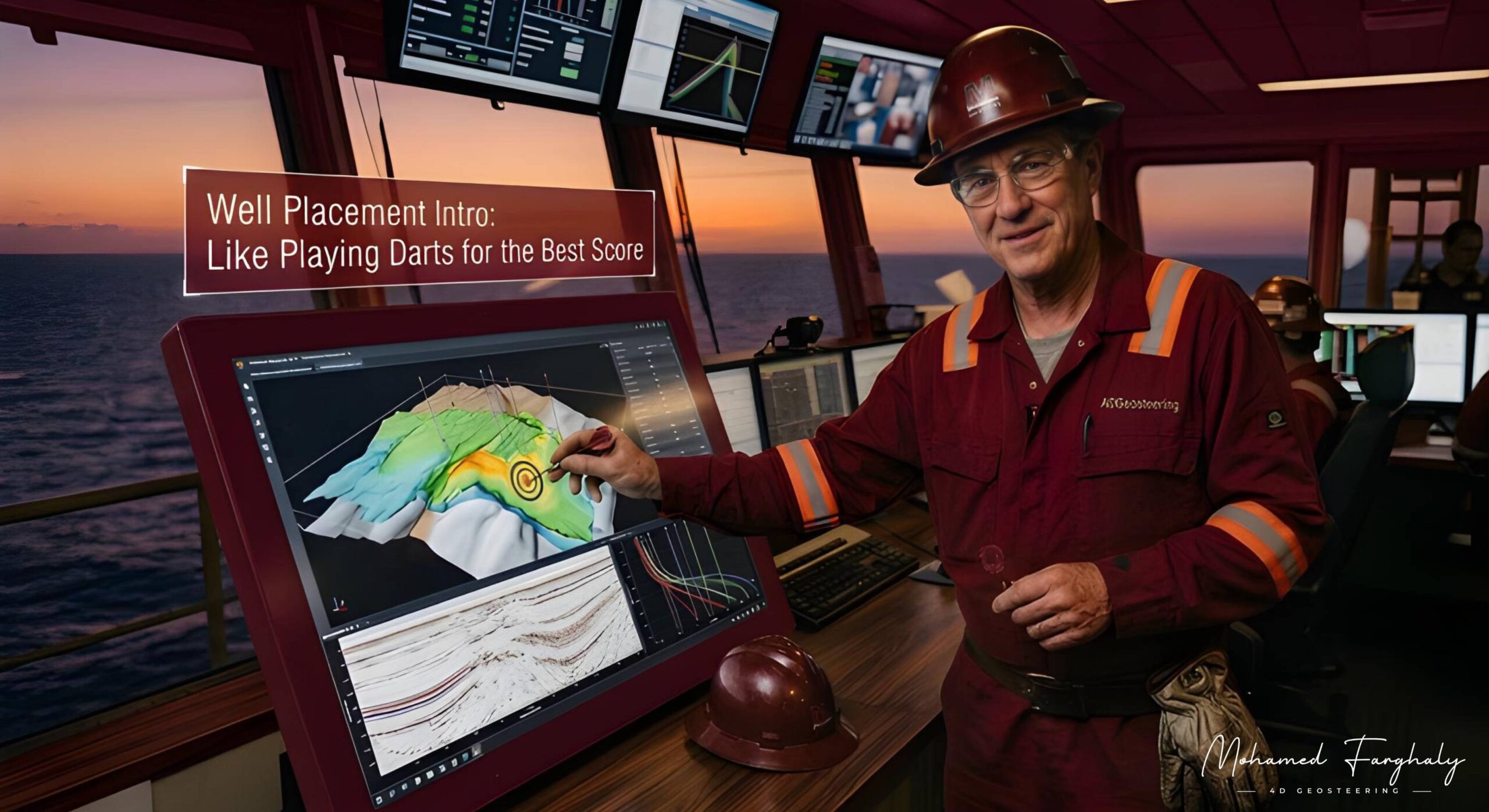
In the oil and gas industry, well placement is one of the most decisive factors in determining a project’s success. Drilling a well is no longer just about reaching a target depth—it’s about placing the wellbore precisely within the most productive zone of the reservoir. This is where geosteering becomes essential.
Traditionally, wells were planned using pre-drill geological models and seismic data. While effective to a certain extent, these methods often failed to account for real-time subsurface uncertainties. Formations can shift, faults may appear unexpectedly, and reservoir boundaries are rarely as uniform as predicted. Poor well placement can lead to reduced production, early water breakthrough, or even missing the reservoir entirely.
Geosteering transforms this process by integrating real-time data with geological models during drilling. Using tools like Logging While Drilling (LWD) and Measurement While Drilling (MWD), geoscientists continuously analyze formation properties such as resistivity, gamma ray, and porosity. This allows them to adjust the well trajectory in real time, ensuring the well remains within the optimal reservoir zone.
One of the main goals of well placement is to maximize reservoir contact. In horizontal and directional wells, even a small deviation can move the wellbore out of the “sweet spot.” With geosteering, operators can detect formation changes early, maintain the desired trajectory, and avoid non-productive zones like shale layers or water-bearing intervals.
Moreover, geosteering improves decision-making under uncertainty. By combining real-time data interpretation with advanced software and geological expertise, teams can make faster and more accurate adjustments. This not only enhances production rates but also reduces drilling risks and overall operational costs.
In today’s competitive energy landscape, efficient well placement is more important than ever. Geosteering bridges the gap between planning and execution, turning data into actionable insights. The result is a smarter, more adaptive drilling process that ensures wells are placed exactly where they deliver the highest value.
Ultimately, successful well placement is not just about drilling deeper—it’s about drilling smarter.
🔗 Keywords
Drilling Rig, Drilling Mud, MWD, LWD, Directional Drilling, Geosteering, Well Placement, Oil Reservoir, Surface Logging, Borehole Imaging, Electromagnetic Resistivity LWD Tool, Bottom Hole Assembly, Study of Real-Time LWD Data, LWD Interpretation, Borehole Image Log, Dip Calculation Methods, Shale Gas Sweet Spot, Accurate Reservoir Boundary Detection, Machine Learning, Artificial Intelligence, The Future of Automated Geosteering, Ensemble-Based Well Log Interpretation, Digital Twins in Drilling, Remote Operations Centers